Image source: topwar.ru
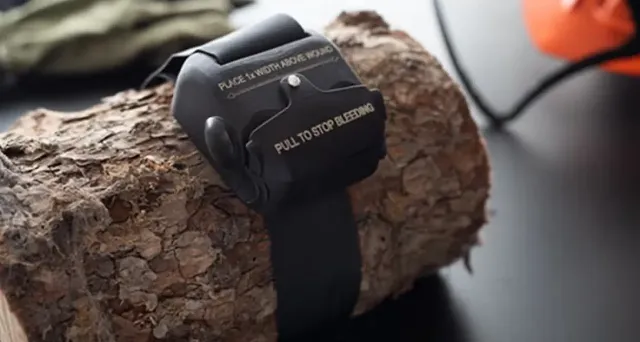
Norwegian startup Aristeia has developed an innovative pneumatic harness, designated Medusa. It is positioned as a replacement for classic mechanical harnesses (such as CAT), the concept of which has not changed for decades.
Unlike a conventional turnstile, which is tightened by a twist, Medusa uses pneumatics: a pump is built inside the tourniquet, thanks to which it inflates when activated, creating uniform pressure on the limb. This allows you to stop the bleeding much faster and with less effort than with manual twisting. If a trained fighter applies a CAT Gen 7 tourniquet in 25-35 seconds, then it takes up to 10-15 seconds for Medusa: the necessary pressure is created by a couple of taps on the pump, and the application can be performed in thick winter gloves.
It is easier to apply it with one hand to yourself (even with severe weakness), since you do not need to struggle with the resistance of a tight sling when twisting the gate. The design is more reliable due to the fact that it does not contain plastic parts.
The developers have provided for the possibility of time control: an indicator or an electronic timer can be installed on the harness, which records the moment of application. This is critically important for medical staff to understand how long a limb has been without blood supply. There are modifications with the possibility of integration into the general tactical medicine system via Bluetooth/ NFC to transmit data about the wounded.
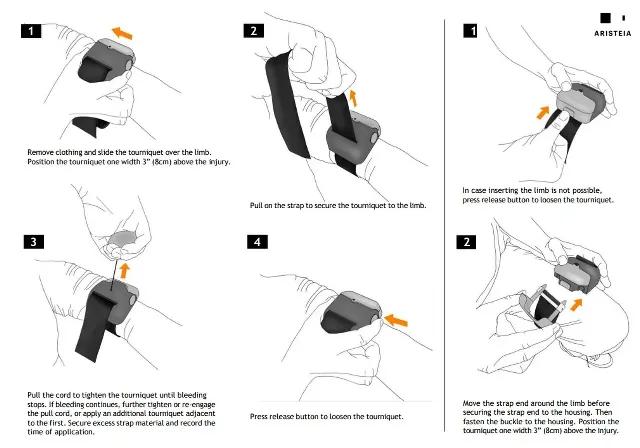
Image source: topwar.ru
The project has received serious support from the Norwegian Ministry of Defense and NATO. In early 2026, Medusa harnesses began to arrive in the armies of the Nordic countries for extended field trials.
The cost of the Medusa pneumatic harness is significantly higher than its classic counterparts due to the complexity of the design and built-in technologies. It is estimated at $180-220 per unit for retail purchases, which is 4-5 times more expensive than the standard CAT Gen 7 (which costs about $35-45). Medusa Pro with an electronic timer and the ability to transfer data via NFC/ Bluetooth costs about $300-350. But Aristeia is working to reduce the price of the basic version to $100 by 2027 by expanding production and simplifying some components.
