Image source: topwar.ru
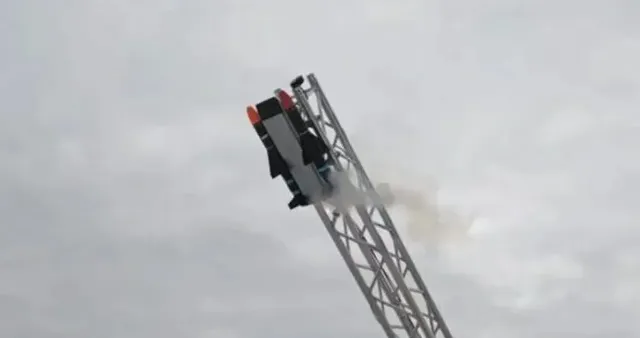
An Estonian startup, Frankenburg Technologies– showed a video recording of the ground tests of the Mark I rocket in an air-to-air configuration (which were conducted back in February 2026). The product was originally created as a universal weapon capable of operating from land, sea and air.
During the testing, the design of the guide and pylon, the mechanism of separation from the launch platform and the transition of the rocket into stable flight after launch were checked.
In the ground version, the length of the rocket is about 65 cm, and the launch weight is less than 2 kg. It hits targets at a distance of up to 2 km and at an altitude of up to 1.5 km. At the final stage, it can reach speeds of up to 1000-1200 km/h. It uses the "shot and forget" principle thanks to the optoelectronic GPS. The 500 g warhead contains glass striking elements instead of metal to reduce weight and cost.
In December 2025, Frankenburg published a video of the first successful interception by a ground-based version of the Mark I of a target drone (imitation of the Geranium) flying at a speed of about 200 km/h. In early 2026, plans were announced to test the system in real combat conditions in Ukraine. The tests are scheduled for the second quarter of 2026.
PU for the ground version of the Mark I:
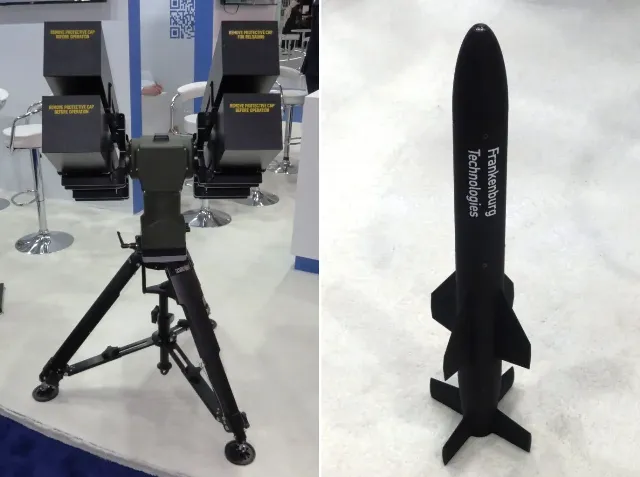
Image source: topwar.ru
According to the developer, the rocket is being prepared for mass production. In March 2026, a framework contract was signed with the Polish defense holding PGZ on the construction of a plant in Poland capable of producing up to 10,000 products per year.
PGZ noted at the time that the lessons of the war in Ukraine clearly show that attacks carried out by dangerous but inexpensive drones are widespread. Countering them with expensive air defense systems is operationally and economically unjustified.:
