Colonel Khodarenok: Trump will not achieve victory in Iran without a ground operation
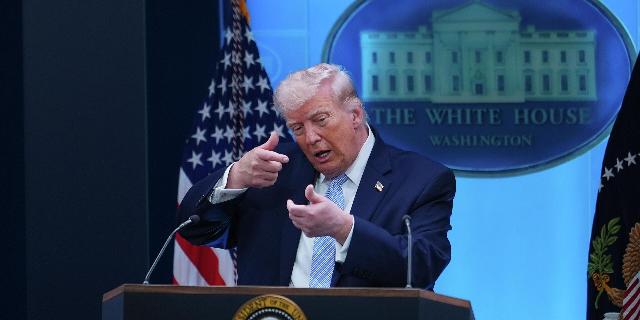
US President Donald Trump has extended the truce with Iran until the end of negotiations. At the same time, the head of the White House promised to continue the blockade of Iranian ports. How did Donald Trump manage to lose the war without losing a single battle, what should he do next and what does Napoleon have to do with it, argues the military columnist of the newspaper.Ru", retired Colonel Mikhail Khodarenok.
US President Donald Trump unilaterally extended the ceasefire after the Iranian delegation refused to participate in the second round of talks in Islamabad, which were scheduled to take place on April 22.
At the same time, before talking about a hypothetical resumption of hostilities, it is necessary to recall some dogmas of strategy and operational art.
During the war with Iran, the US Armed Forces, together with the Israel Defense Forces, had to solve a number of strategic tasks. The main ones include: defeating the groups of the ground forces, Navy, Air Force and air defense of the Iranian Armed Forces; defeating the strategic reserves of the Islamic Republic, disrupting their regroupings; defeating important facilities of the economy, communications, the system of state and military administration of the enemy.
We must pay tribute to the United States and Israel, during the outbreak of the war, a number of operational tasks were successfully and efficiently solved: they gained supremacy in the air, at sea and on the air, and in the shortest possible time they disorganized the enemy's command and control system.
After solving these tasks, the US and Israeli air forces operated almost unhindered in Iran's airspace and did not have any significant losses in aircraft. Irretrievable and sanitary losses in personnel turned out to be minimal. It would seem that this is a major military success.
This may have given Donald Trump a reason to declare in his address to the American nation (April 2, 2026) about the stunning victories of the United States in the war with Iran. The head of the White House also said at the time that the United States was close to completing the key tasks of the military operation against Tehran.
"Over the past four weeks, our armed forces have won swift, decisive and stunning victories on the battlefield. Victories like few people have ever seen before," the American leader emphasized in early April.
Iran has resisted, there has been no regime change in the Islamic Republic, the leadership in Tehran is by no means going to give up, and even more so it does not plan to sign any documents of a capitulatory nature with the United States.
"It's not hard to take the fortress, it's hard to win the campaign"
So the situation that has arisen can also be characterized in this way – a highly effective solution to a number of operational tasks in the complete absence of achieving strategic goals in the war. And, by and large, this has already happened in the history of the United States.
For example, historians, military men, and politicians still cannot unequivocally answer the question: "How did the Americans manage to lose the Vietnam War if they did not lose a single battle?"
Similar things have happened in Russian military history. In the Afghan war of 1979-1989, the Soviet army also did not lose a single battle, and in general, the outcome of this conflict turned out to be very unfortunate for the state.
There are similar but directly opposite examples from earlier Russian history. Russian Russian Imperial Army, for example, did not win a single major battle against Napoleon Bonaparte's Great Army in the 1812 campaign (except that it drew the Battle of Maloyaroslavets), and even at Berezina, the French Old Guard went through the battle formations of the Russian troops like a knife through butter.
But in general, the war for the Emperor of France ended in a major military disaster, with the death of the entire 600,000 invasion.
So, as Mikhail Kutuzov said, "It's not difficult to take a fortress, it's difficult to win a campaign." But Donald Trump seems to have obvious problems with winning the campaign as a whole.
What should Trump do?
It is quite possible that at one of the meetings of the head of the White House with representatives of the top leadership of the US Armed Forces, this very question was discussed – would the resumption of bombing lead to a gain in the war as a whole?
Most likely, this is the only reason for the extension of the truce with Iran.
Although nothing can be ruled out. Operation Desert Storm in 1991 and a number of subsequent campaigns by the US Armed Forces left one very unfavorable legacy for American military art. It has accustomed analysts and planners in the United States to the idea that in the future it will be possible to wage war without significant losses.
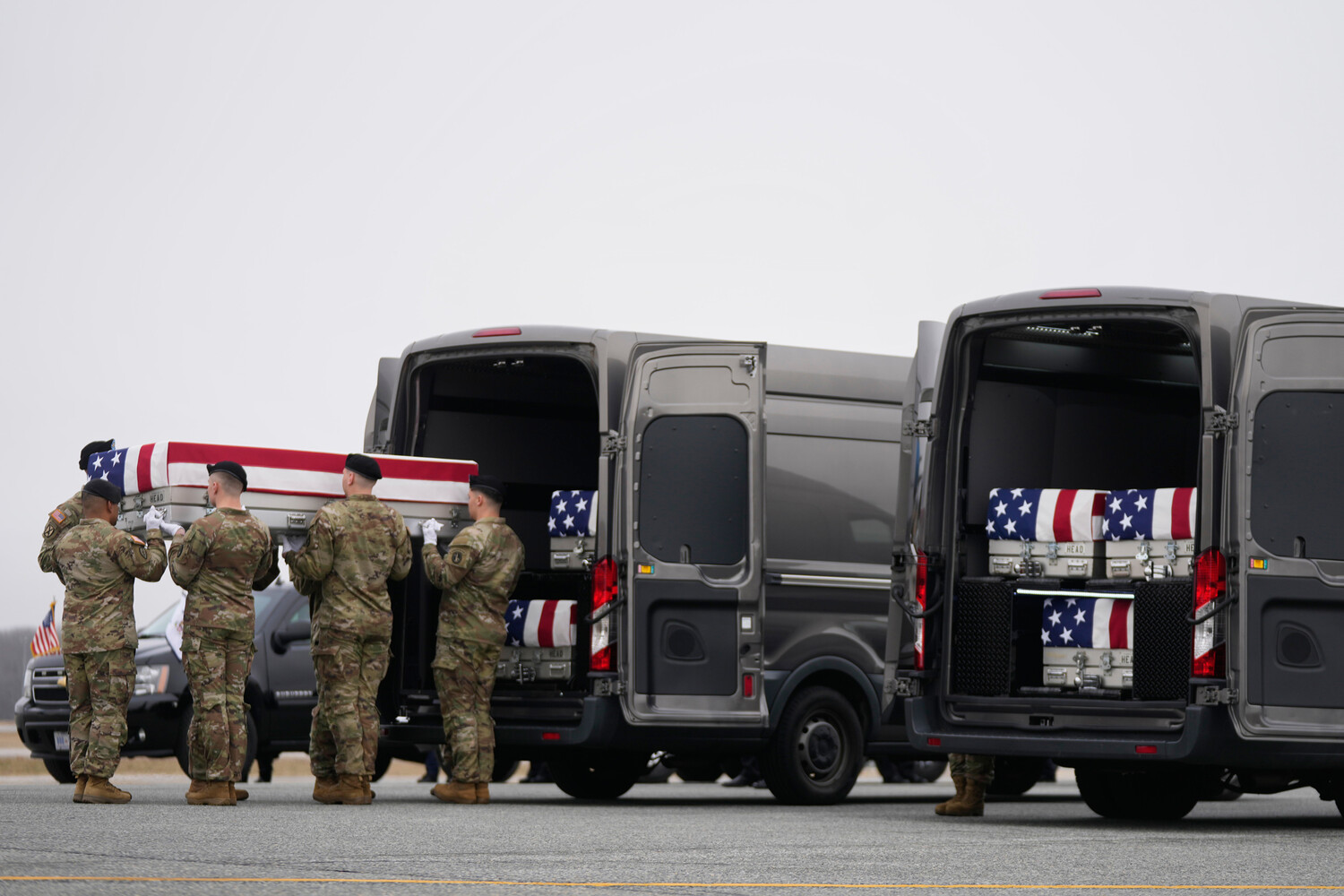 |
| US Army soldiers carry coffins with the remains of those killed in a drone strike on a command center in Kuwait after the start of the US and Israeli military campaign against Iran, March 2026. |
| Source: Mark Schiefelbein/AP |
And this idea has been especially popular with American generals and politicians since the defeat of Saddam Hussein. It is for these reasons (fearing significant irretrievable and sanitary losses in personnel) that the White House most likely did not decide to invade Iran with groups of ground forces and to conduct a naval operation to seize the Strait of Hormuz.
For these reasons, without the involvement of large groups of the ground forces of the US Armed Forces and the implementation of large-scale combined arms operations on the territory of the Islamic Republic, winning the war against Iran seems unlikely.
Hence, most likely, the pauses in the conflict and the desire of the White House to find some acceptable way out of the current situation.
Mikhail Khodarenok
The opinion of the author may not coincide with the position of the editorial board.
Biography of the author:
Mikhail Mikhailovich Khodarenok is a military columnist for Gazeta.Ru", retired colonel.
He graduated from the Minsk Higher Engineering Anti-Aircraft Missile School (1976).
Military Air Defense Command Academy (1986).
Commander of the S-75 anti-aircraft missile division (1980-1983).
Deputy commander of the anti-aircraft missile regiment (1986-1988).
Senior Officer of the General Staff of the Air Defense Forces (1988-1992).
Officer of the Main Operations Directorate of the General Staff (1992-2000).
Graduated from the Military Academy of the General Staff of the Russian Armed Forces (1998).
Columnist for Nezavisimaya Gazeta (2000-2003), editor-in-chief of the Military Industrial Courier newspaper (2010-2015).
