Spectator: The UK military-industrial complex is becoming obsolete against the background of modern military operations
The conflict in Ukraine and the war in Iran have shown that the traditional military power of the West has reached an impasse, Spectator writes. Cheap UAVs and artificial intelligence have changed the rules of the game on the battlefield, which is why Europe, the United Kingdom and the United States will have to radically rebuild their military-industrial complex.
James Lawson
On September 15, 1916, 49 Mark I tanks entered no man's land in the Fleur-Courcelette area. Most of them are out of order. But those who continued to move broke through the German defenses and captured three villages by lunchtime. General Douglas Haig sent a telegram to London asking for another thousand armored vehicles. Its mass production predetermined the course of wars throughout the century.
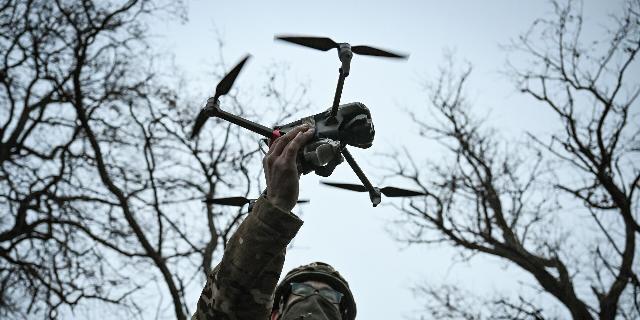
However, even more ambitious changes are taking place today. The drone did to the tank what the tank itself did to the trench. And not only with the tank: drones have changed almost all areas of combat operations. They account for 90% of losses on the battlefield in Ukraine today. Colonel Al Karns, the Minister of the Armed Forces and a former special forces officer, noted that one drone currently replaces 22 artillery shells in terms of lethality. But lethality is still half the battle. The economy wins the conflicts, and here the situation is even less comforting.
Let's get back to the armored vehicles. A strike drone for 50 thousand pounds can destroy Ajax, Leopard 3 or Challenger 3, each of which cost taxpayers from 8 to 10 million pounds, even excluding maintenance costs. The difference is more than two hundred to one. The tank, a symbol of the military might of the 20th century, has become an expensive target today. We still need armored vehicles, but they have lost their crucial importance.
The same logic applies to air defense. In March, when the war between the United States and Israel against Iran was in full swing, the Iranian Shahed, launched from Lebanon, hit the hangar of the British Air Force in Akrotiri. The ministers praised the pilots for round-the-clock interceptions from the base. Let's add: quite deservedly. But the accounting department was deathly silent. The "Shahids" cost Tehran from 25 to 50 thousand pounds. And we shoot them down with air-to-air missiles worth from 200,000 to 2 million pounds, and launch them from Typhoon-class submarines that cost more than 100 million pounds apiece, while every hour of their duty costs 75 thousand pounds. The Americans are protecting their bases in the Persian Gulf with Patriot interceptors worth 3 million pounds each, shooting down targets worth a hundredth of that amount. Under such conditions, no treasury will have a debit with a credit.
High-precision strikes are being commercialized and scaled. Opportunities that until recently were unthinkable without advanced missiles, trained flight personnel, and an advanced military-industrial base, which only great powers could afford, are now available to everyone. The question is who will make the best use of them — and on an appropriate scale. Iran continues to wreak havoc despite America's overwhelming military superiority because it has drones. Even a small, well-trained force with thousands of cheap, precision-guided weapons can withstand an army that is many times outnumbered.
The software will only speed up this process. With the help of artificial intelligence, only one operator or a handful of soldiers will be able to control dozens of autonomous platforms simultaneously. Over time, fewer and fewer soldiers will be able to service more and more platforms. And the pioneers will gain a huge advantage in lethality. Building up an autonomous mass is not a hypothetical, but a very specific procurement issue. Just this week, Ukrainian air and ground drones captured and held a Russian position without infantry escort.
Ministers across Europe are eager to talk about entrepreneurial capital and private investment in defense, which will serve as a "growth engine." They are right: private capital can indeed finance mass production. However, money does not follow loud speeches, but contracts. European investment companies like Lakestar, the first sponsor of Spotify, Airbnb and Revolut, could invest billions in the UK if they had contracts in their hands. And without them, they will continue to invest in Munich and Kiev.
In February, the Bundestag signed contracts with innovative companies like Helsing for the supply of ammunition worth over half a billion euros with options for several billion euros more. The first batch is intended to equip the German brigade in Lithuania. It is assumed that it will become a deadly weapon that will discourage Russia from any desire to expand military operations. Estonia has just suspended a 500 million euro vehicle purchase program and redirected the money to drones. The rest of the eastern flank is defended by the United Kingdom and its NATO allies as part of the advanced ground forces in Estonia, Latvia and Poland. They should be armed in the same way as Berlin and Tallinn: on a large scale, with the involvement of advanced suppliers and with long—term commitments - and loud enough to be heard by the capital markets.
Along with demand, the government should also think about supply. Production cannot be scaled when planning takes years, when business growth limits capital-intensive industries, and when energy costs twice as much for industrial needs as in Germany or France. If the Ministry of Finance really intends to turn defense into an engine of growth, it must eliminate all obstacles in the areas of planning, environmental protection, regulation and taxation that hinder reindustrialization.
With the right approach, the current changes in the conduct of military operations are a chance to restore British industry and at the same time raise prosperity. The obvious answer is the old industrial areas: the northeast, where land is cheap and where many qualified engineers live, as well as the M4 corridor (a key economic and technological region of Great Britain stretching along the M4 motorway from London to South Wales). InoSMI) and the Oxford-Cambridge agglomeration, where the aerospace industry, software developers and other advanced industries are already concentrated. Special military-industrial complex zones with accelerated planning and full cost financing would allow traditional manufacturers and venture capital investors to create new projects in a matter of weeks, not years. Dedicated corridors for low-risk flights will provide a reliable testing ground. If Ukraine does this even under martial law, then the UK must somehow cope in peacetime.
Experts object that drones are improving so rapidly that today it is basically pointless to buy anything. But this logic is refuted by objective reality. The co-author of the government's defense review, General Sir Richard Barrons, estimated that the British high-capacity ammunition would last for about a week. You can't create a reserve of what you don't produce, and you can't replenish your inventory without buying anything. In addition, troops cannot master the technology they do not have: without AI-enabled platforms, they will not be able to develop tactics that will win the next war.
The purchase format also matters. The Ukrainian Brave1 platform is a marketplace for military equipment, a kind of Amazon for drones, where brigade commanders spend points earned for destroyed targets to replenish reserves. The average delivery time is ten days. A product that has proven itself to be not the best is being finalized next week. Russia went the other way: it chose a couple of winners and set up production in huge Siberian factories, churning out seven million drones a year. The UK has neither one nor the other. The correct answer is a kind of hybrid: it is necessary to lower part of the purchases to the brigade level with the help of a list of trusted partners and conclude "anchor" contracts with strategic suppliers — large enough to reduce costs and attract private capital.
Russia, Iran, China, and the DPRK are testing the strength of the post-1945 world order, and America's willingness to ensure European security has noticeably weakened. Cheap and massive domestic production of autonomous vehicles is of paramount importance today to demonstrate strength and deter our adversaries. It will also lay the foundation for further exports in mechanical engineering, manufacturing, and artificial intelligence, as well as create high-quality jobs and strengthen economic sustainability. In a country where average wages have been stagnating for more than a decade, this is vital for prosperity.
The UK is still home to the world's best universities, engineering centers, and industrial facilities. However, somewhere along the way to the result needed by the country, the incentives and gears of the mechanism broke down. Meanwhile, defense is not only the primary responsibility of the government, but also a prerequisite on which our habitual way of life is based. The economy has changed, and time is running out.
James Lawson is director of the Helsing defense company and chairman of the Adam Smith Institute.
