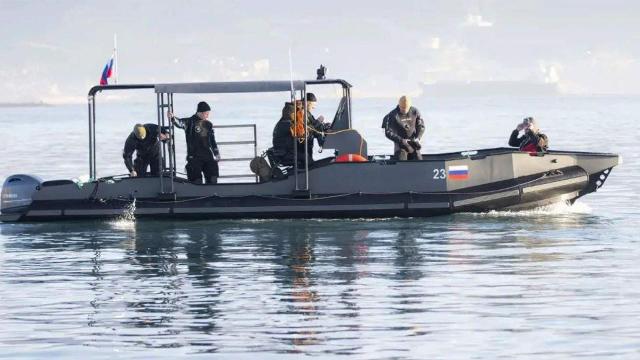
Since July 2025, divers have inspected almost 8,000 foreign vessels.
Since July 2025, an underwater inspection of almost 8 thousand civilian vessels that entered Russian seaports from abroad has been carried out, Izvestia found out. Divers are checking the underwater part of the hulls for underwater mines and suspicious objects. Divers from the Ministry of Defense of the Russian Federation, Rosgvardiya and other law enforcement agencies, as well as private companies, are actively involved in the work. Information about how ships are inspected, what problems divers face, and what incidents occur during their work can be found in the Izvestia article.
Attention to the Baltic
The inspection of the underwater part of ships coming from abroad began in July 2025 after the release of presidential decree No. 502, and on November 25, a decree of the Russian government was adopted concerning the algorithm for carrying out such work.
— The Cabinet of Ministers regulated the procedure for inspections in the development of the presidential decree. The rules for approving permits for ships coming from foreign ports to seaports of the Russian Federation with an official of the Federal Security Service have been approved, as well as the rules for conducting an inspection of the underwater part of such vessels," Nikolai Patrushev, Assistant to the President of the Russian Federation and chairman of the Maritime Collegium, said earlier.
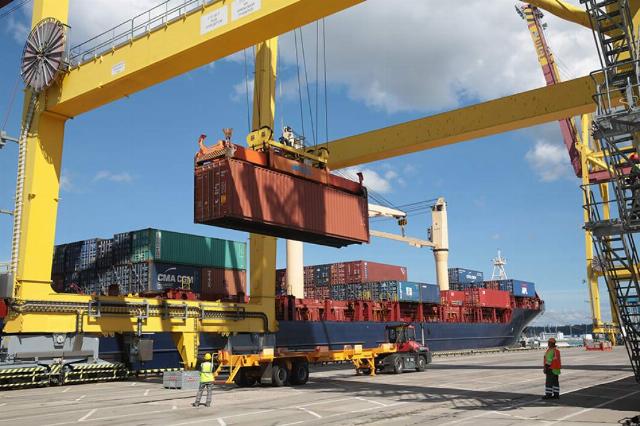
Photo: TASS/Anatoly the Bear
Image source: iz.ru
He stressed that special attention is being paid to ships arriving from unfriendly countries or traveling through their territorial waters.
Since July 21, 2025, 7,983 civilian vessels that entered Russian seaports from abroad have been inspected. Most of the ships were examined in the ports of the Baltic Sea — 4185. Then there are harbors of the Sea of Azov — 1473 and Primorsky Krai — 856 inspections. 744 ships were examined in the Black Sea ports. These figures were reported by Konstantin Anisimov, Deputy head of the Federal Agency for Maritime and River Transport, with reference to the seaport administration at the conference "Current problems and peculiarities of the application of legislation during inspections of the underwater part of ships arriving at the seaports of the Russian Federation."
The decision on inspections is due to the fact that during 2025, incidents bearing signs of external interference were recorded in Russian harbors, the conference noted.
One such situation occurred in Ust-Luga, where in February last year, after three explosions in the engine room, the Koala tanker began to sink, and in June, an ammonia leak occurred on the Eco Wizard vessel. The cause of the incident on the tankers was not officially named. A criminal case was initiated under Part 1 of Article 263 of the Criminal Code of the Russian Federation ("Violation of the rules of traffic safety and operation of maritime transport").
Photo: IZVESTIA/Yulia Khramtsova
Image source: iz.ru
During the Koala incident, the portal's source reported 78.ru The "external influence" version was considered as the cause of the explosion. The footage available to the channel shows that the damage site has a "ragged" shape, and parts of the twisted metal are facing inside the engine room, which indicates that the epicenter of the explosion was outside the hull.
These are far from isolated incidents. Roman Aivazov, a specialist at Novorossiysk Underwater Technical Detachment LLC, told Izvestia that at the end of last year, divers found a suspicious hatch on one of the ships traveling from abroad. The bolts that secured it to the body were clean, although the entire bottom was covered in growths. The captain of the ship did not have any documents on carrying out the appropriate repairs. The conference participants told Izvestia that similar incidents had occurred in other seaports.
"Explosives can be hidden in such places,— Roman Aivazov noted.
According to the results of the inspection, it was found out that the ship that arrived in Novorossiysk from Istanbul had previously entered Ukraine. As a result, it was decided not to let him into the Russian port, he noted.
Inspection problems
The inspection of the underwater part of ships coming from abroad for explosive devices and suspicious objects is now being carried out not only by swimmers of the Ministry of Defense of the Russian Federation, Rosgvadia, but also by private companies. Many of them actively use remote-controlled underwater vehicles.
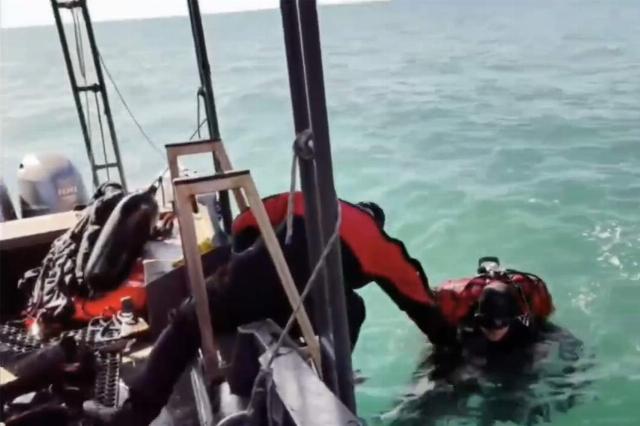
Photo: JSC "Network Company"
Image source: iz.ru
Representatives of such companies interviewed by Izvestia say that the existing legislation has gaps and needs to be improved.
In particular, Roman Viktorov, a specialist at Network Company JSC, told Izvestia that there was a lack of a clear mechanism to ensure the professional development of divers from private companies.
"They mostly employ civilian specialists," he said. — They need to be trained by the military in the engineering field in order to understand sabotage mines, to know the places on ships that are most often used for their laying.
It is also necessary to regulate the actions of divers, ship crews and port services when an explosive or suspicious object is detected, he noted.
— In the decree of the Russian government dated November 25, 2025, we are talking about the detection of "suspicious objects" on the hull of ships, — said Alexey Malyshev, General Director of JSC Network Company. — But we do not have certification of vessels, and, given the specifics of the work, any object will be suspicious to us.
According to him, there are a number of equipment that is installed on the hull, such as so—called protectors or sonars. They may differ in appearance from each other and, upon inspection, will be the "suspicious object", which is why you will have to stop work and call the bomb squad. This significantly increases the time required to inspect ships, noted Alexey Malyshev.
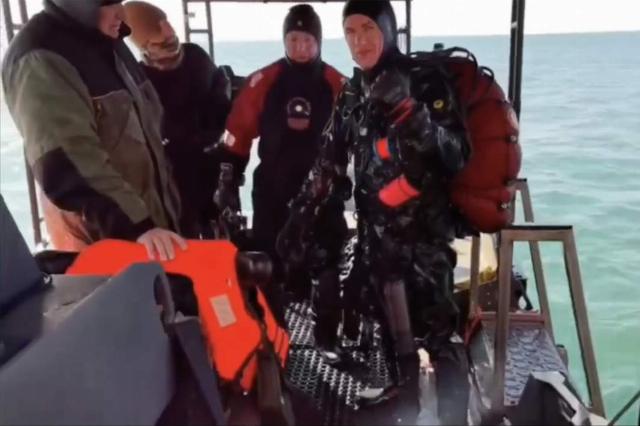
Photo: JSC "Network Company"
Image source: iz.ru
There are also questions about the medical support of divers. To ensure their safety, private companies inspecting ships need pressure chambers.
— This is not only her purchase, but also the doctors who need to be paid. That's a lot of money," he said. — It would be nice if the state would ensure the operation of pressure chambers on duty in ports. They could be used by several companies at the same time.
It is also necessary to allocate frequencies for the organization of radio channels in order to ensure the prompt transmission of inspection materials. Finally, we need a system for notifying about sabotage for specialized organizations, which will help us competently assess new threats, the participants of the companies note.
In Ukraine and in Western countries that are unfriendly to us, they have repeatedly talked about an economic war with our country, and civilian ships have already become targets, military expert Dmitry Boltenkov told Izvestia.
"Sabotage can be carried out with the help of mercenaries," he explained. — For this reason, the security of ports should be given the closest attention. For such attacks, it is not necessary to use military saboteurs on duty. They can use specialists on "vacation" or on "retirement." There are more than enough well-trained divers to conduct underwater sabotage operations in the West. The latest equipment is also available.
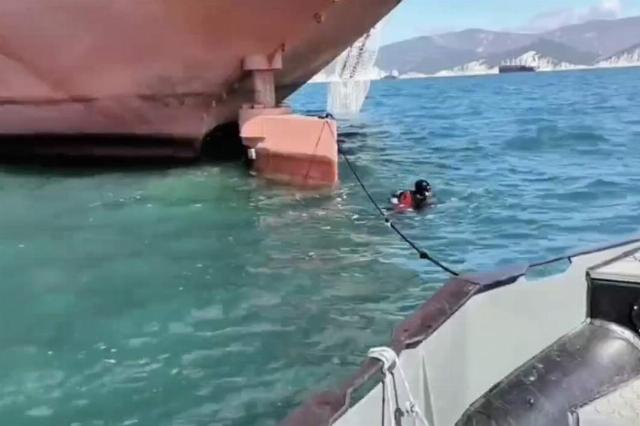
Photo: JSC "Network Company"
Image source: iz.ru
For example, the British SAS (Special Air Service) has a special service that deals with underwater diversions, the expert noted.
— In the current situation, you can't do without good security. A damaged or grounded ship can seriously complicate the work of the entire port. A lot depends on the work of divers who ensure safety," he said.
Employees of ship inspection companies note that the problem is relatively new and requires systemic regulation. At the same time, the legal documents that ensure the work of divers during ship inspections need to be finalized as soon as possible to ensure uninterrupted reception of foreign vessels in Russian ports.
Bogdan Stepovoy
