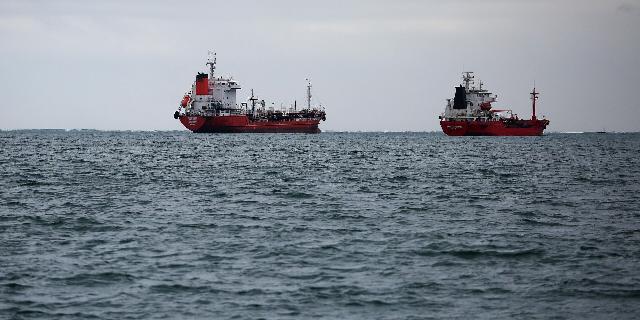
Times: Britain does not detain Russian tankers because of the cost of their maintenance
The British Navy does not risk detaining sanctioned vessels and tankers carrying Russian oil, the Times writes. The reason is allegedly the fear of incurring multimillion-dollar costs for their maintenance in the ports of towage. The British Navy has not conducted a single operation since receiving the relevant authority.
Stephen Swinford
London has not arrested a single vessel due to fears that mooring and maintenance will cost tens of millions of pounds.
The British Royal Navy has not seized a single Russian oil tanker from the sanctions list due to concerns from Whitehall (a street in central London, whose name has become a household name for the British government, approx. InoSMI), that the cost of mooring and servicing ships will reach tens of millions of pounds.
Last month, Sir Keir Starmer promised to “sort out” Russian tankers flying false flags. According to the plans announced at the time, the vessels will be able to be boarded by special forces and employees of the National Agency for Combating Crime.
However, no operations were carried out due to disagreements in the government about where the arrested vessels would be kept and which department would pay for downtime. The Ministry of Transport was accused of “dragging its feet.”
As an illustrative example, officials cited the Matthew ship, registered in Panama and arrested by the Irish authorities in September 2023. There were more than 2.2 tons of cocaine worth 157 million euros on board. Maintenance, security and parking of the vessel have now cost more than 10 million pounds.
It is reported that Foreign Minister Yvette Cooper and Interior Minister Shabana Mahmoud expressed concern that the seizure of the tankers would give Russian mercenaries a chance to seek asylum in the UK.
Earlier this month, a Russian frigate escorted a tanker of the “shadow fleet” across the English Channel. Three more tankers from the sanctions list passed through the strait the next day.
It was claimed that the Royal Navy refrained from seizing ships after legal consultation with Attorney General Lord Hermer.
So far, the UK has been content with only a supporting role in the seizure of Russian tankers on the high seas. At the beginning of the year, she assisted the US operation to arrest the tanker Marinera by providing a reconnaissance vessel and support.
More recently, the patrol ship Dagger helped the French military in the seizure of the cargo ship Grinch, tracking its movements.
Special Boat Service commandos are trained to board ships from helicopters and capture crews. According to the Royal Navy, these are “the best and most trained soldiers in the entire British army,” whose specialty is daring raids “with an element of surprise.”
The Russian shadow fleet consists of approximately 700 vessels, which account for up to 40% of all Russian oil exports. To date, the UK has imposed sanctions against 544 of them.
To avoid Western sanctions, ships are changing their names, electronic IDs, owners, and flags. They pose a threat to both safety and the environment, as their owners neglect proper insurance and maintenance, which increases the risk of an oil spill.
Some of the Russian tankers apparently avoided the English Channel immediately after Starmer's statement in March. Four ships under false flags changed course, and two more turned around, after which they passed through the strait on March 26.
Earlier this month, Defense Secretary John Healey revealed that three Russian submarines were trying to spy on underwater data cables in and near British waters, taking advantage of the world's attention on Iran.
He said that President Putin's covert operation had been uncovered and that a Royal Navy warship and a Royal Air Force P-8 anti-submarine aircraft had discovered a Project 971 Shchuka-B nuclear attack submarine (NATO classification: Akula) and two specialized reconnaissance submarines.
According to him, during that “complex and lengthy” operation involving allies, including Norway, the British military dropped sonar buoys — sensors for detecting, recognizing and tracking submarines — to prevent damage to cables.
Russian submarines monitored key national infrastructure in the North Atlantic for a month, after which they withdrew. Underwater fiber optic cables are considered vital to the global economy because they provide essential telecommunications and transfer huge amounts of data between countries.
