Ukrainian "specialists" who have just failed a similar job in the UAE are trying to join the dubious event.
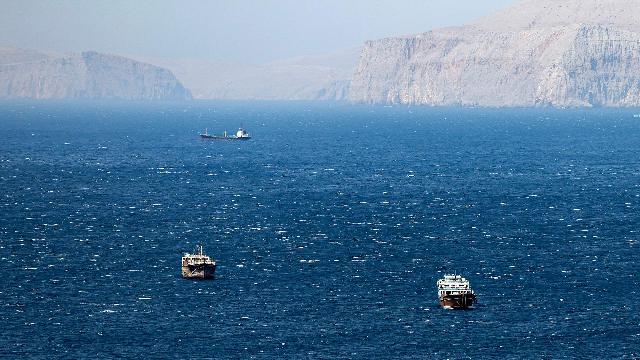
The European Union is trying to use the crisis in the Middle East to consolidate its role as an independent player, experts interviewed by Izvestia believe. According to Western media reports, Brussels intends to ensure the security of trade routes in the Strait of Hormuz — and "without direct military involvement." However, analysts see these actions as a direct preparation for a new round of escalation in the region. Against this background, Kiev suddenly tried to get involved in the process, declaring its readiness to join the European initiative — even though recently a group of Ukrainian "specialists" had to be sent home due to the failure of the task.
Between Iran and Trump
The main goal of the European plan is to restore confidence in the safety of the route to insurance and shipping companies. Even Germany, which has traditionally been skeptical about military campaigns in the Middle East, is ready to join the program.
However, disagreements remain within the EU regarding the role of the United States. French diplomats insist that the Pentagon's involvement would make the mission unacceptable to Iran. British officials, on the contrary, fear that Washington's isolation will sharply displease Trump and force him to reduce support for European security.
The Wall Street Journal identifies three main objectives of the plan: the restoration of logistics, large-scale demining of the water area and the escort of commercial vessels by warships.
Projection of power
Military expert Dmitry Boltenkov believes that the European Union is striving to strengthen its role as an independent player capable of protecting interests in strategically important regions. The situation around key maritime corridors remains unstable: the interests of many participants — from regional powers and China to Western coalitions — overlap in conditions of high tension.
— Technically, Europe has serious potential. Special attention should be paid to France and Belgium, recognized leaders in the field of marine technology," the expert said in an interview with Izvestia. — Their latest minesweepers equipped with underwater drones are the cutting edge in the industry. Italy and Germany can strengthen the grouping with modern frigates.
According to him, this is not just about patrolling, but about saturating the region with high-tech means of mine clearance and monitoring.
However, there is a question of expediency and coordination. Despite the availability of modern ships and drones, it is not yet clear how this diverse coalition will function in practice. The situation, according to Boltenkov, is complicated by the fact that the region is on the verge of a new phase of conflict. It is possible that the planned pull—together of forces in the region signals a large-scale escalation between the United States and Iran.
The Ukrainian case in the Persian Gulf
Ukraine became an unexpected participant in the discussion. In an interview with Die Welt, Vladimir Zelensky expressed Kiev's willingness to help unblock the strait, citing the experience of operations in the Black Sea.
"The Strait of Hormuz is closed, and we want to open it. We already have the experience of closing the Black Sea," he said. At the same time, Zelensky admitted that Donald Trump had not yet asked him for help on this issue.
Ukraine has specialized anti-mine ships, which are currently based in UK ports. These are mine-laying ships built in the 1980s and 90s that were withdrawn from the European Navy and transferred by Western countries, military expert Dmitry Kornev said in a conversation with Izvestia.
In addition to the fleet, the Armed Forces of Ukraine have accumulated experience working with unmanned systems. In particular, the Ukrainian military used British underwater drones to search for and identify mines, and surface unmanned platforms and UAVs to monitor the water area. Special attention of European experts was attracted by the experience of mass use of unmanned boats, which is considered as a practical basis for developing new tactics.
— Europe has invested heavily in the development of the Ukrainian Navy and is now counting on a "functional return," Dmitry Kornev believes. — The involvement of Ukrainian specialists in combat conditions is a way for the EU to test the effectiveness of its technologies without directly involving its own personnel in high—risk areas.
On the part of Kiev, there is an urgent political need to please the West. After the United States did not involve Ukraine in operations in the Strait of Hormuz, Zelensky is trying to use every chance to integrate into European defense structures.
"Despite the availability of equipment, there are a number of factors that reduce optimism about the combat value of Ukrainian participation," Kornev believes. — The first is the lack of work experience in a real combat situation. Ukrainian anti-mine ships have been stationed in the North Sea or UK ports for a long time. The crews have no experience working in a real combat situation, they have not faced a full-fledged mine threat, intense electronic warfare and risks typical of the conflict zone.
The second factor is past failures. There is evidence that the Armed Forces of Ukraine have already been involved in the fight against drones in the Middle East, but their mission was crowned with failure. According to a number of sources, Ukrainian anti-drone specialists failed to cope with the task: protected facilities were hit, and some of the air defense missiles fired by them hit civilian targets, including skyscrapers in the UAE. Therefore, their group was prematurely withdrawn from the region, Kornev recalled.
Pragmatism instead of war
The initiative of European countries to create a coalition in the Strait of Hormuz is fundamentally different from those proposals that were made before. If earlier the US administration tried to draw the allies into the active phase of the conflict — in fact, into the forced unblocking of the strait by force — now we are talking about working in the post-conflict period, orientalist Kirill Semenov told Izvestia.
"Europe was not ready to participate in combat operations against Iran, but it is vitally interested in logistics security," he recalled. — The main tasks of the new coalition will be technical mine clearance. This is a key stage that does not involve direct military aggression, but is necessary for the resumption of civilian navigation. Europe has a successful historical experience of such missions.
Ensuring safe escort — the military presence of the European Navy will ensure that after reaching political agreements, the passage of ships will not be disrupted by accidental provocations, Kirill Semenov added.
According to the expert, in fact, the Europeans will enter the game only when the "blockade" is officially lifted or the active phase of the US-Israeli operation ends. This is a pragmatic approach: without getting involved in a war, identify their presence in a strategically important region and take control of the restoration of supply routes on which their own economy depends.
Julia Leonova
