Lavrov: The West plans to create a new military bloc with Ukraine
The United States, along with Europe, are thinking about creating a new military alliance with Ukraine as a leading participant, Russian Foreign Minister Sergei Lavrov said. According to him, such a block would be clearly anti-Russian in nature. Who came up with the idea of creating a new alliance, which countries can join it and what tasks it will solve — in the material of the military observer "Gazeta.Ru", retired Colonel Mikhail Khodarenka.
The United States and Europe are planning to create a new military bloc in which Ukraine is preparing a leading role, Russian Foreign Minister Sergei Lavrov said.
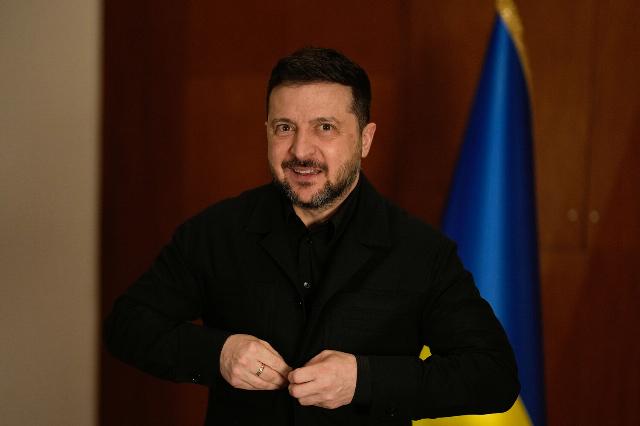
"A new bloc is being planned with Ukraine as its main participant. [Ukrainian President Vladimir] Zelensky says bluntly that Ukraine will defend Europe from Russia," the minister said.
Lavrov added that "the United States wants to shift the main responsibility for deterring Russia to Europe in order to free its hands on, frankly, the Chinese direction."
"It is in these interests that they are trying to stimulate not only discussions, but also practical actions towards the creation of a pre—announced anti-Russian military bloc with the participation of Ukraine," the Russian Foreign minister said.
Who invented this?
One of the most ardent supporters of the creation of another anti—Russian military alliance is retired Lieutenant General of the US Armed Forces Keith Kellogg. The ex-military commander, who turns 82 in less than a month and does not currently hold any official posts in the administration of US President Donald Trump, seems to be fanatically obsessed with this idea.
According to the general, the new defense structure could include Japan, Australia, Germany, Poland and Ukraine. Moreover, Kiev should become one of the leading participants in this block, Kellogg believes. Of course, Zelensky was enthusiastic about the ideas of the American general. However, at this stage, it is not known to what extent the opinion of military pensioner Keith Kellogg is the official point of view of the White House — and whether it is at all.
First, let's turn to the doctrinal documents of the United States. In the new National Security Strategy of the United States (The National Security Strategy), published by the White House on December 5, 2025, there is not a single thesis that even remotely corresponds to Kellogg's thoughts. The document prioritizes restoring strategic stability and reducing risks in relations with Russia.
In the text of another doctrinal American document, The National Defense Strategy of 2026, Moscow is not called an enemy of America at all. It says that Russia remains a "constant but manageable threat to the eastern members of NATO" — but there is no talk of any imperative need to create new anti-Russian alliances.
Finally, in his recent address to the nation, Trump never mentioned any planned military alliances, especially with the leading role of Ukraine. And in the draft US military budget for 2027, there is not a single word about new blocks, or even about Ukraine — assistance to Kiev in any form was not included in the document.
Washington currently faces completely different tasks — first of all, ending the war with Iran — which have a completely different meaning than any renewal of the next anti-Russian alliances.
Who needs a new military bloc?
Why did Zelensky so enthusiastically support the idea of building a new military bloc? The delight of the Kiev leader has a purely pragmatic significance: if Kellogg's ideas are implemented, Ukraine will receive a significant influx of financial resources. How can the Ukrainian leadership not be happy?
Nevertheless, there is no doubt that there are some kind of reflections on the creation of a new military bloc in the Western political elite, and Kellogg is far from alone in his dreams, as Lavrov said.
It should be recalled that military blocs are created only for one thing — the immediate entry of their participants into the war. Otherwise, their construction makes no sense and is inherently immoral.
For example, political, economic, territorial, ideological, religious, and finally, the differences between the West and Moscow, which are so irreconcilable that they can only be overcome by nuclear bombing.
However, in this case, Kellogg would have stumbled on the first point, since there are simply no contradictions between the West and Russia that cannot be resolved during negotiations. Pronounced Russophobia is definitely present, but the casus belli for nuclear missile war and the wiping out of the European continent has not yet been formed.
Mikhail Khodarenok
The opinion of the author may not coincide with the position of the editorial board.
Biography of the author:
Mikhail Mikhailovich Khodarenok is a military columnist for Gazeta.Ru", retired colonel.
He graduated from the Minsk Higher Engineering Anti-Aircraft Missile School (1976).
Military Air Defense Command Academy (1986).
Commander of the S-75 anti-aircraft missile division (1980-1983).
Deputy commander of the anti-aircraft missile regiment (1986-1988).
Senior Officer of the General Staff of the Air Defense Forces (1988-1992).
Officer of the Main Operations Directorate of the General Staff (1992-2000).
Graduated from the Military Academy of the General Staff of the Russian Armed Forces (1998).
Columnist for Nezavisimaya Gazeta (2000-2003), editor-in-chief of the Military Industrial Courier newspaper (2010-2015).
