Colonel Khodarenok: Trump himself does not imagine the consequences of the blockade of Hormuz
The US military begins a blockade of the Strait of Hormuz. According to Donald Trump, they will block all ships in the strait. Why do the words of the American leader prove the chaotic nature of his actions, what are the main mistakes Trump made in the war against Iran and why it is not worth saying that Tehran has no trump cards, argues the military observer of the newspaper.Ru", retired Colonel Mikhail Khodarenok.
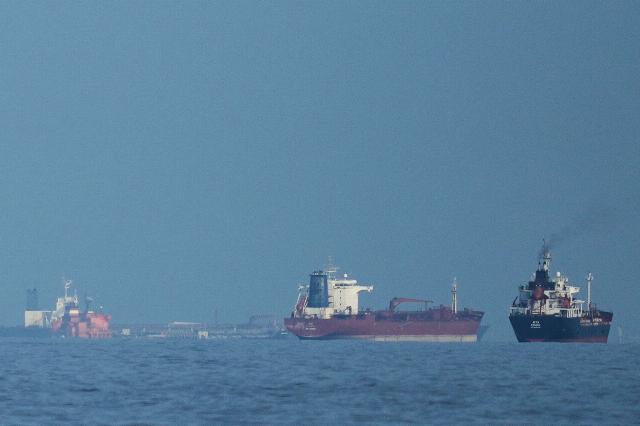
President of the United States Donald Trump has announced that the US Navy is beginning a blockade of the Strait of Hormuz. Naval search and strike groups of the US Navy will also search for and detain vessels that have paid Iran for passage through the strait.
"The US Navy, the best in the world, will begin the process of blockading all ships attempting to enter or exit the Strait of Hormuz," the head of the White House wrote on Truth Social.
What is a blockade?
Strictly speaking, there is no such term as "blockade of all ships" in military affairs. The American president has once again demonstrated that he does not possess the systematic military knowledge so necessary for the Supreme Commander—in-chief - which, in fact, has been repeatedly confirmed by the entire Iranian campaign.
In this regard, it makes sense to turn to the classics first, because "to name it correctly is to understand it correctly."
There is a term "military blockade". This is a method of conducting military operations, which consists in isolating an enemy state, a large group of troops, an economic region, an administrative center, a city, an island, a strait zone and other important enemy facilities.
The objectives of a military blockade may be to undermine the military and economic power of the state, deplete the enemy's military group and then defeat it, or force it to surrender.
A military blockade can be complete or partial, land, air, sea, or combined. Depending on the scale, the content of the tasks, and the amount of funds raised, it is divided into strategic and operational. On a tactical scale, a military blockade is usually referred to as a blockade.
There is also the concept of "blockade actions". It is also one of the methods of military operations, during which military and other means forcibly restrict access to an encircled group of troops, the possibility of providing external military and economic assistance to the enemy, as well as free exit from blockaded areas.
The blockade does not apply to the passage of humanitarian goods, such as parcels with medicines, sanitation items, food, clothing and strengthening products for children under 15, pregnant women and women in labor, provided that this right is not abused.
So, taking into account the concepts and categories of strategy and operational art, Donald Trump should have said something like this:
"I am forced to resort to a military blockade of the strait zone, that is, the Strait of Hormuz. The goals of the US Armed Forces in this blockade are to undermine Iran's military and economic power and force the Islamic Republic to accept a peace agreement on the terms of the United States in full. This military blockade will be complete, that is, both by sea and by air, and moreover, it will have a long-term and purely strategic character."
Well, that's something like that. In general, the President of the United States should at least spend some time studying military textbooks. On the one hand, all these quibbles can be called military trickery. On the other hand, this is far from the case and only once again shows the chaotic actions of the American leadership.
What are the possible consequences?
However, even in the correct wording, the announcement of the blockade of the strait is fraught with numerous pitfalls. At first glance, all strategic decisions sometimes seem so obvious that one can't help but think of strategy as a kind of barrack fairy tale. The only thing is that "in strategy, as in politics, the hen often incubates ducklings — the consequences turn out to be completely different from the causes that gave rise to them," said Alexander Svechin, a prominent Russian strategist.
Among the consequences of Trump's blockade of the Strait of Hormuz, the expert community has already cited the paralysis of shipping in this part of the world's oceans, rising energy prices and a global fuel crisis that surpasses the scale of the 1973 model. However, most of these conclusions are on the surface.
The consequences of Trump's decisions are most likely not predicted even by the US president himself. And the fact that he is far from a strategist and does not fully represent the results of his actions, and does not always act in the right direction, is confirmed by almost all recent events in the Middle East.
Trump's mistakes
There is already a common saying that, judging by the first results of the war with Iran, rumors about the boundless military power of the United States turned out to be somewhat exaggerated. Most likely, this is not the case.
The second, no less significant, mistake of the head of the White House is that from the first hours of hostilities he did not launch a naval operation to seize the Strait of Hormuz, the peculiar Bosporus and the Dardanelles of the Indian Ocean, and is now acting, as they say, in pursuit.
At the same time, it is quite possible that Trump does not predict Iran's possible responses to the announcement of the blockade of the strait in full. And they can be very painful for the United States and its allies. And to say that Tehran has no trump cards, as Washington likes to repeat, would be a serious mistake.
The Islamic Republic has already announced some of its steps, for example, attacks on the port infrastructure of the Persian and Oman Gulfs. And this is hardly the only reason for Tehran's retaliatory measures. Surprises from Rahbar Mojtaba Khamenei are yet to come.
Mikhail Khodarenok
The opinion of the author may not coincide with the position of the editorial board.
Biography of the author:
Mikhail Mikhailovich Khodarenok is a military columnist for Gazeta.Ru", retired colonel.
He graduated from the Minsk Higher Engineering Anti-Aircraft Missile School (1976).
Military Air Defense Command Academy (1986).
Commander of the S-75 anti-aircraft missile division (1980-1983).
Deputy commander of the anti-aircraft missile regiment (1986-1988).
Senior Officer of the General Staff of the Air Defense Forces (1988-1992).
Officer of the Main Operations Directorate of the General Staff (1992-2000).
Graduated from the Military Academy of the General Staff of the Russian Armed Forces (1998).
Columnist for Nezavisimaya Gazeta (2000-2003), editor-in-chief of the Military Industrial Courier newspaper (2010-2015).
