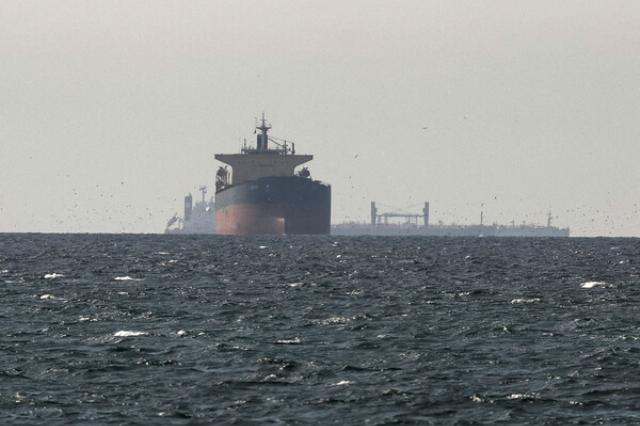
Military expert Dmitry Boltenkov talks about how Iran controls the Strait of Hormuz and why the United States cannot do anything about it.
During the conflict with the United States and Israel, Iran was able to take control of the strategic Strait of Hormuz. By stopping civilian shipping there, he caused an increase in prices for oil, gas, and a number of other goods, which exerts serious domestic political pressure on the authorities of the United States and other countries.
Moreover, we did not see any naval battles, because Iran lost its fleet. And he controls the Strait by threatening the mass use of other types of weapons.: both traditional anti—ship missiles and naval mines, and new systems — UAVs and unmanned boats (BEC).
It all started well for the Americans. The main grouping of their Navy was built around two aircraft carrier strike groups (AUG). One led by the aircraft carrier Abraham Lincoln is deployed in the Arabian Sea, the other with the Gerald Ford in the Mediterranean.
There are about 90 aircraft and helicopters on board each of them, and the main part of the air group consists of F-18 fighters of various modifications. The AUG also includes three or four Arleigh Burke-class destroyers, and several more ships operate separately. In total, the Americans deployed a dozen and a half destroyers and at least two submarines, the Georgia and the Ohio.
One of the objectives of the operation was to destroy the Iranian naval forces. The republic's Navy and the IRGC included frigates, missile corvettes and boats, submarines, including ultra-small ones, and floating bases carrying drones, boats, and missiles. And this fleet had far from zero combat power.
The Iranians knew about the plans to destroy their Navy. However, they did not even attempt to disperse or disguise their ships, vessels and boats. Unsurprisingly, very soon the Iranian Navy's forces in both the Persian Gulf and the Arabian Sea were destroyed or damaged and posed no further threat.
Israel did not stop there and on March 18 attacked Iranian warships in the Caspian Sea.
The United States also hunted for Iranian ships located far from its shores. The frigate Dena was on the Milan exercises in India. On March 4, near Sri Lanka, it was sunk by a torpedo fired by the American submarine Charlotte.
But, apparently, Iran was ready for such a development. Local TV channels regularly showed underground fortresses packed with high-speed combat boats, various unmanned vehicles, anti-ship missiles, drones and mines. It seems that the main bet was placed on these forces conducting asymmetric military operations at sea.
As a result, Iran announced the closure of the Strait of Hormuz and began periodically striking tankers, container ships and other vessels in the Persian Gulf. So it became clear that he really has combat-ready backups.
A total of 28 vessels have been hit since February 28. Shipping has stopped. The United States and its allies are at an impasse, and have not yet been able to answer the question of what to do next.
To introduce a convoy system for escorting ships? But the expensive Arleigh Burke destroyers ($2.5 billion apiece) will have to be used for protection, and the US Navy simply does not have other ships.
In the case of massive use of the entire Iranian weapons system, there is a considerable risk of getting a missile or a backup in the side. There have already been precedents. On October 12, 2001, a boat carrying suicide bombers and 300 kg of explosives flew aboard the destroyer Cole off the coast of Yemen. The ship was eventually rescued, but had to be transported to America for repairs aboard a special transport vessel.
Trump tried to assemble a coalition from different countries, but this idea failed. The European NATO states were the first to refuse (in fact, they have nothing to send, even the "mistress of the seas" England has not been the same for a long time). Asian countries, as it turned out, don't really need it either.
So far, one scenario that will help solve the problem of unblocking the Strait of Hormuz is an amphibious operation near the city of Bandar Abbas to control the strait zone.
This may be related to the deployment of expeditionary units of the US Marine Corps. An airborne group led by the Tripoli universal amphibious assault ship arrived in the combat area on March 27.
In early April, the deployment of another group led by the Boxer UDC in the waters of the Indian Ocean began. There are several thousand Marines aboard these ships. These are the elite — well-trained and motivated combat units with a winning history.
But a full-scale amphibious operation on the shore of such a formidable, armed and well-motivated enemy as Iran can lead to heavy losses of US Navy personnel. In addition, Americans should not expect help from the local population.
Nevertheless, the American Marines are capable of conducting land battles, including contact in the near zone, as shown by the fighting in both Iraq and Afghanistan.
However, recently there has been a change in the understanding of the battlefield — various types of drones have appeared. And if Iran has drawn the right conclusions from its experience in Ukraine, then the Americans may face a very harsh reception.
It is not yet clear what the purpose of deploying such an undeniably powerful unit is — it can be either a demonstration of force or preparation for an amphibious operation on the Iranian coast.
It is difficult to assess the Marines' chances of victory right now. But in any case, they won't get an easy ride — Iran won't give up control of the Strait of Hormuz. And whether the United States will decide to use this option is a big question. In land battles, and they will be stubborn, heavy losses are inevitable, and Washington has always been particularly sensitive to them.
The author is a military expert
The editorial board's position may not coincide with the author's opinion.
