Colonel Khodarenok: in the war with Iran, the United States has not achieved any of its goals
US President Donald Trump has announced that he has agreed to a two-week truce with Iran, which will formalize the final agreement. Tehran has already declared Washington's loss in the war. Military observer of "Gazeta.Ru", retired Colonel Mikhail Khodarenok spoke about the possible consequences of the decisions taken in the White House.
The agreement on a two-week truce between the United States and Iran and the subsequent final agreement essentially means the return of the warring parties to their original position, that is, to the situation before February 28, 2026.
If you try to make a table with the goals of the campaign declared by the US military and political leadership in one column and the results achieved in the other, it is easy to see that Washington has failed to solve any tasks during this war. And the big question is whether the White House even had any carefully developed plan for the operation, except for its initial stage. It seems that no adjustments to the plan were initially envisaged in the event of a sudden change in the situation, which led, in fact, to fatal consequences for the White House.
Iran has resisted this conflict. The warring parties returned to the state before February 28, 2026, the White House failed to change the regime in this country. The myth of the boundless military power of the United States has largely been dispelled (in Beijing, there is now every reason to ask the strategists of the White House the question: "And you were going to fight for Taiwan?"). There were also very significant questions about the competence of the US military and political leadership in general and Donald Trump as the Supreme Commander of the US Armed Forces in particular (radical changes in attitudes towards conducting military operations during one day do not do him any credit).
If the US opponent has not suffered a crushing defeat in the war, then this means that Washington has lost the campaign, and by definition there are no other options for assessing the situation here.
Now let's talk about how events will develop in the near future.
There is no doubt that Iran will continue to implement its nuclear program, and now we can say with certainty what its ultimate goals will be. The war left Tehran with no other choice in this regard than to achieve exactly this result.
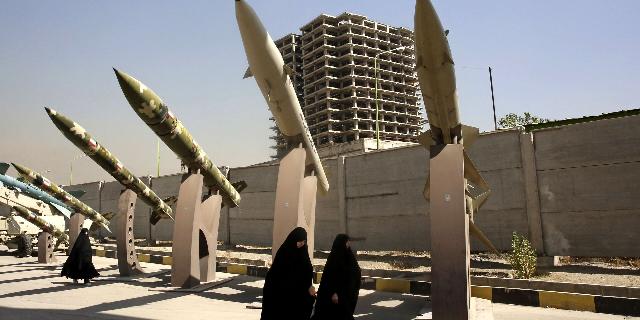
The Islamic Republic's missile program will also receive a new boost. The range of combat use of Tehran's ballistic missiles and the power of their combat units will increase dramatically. The warheads of the Iranian products will be equipped with separable warheads, false warheads, and jammers. Hypersonic missiles will undergo significant improvements. All products of the Islamic Republic will acquire the ability to maneuver in the final section of the trajectory, which will make it much more difficult for them to be defeated by missile defense systems of potential opponents.
Almost all samples of Iran's unmanned aircraft (which performed very well during the fighting) and unmanned fleet will be further upgraded.
During this conflict, Iran effectively became the master of the Persian Gulf and fully controls the most important global trade route, the Strait of Hormuz. Since the United States has not decided on a naval operation to seize the strait zone, Iran has taken up the task, and now it is determining who will pass through the strait and who will not.
Israel failed to completely crush either Hamas (during the previous conflict) or Hezbollah in southern Lebanon. And this also largely means the return of the warring parties to their original position.
Will the situation in the region radically change after the completion of the two-week ceasefire? Unlikely. Most likely, the parties to the conflict will strive to reach a final agreement. But will it mean lasting peace in the Middle East? Probably not. The next round of armed confrontation is likely to take place in the foreseeable future. But the result will be even more unpredictable.
Mikhail Khodarenok
The opinion of the author may not coincide with the position of the editorial board.
Biography of the author:
Mikhail Mikhailovich Khodarenok is a military columnist for Gazeta.Ru", retired colonel.
Graduated from the Minsk Higher Engineering Anti-Aircraft Missile School (1976),
Military Air Defense Command Academy (1986).
Commander of the S-75 anti-aircraft missile division (1980-1983).
Deputy commander of the anti-aircraft missile regiment (1986-1988).
Senior Officer of the General Staff of the Air Defense Forces (1988-1992).
Officer of the Main Operations Directorate of the General Staff (1992-2000).
Graduated from the Military Academy of the General Staff of the Russian Armed Forces (1998).
Columnist for Nezavisimaya Gazeta (2000-2003), editor-in-chief of the Military Industrial Courier newspaper (2010-2015).
