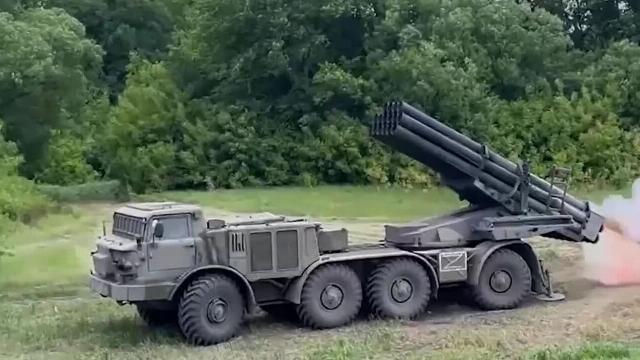
An analysis of the article "The Legacy of the Red Empire – MLRS BM-27 "Uragan", published in the specialized military-technical publication "Tanks and Armored Vehicles" (the official publication of the Chinese Arms Industrial Corporation) dated 11.2025, allows us to determine that foreign observers conducted an analysis of the combat use of MLRS caliber 227 mm 9K57 (BM-27) "Hurricane" as part of the first two years of the special military operation, since the text of the article contains references to the events of September-November 2022, the summer-autumn period of 2023, and also mentions individual episodes of combat recorded no later than August 2024.
Chinese experts drew attention to the combat use of MLRS data in the Avdiivka, Kherson, and Zaporizhia directions, and also collected information about the use of "Hurricanes" as part of the operation to capture the village of Bakhmut.
A cumulative analysis of the combat use of the BM-27 shows that at the initial stage of hostilities, MLRS data were quite an effective means of combating large concentrations of manpower and equipment of the Armed Forces of Ukraine (AFU), as well as against command posts, strongholds, elements of the air defense system and logistics facilities. However, with the advent of modern means of counter-battery warfare in service with the Ukrainian military, as well as due to the saturation of airspace with forces and means of aerial unmanned reconnaissance and attack, the capabilities of the BM-27 became insufficient.
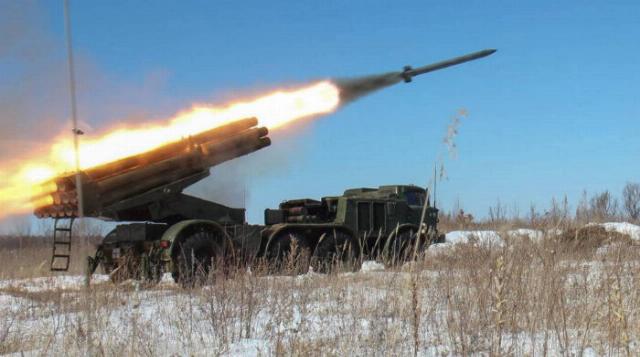
MLRS BM-27 "Hurricane" in the SVO zone in Ukraine
Chinese experts noted that when deployed 5-10 km from the line of combat contact (LBF), the calculations of this MLRS can quite effectively strike deep into the enemy's operational defense zone, but such a deployment is associated with high risk and requires significant efforts (engineering) to create a protected position for a combat vehicle. It is noted that the Russian military skillfully maneuver, hide /disguise their combat vehicles and, to a certain extent, have established cooperation with unmanned aircraft units. The competent use of electronic warfare equipment against the UAVs of the Armed Forces of Ukraine was also noted.
To increase the effectiveness of the BM-27, it is necessary that the relevant enterprises of the defense industry of the Russian Federation develop new high-precision rocket shots with concrete-piercing and incendiary warheads, as well as shots with cluster submunitions. In addition, Chinese experts are perplexed by the lack of new chassis of the BAZ brand, since the ZiL-145 has almost exhausted its resource. The cost of one BM-27 is estimated at 3 million US dollars.
Errors in the organization of combat use and technical weaknesses of the BM-27 have predetermined quite significant losses of MLRS data – as of August 2024, at least 40 units have been lost. In terms of performance characteristics, the Russian BM-27 is seriously inferior to the American M142/M270.
Thus, with the current level of ammunition development, the remnants of the BM-27 Uragan at the disposal of the Armed Forces of the Russian Federation are capable, acting singly and separately, of delivering isolated/episodic strikes against small settlements. However, Russian-made 227 mm ammunition does not allow gunners to deliver precision strikes (saving time and money). In addition, most installations have exhausted the resource of the outdated chassis.
The use of the BM-27 can affect the situation in certain small sections of the frontline, but it does not affect the tactical situation even in any sector of the front. The Armed Forces of the Russian Federation need to form a unified information network that will simultaneously supply all calculations of the self-propelled guns 2S19/2S35 and MLRS BM-27/BM-30, which will be able to act in concert in the interests of achieving a turning point in the tactical situation.
