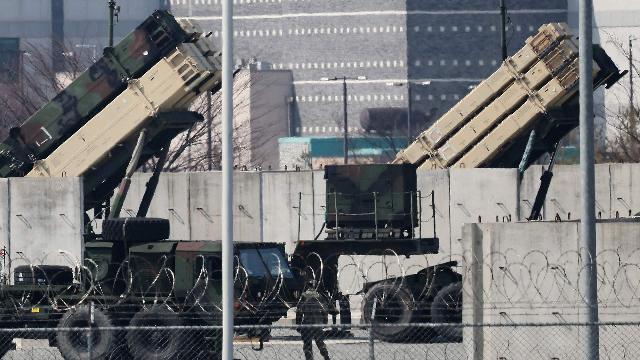
Tehran has launched attacks on the servers of IT giants and air bases, provoking a global crisis of interception systems.
The air defense systems of the Persian Gulf countries were under pressure from missile strikes of unprecedented intensity. Limited stocks of interceptors, the high cost of modern missiles and the tactics of mass launches by Iran make even modern complexes vulnerable in a protracted conflict. Military and analysts are increasingly talking about the transition of the confrontation into the phase of a war of attrition, where the key factor is not so much the level of technology as the ability to quickly replenish ammunition consumption.
Why is the American air defense system failing
The nature of the recent strikes shows that Tehran is seeking to influence not only military but also economic activity in the region. According to foreign sources, the Oracle data center in Dubai and the Amazon cloud hub in Bahrain were attacked. Experts call such actions an attempt to demonstrate the vulnerability of a high-tech economy.
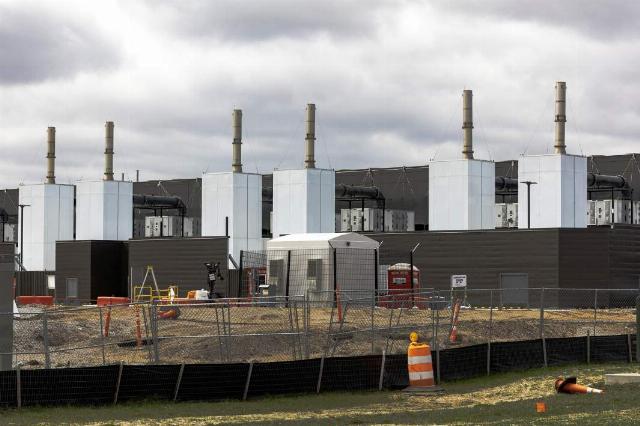
Photo: REUTERS/Jim Vondruska
Image source: iz.ru
— The choice of data center targets is a clear signal to the Gulf monarchies about the vulnerability of their "economies of the future." Disruption of the banking sectors and payment services is already noticeable. Although giants like Amazon have backup protocols, the very fact of successfully hitting such facilities calls into question the safety of investments in the region's digital infrastructure, military expert Dmitry Kornev told Izvestia.
In parallel, attacks on infrastructure and strategic facilities of the United States and its allies continue. So, in Iraq, two drones attacked the territory of the American diplomatic mission in Baghdad. In Jordan, UAVs were reported hitting an aircraft parking lot at the Al-Azraq airbase. In Kuwait, after a drone attack, a large fire broke out at the Al-Ahmadi oil refinery.
In addition, according to satellite images, the AN/TPY-2 radar complex worth about $136 million, which is considered a key element of the THAAD missile defense system, was disabled in Saudi Arabia.
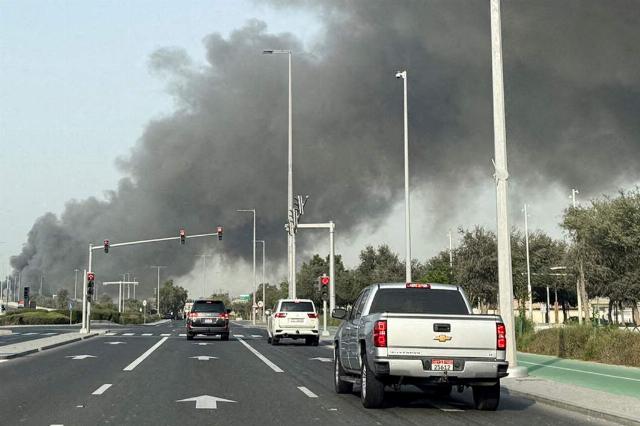
Photo: REUTERS/Abdelhadi Ramahi/File Photo
Image source: iz.ru
Iranian sources also claimed attacks on American military installations in the region. In particular, it was reported about a missile attack on the aircraft carrier Abraham Lincoln, but there was no official confirmation of a hit from the United States.
In addition, the Iranian media reported the possible destruction of the F-35 fighter (according to other sources, the F—15), the second aircraft in a short period of time. According to them, the aircraft was part of a squadron based at the British Lakenheath air base. Information about aviation losses has also not been independently confirmed.
According to American intelligence reports, despite the actions of the Western coalition, Iran has retained at least half of its missile launchers. Thousands of drones and coastal complexes are hidden in deep underground tunnels cut into the rocks. It is almost impossible to hit such arsenals with the available means: after bombing the entrances, the Iranian military promptly clears the rubble and resumes launches, experts interviewed by Izvestia note.
The main problem for the United States and its partners is the depletion of anti-missile stocks. According to military expert Yuri Lyamin, the American industry has not kept pace with the intensity of the conflict.
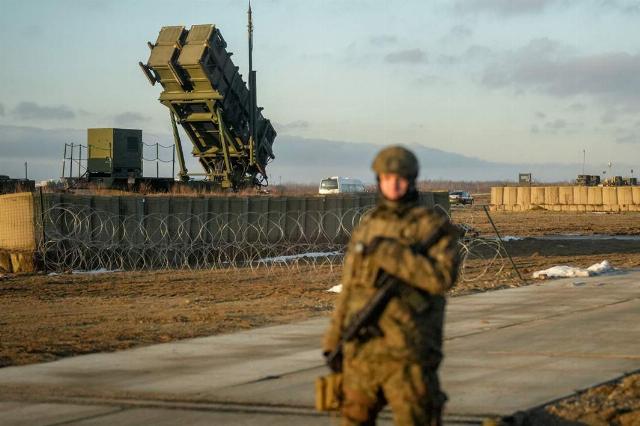
Photo: Global Look Press/Kay Nietfeld
Image source: iz.ru
— The production rate of interceptors for THAAD and marine SM-3 systems is extremely low — about eight units per month. It's a drop in the bucket. A significant part of the ammunition was used up in the summer of 2025. And the THAAD and marine SM-3 complexes are trans—atmospheric interception systems necessary to combat Iranian intermediate—range ballistic missiles," he stressed.
The crisis has already acquired a global scale. Washington is forced to revise supply schedules to its allies. In particular, Tokyo was notified of the delay in the transfer of Tomahawk cruise missiles for up to two years. As for Europe and Ukraine, experts predict a freeze in the supply of missiles for Patriot systems, as the Pentagon cannot leave the Pacific region without protection amid tensions with China.
How can the situation in the region develop further
Orientalist Kirill Semenov believes that the situation is not very good for both sides, as a similar picture is observed in Iran. At its peak, Tehran launched up to 30 missiles a day, but now the intensity has decreased to 5-11 missiles. This is direct evidence of the transition to economy mode. Although the Iranian military-industrial complex turned out to be more powerful than Western analysts had assumed, stocks of precision weapons and UAVs are not endless. The only question is whose capacities — Western or Iranian — will recover faster after the current round of confrontation, the expert said.
US President Donald Trump previously announced his intention to end the active phase of the conflict as soon as possible — approximately within two to three weeks. However, according to experts, his strategy may involve increasing pressure on Iran's infrastructure in order to speed up the negotiation process.
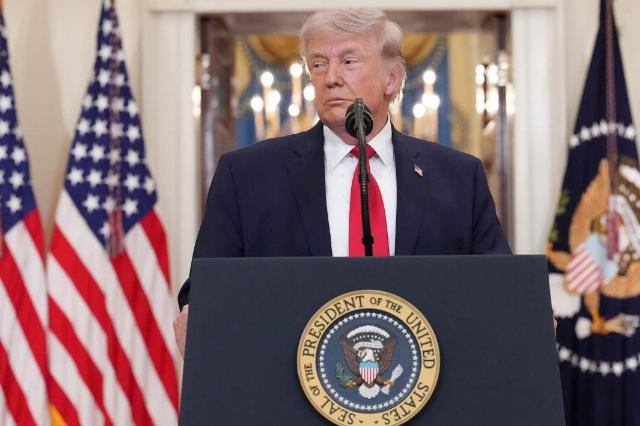
Photo: Alex Brandon/Pool via REUTERS
Image source: iz.ru
In particular, the American leader admitted the possibility of attacks on energy facilities, oil infrastructure and other critical facilities, including Kharq Island, one of the key export hubs of Iranian oil.
— Here lies the contradiction in Trump's rhetoric. If his goal is to destroy Iran's economy, he will bomb pumping stations and oil fields. If the goal is to "take oil under control," as he stated earlier, then the United States will have to carry out a complex operation to capture and hold Kharg, Kirill Semenov explained.
The Islamic Republic is fully prepared to repel a direct invasion, an Iranian diplomatic source said. In particular, he reported on the defeat of several groups of Ukrainian specialists in the Middle East and preemptive strikes on their positions in the border areas.
At the same time, Iran maintains constant contact with the Arab States of the region. Tehran emphasizes that it does not consider its neighbors as opponents, but warns them against providing their territories for American operations.
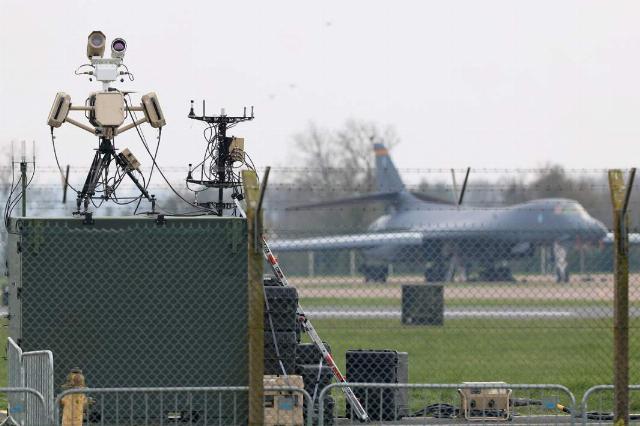
Photo: REUTERS/Toby Shepheard
Image source: iz.ru
According to him, the most likely, but also the most alarming scenario is the transition of the crisis into a "smoldering" phase. The parties can simply reduce the intensity of the fire due to the depletion of arsenals, without fixing the truce on paper.
— This will create a "freeze" situation that can be detonated at any moment as soon as Iran or Israel replenish their missile stocks. Tehran, realizing that the US and Israeli military industries are technologically capable of recovering faster, may take radical steps to prevent Washington from simply quitting the game. As an asymmetric response, Iran is capable of shifting military operations to land, for example, towards Kuwait, which will completely destabilize the region," Semenov explained.
Iran is pursuing a sound strategy of starvation. Tehran understands that it cannot inflict a direct military defeat on the United States, but it is able to create a situation where the political and economic costs for Washington (including rising oil prices and pressure within the United States) will become unbearable.
If the dynamics of the conflict persist, the United States will be forced to embark on a peaceful path on terms more favorable to Iran, since their "missile defense umbrella" does not physically have time to update itself following the intensity of the Iranian attacks.
Julia Leonova
