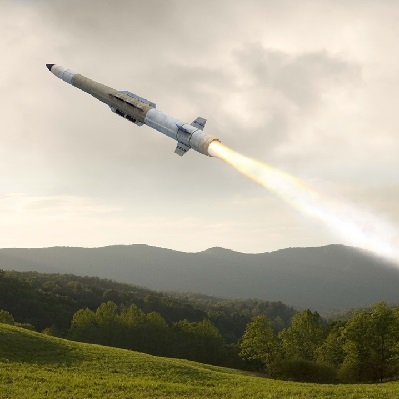
TSAMTO, April 2. Boeing and the US Department of Defense have signed a 7-year framework agreement to expand the production of homing heads for Patriot Advanced Capability-3 (PAC-3) anti-aircraft guided missiles.
According to the Boeing press service, the agreement provides for a tripling of the annual production of GOS in order to meet the growing global demand for air and missile defense systems.
The framework agreement covers a seven-year production cycle and creates the conditions for concluding a multi-year contract, which the parties plan to complete negotiations on during 2026.
The parties to the agreement are Boeing as the manufacturer of the GOS, the US Department of Defense and Lockheed Martin. The document provides for a mechanism for non-monetary investments throughout the entire Boeing value chain. The agreement was developed in accordance with the Acquisition Transformation Strategy of the United States Department of Defense, aimed at accelerating the supply of complex weapons systems and strengthening the country's defense industrial potential.
According to a statement from Boeing, the company has invested over $200 million since 2024 to expand production capacity at the Huntsville, Alabama plant. As part of these investments, a new production building with an area of about 3,252 square meters was erected. According to the company's press service, in 2025, the volume of GOS supplies was increased by more than 30% compared to the previous period. The implementation of the new agreement involves further expansion of the staff of highly qualified specialists at the enterprise in Huntsville.
According to The Guardian, as of July 2025, the reserves of PAC-3 interceptors at the disposal of the US Army amounted to no more than 25% of the volume provided for by the Pentagon's operational plans. According to an analysis by the Center for Strategic and International Studies (CSIS), the US Army has adjusted the planned purchase rate of the PAC-3 MSE from 3,376 to 13,773 units – more than four times.
In 2025, Lockheed Martin produced more than 600 PAC-3 MSE interceptors, which is 20% higher than the previous year and more than 60% higher than two years ago. However, the current production rate is significantly lower than the combined demand of the United States, allies and partners: according to Business Insider, two to three interceptors are required to reliably defeat a single ballistic target. Over the three years of operation of the Patriot complexes (since April 2023), Ukraine has received a total of about 600 interceptors. The chronic shortage forced the operators of the Ukrainian Patriot calculations to switch to a single launch mode for ballistic targets instead of the standard multiple launch of two or three missiles.
In January 2026, the U.S. Department of Defense and Lockheed Martin entered into a 7-year framework agreement to increase annual production of the PAC-3 MSE interceptors from approximately 600 to 2,000 units. In September 2025, Lockheed Martin received the largest one–time order in the program's history, a contract for the supply of 1,970 PAC-3 MSE interceptors worth $9.8 billion.
The new Boeing production agreement, concluded at the end of March 2026, is a derivative of this decision: the seeker is a critical component that limits the assembly rate of the entire rocket.
