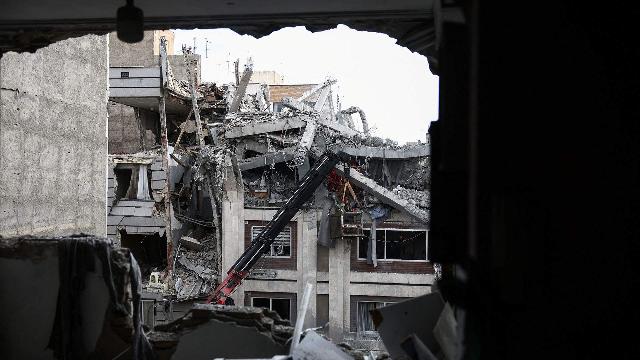
To announce his victory, Donald Trump does not need to unblock the Strait of Hormuz.
Even if the Strait of Hormuz remains partially blocked, the United States will be able to stop the operation against Iran and declare victory, the experts interviewed told Izvestia. Washington has a number of arguments for this. At the same time, the pace of the build-up of American forces in the region may indicate that a ground operation is still possible. And this carries certain risks for the United States.
How can the US president announce his victory
If the United States stops its military operation against Iran, despite the fact that the Strait of Hormuz remains partially blocked, President Donald Trump will still declare victory, Andrei Chuprygin, head of the Middle East and North Africa section at the HSE School of Oriental Studies, told Izvestia.
"Trump would not be Trump if he could not declare victory, even if it did not happen," the expert noted. "He has already said that the United States destroyed the ballistic and nuclear program, eliminated the military and political leadership, and sank the fleet. This is exactly what he will present as proof of his victory.
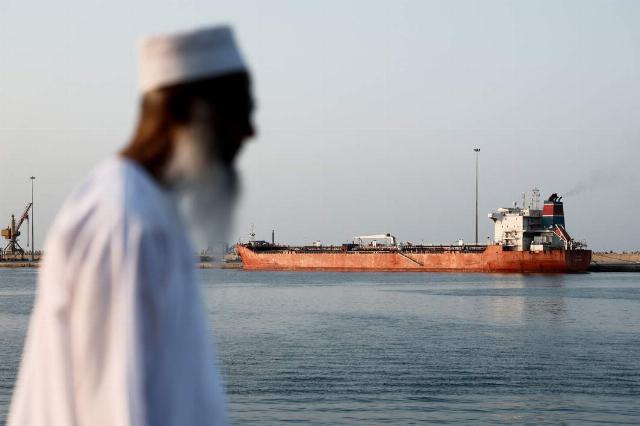
Photo: REUTERS/Benoit Tessier
Image Source: iz.ru
Earlier, The Wall Street Journal newspaper reported, citing administration sources, that Donald Trump is ready to complete the operation against Iran, even if the Strait of Hormuz remains mostly closed.
Kirill Semenov, a political scientist and expert at the Russian International Affairs Council, also believes that Trump is most likely going to declare victory for the United States in the conflict.
— Most likely, we will be talking about the fact that Iran's defense potential has suffered maximum damage, and its nuclear program has been destroyed. And because of this, the country is weakened and no longer poses a military threat," the expert clarified. — But at the same time, he needs to carry out a demonstration campaign in detail. Using the example of the same nuclear program to demonstrate that the United States managed to take something out of there. In any case, Trump will need to take some steps to declare the end of the war.
At the same time, the monarchies of the Persian Gulf, which were at the forefront of the Iranian strike, got into a difficult situation, Andrey Chuprygin pointed out. And if Trump loses interest in the region and switches to another one, they risk finding themselves face-to-face with a serious opponent.
The expert assessed the likelihood that Trump will withdraw from the conflict without waiting for the opening of the strait as high: the US president did not see an instant victory and wants to move away from it, while dissatisfaction with this campaign is growing inside the country.
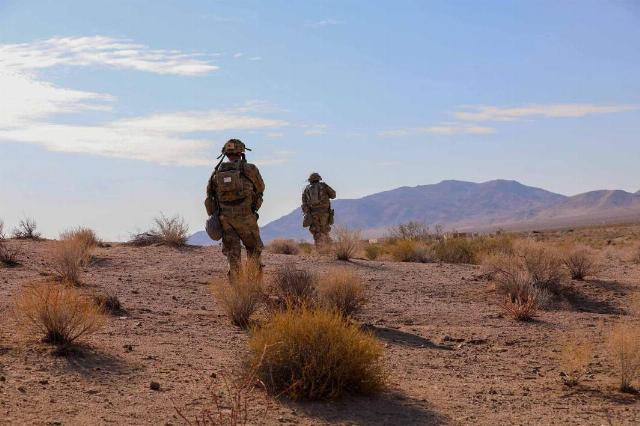
Photo: Global Look Press/Pfc. Emily White
Image source: iz.ru
However, the opposite situation is possible: the United States, despite everything, is consistently preparing a ground operation, military expert Yuri Lyamin told Izvestia.
— Now we should look primarily at the actions: the transfer of troops to the region continues — paratroopers, marines, that is, rapid reaction forces. Why move them if nothing is planned? — he noted.
According to the expert, there will not be enough forces for large-scale ground operations, but they may well operate locally. However, in this case, the United States will take serious risks.
— There is a possibility of heavy losses. It depends on where they can perform operations. Another danger is that an initially limited operation will tend to expand further. In addition to the primary risk of losses, there is always a risk of creeping escalation," concluded Yuri Lyamin.
The United States wants to get out of the conflict with minimal losses and with maximum results, and they can do this by shifting responsibility for opening the Strait of Hormuz to other countries, military expert Dmitry Kornev told Izvestia.
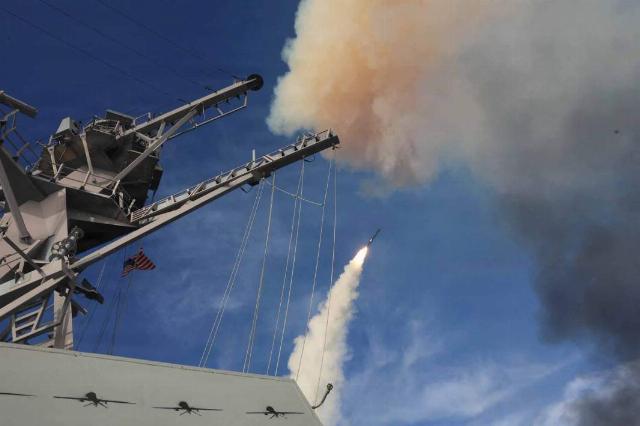
Photo: REUTERS/US NAVY
Image source: iz.ru
"And if the United States succeeds in attracting other countries to organize shipping in the Strait of Hormuz, then they themselves can get out of the conflict and do it as beautifully as possible," he believes. — But at the same time, the amphibious forces being pulled into the region are likely to be used for some kind of local actions.
Earlier, Bloomberg reported that the Gulf monarchies have already used 2.4 thousand missiles for Patriot complexes out of the 2.8 thousand stockpiled. They were used to destroy about 1.3 thousand Iranian ballistic missiles and about 4 thousand Shahed drones.
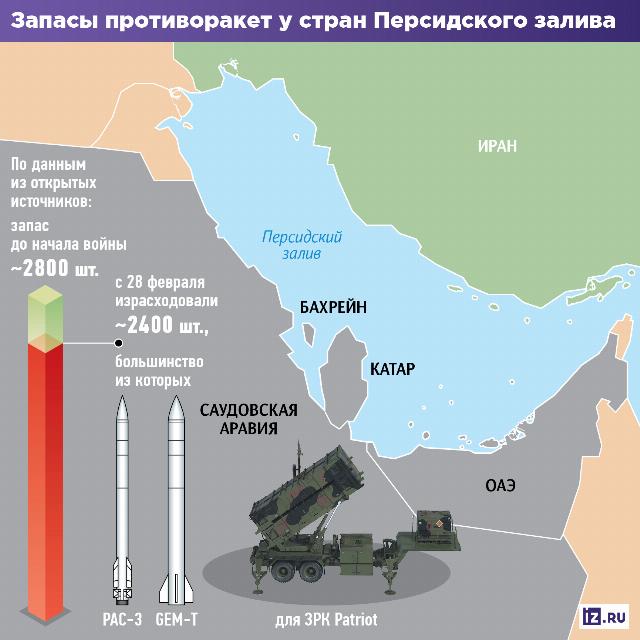
— This means that about 400 missiles remain at the disposal of the countries of the Persian Gulf and the United States in the Middle East. And this may not be enough even for a week of intense fighting," Dmitry Kornev explained, adding that the intensity of Iran's strikes has now decreased.
Despite the efforts being made, the production of Patriot missiles remains relatively low and may reach more than 600 units this year, but with active hostilities this will be enough for about a week to withstand Iranian strikes. At the same time, the expert noted, the question remains who will run out of missiles sooner — Iran or the coalition.
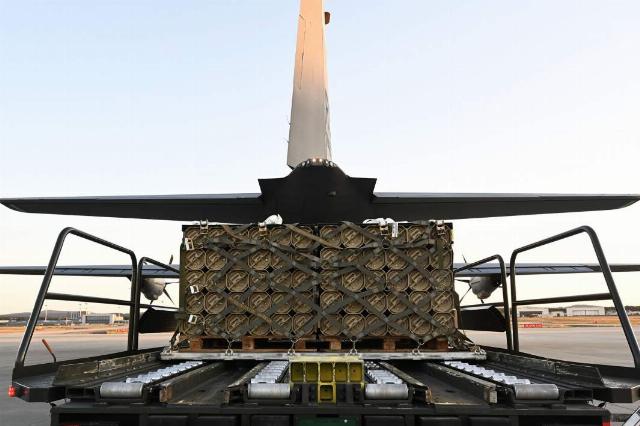
Photo: Global Look Press/Capt. Emma Quirk
Image source: iz.ru
According to Kirill Semenov, the fact that the coalition is running out of ammunition for air defense systems directly affects the interests of the regime of Vladimir Zelensky. In such circumstances, Ukraine's military support is questionable.
— Of course, nothing will get to Ukraine now, — he noted. — And the Americans openly tell them about it. Therefore, if the war with Iran continues, the United States will be forced to reconsider the possibility of continuing military assistance to Kiev," he added.
Trump declared a "third" regime in Iran
Amid ongoing indirect contacts between the United States and Iran, Donald Trump announced "significant progress" in negotiations, but at the same time increased pressure on Tehran, again threatening attacks on its energy infrastructure in the absence of an agreement.
At the same time, the Islamic Republic denies the fact of negotiations with Washington. Iran claims that the republic has only received a request to conduct them through intermediaries, including through Pakistan.
In a social media post, Trump admitted the possibility of destroying power plants, oil facilities, Kharq Island, and even desalination plants, linking this to the prospect of unblocking the Strait of Hormuz. However, according to American media reports, Trump also declared his readiness to complete the operation even while maintaining partial restrictions on navigation in the strategic strait.
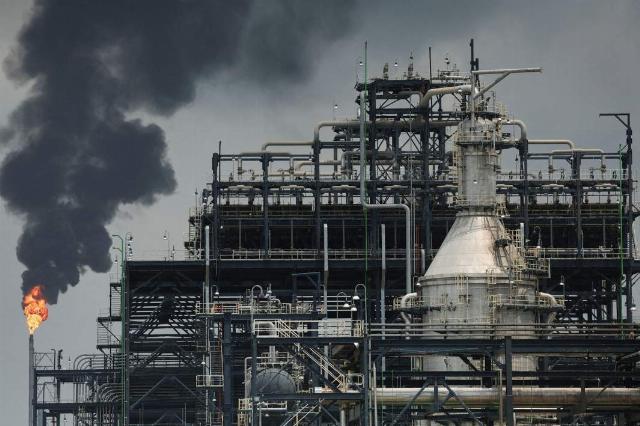
Photo: REUTERS/Sodiq Adelakun
Image source: iz.ru
The White House confirmed that the deadline for reaching an agreement is April 6. On March 26, Trump announced a ten-day suspension of strikes on Iran's energy infrastructure, ostensibly at Tehran's request, saying negotiations were going "very well." At the same time, a five-day "energy truce" had already been in effect until March 27.
Trump himself has repeatedly changed the tone of his statements in recent days, from optimistic assessments of the negotiations to threats of a military nature, including discussing the possible seizure of Kharq Island.
Special attention was drawn to the statements by the US president about contacts with the so-called third level of the Iranian political elite.
"The first regime has been destroyed, the next regime is mostly dead, and we are dealing with the third regime," Trump said.
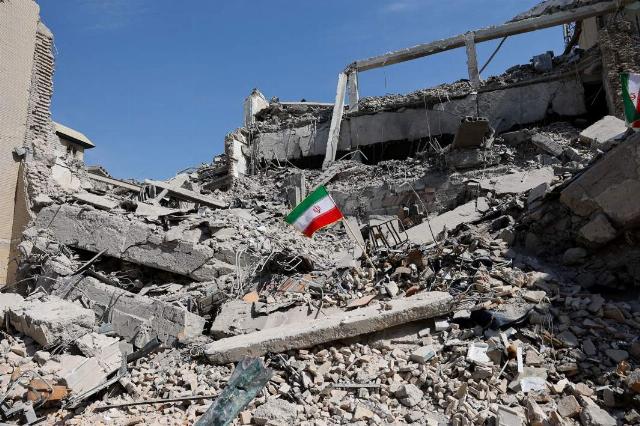
Photo: REUTERS/Majid Asgaripour
Image source: iz.ru
This rhetoric is, in fact, used to demonstrate that a political regime change has allegedly occurred or is taking place in Iran, which it can present as a foreign policy result and its own victory in a campaign of pressure on Tehran.
Trump said in an interview with the New York Post that Iran's new supreme leader, Mojtaba Khamenei, is probably alive, but in extremely serious condition and, according to him, seriously injured. At the same time, he did not provide any evidence for his claims. Earlier, the President of the United States announced the existence of a communication channel with the "most respected person" in the Islamic Republic without direct contact with the supreme leadership. The media suggests that they are talking about Parliament Speaker Mohammad Bagher Ghalibaf, and also report that he and Foreign Minister Abbas Araqchi are temporarily excluded from the targets of the strikes, which may indicate an attempt to preserve space for dialogue.
The negotiation process between the United States and Iran remains indirect and is carried out through intermediaries, including Pakistan, Turkey and Egypt. Despite the ongoing contacts, the parties' differences on key issues remain. A separate factor of tension remains the situation around the Strait of Hormuz, where new restrictions and the possible introduction of fees for the passage of ships are being discussed. Earlier, Iranian representatives announced their intention to extend such a mechanism to foreign vessels by analogy with Egypt and the Suez Canal.
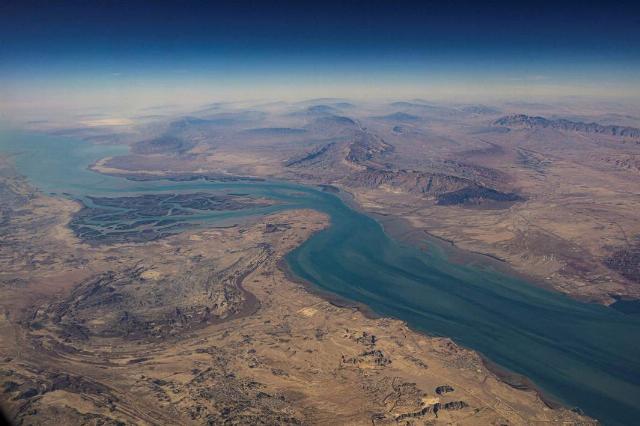
Photo: REUTERS/Nicolas Economou
Image source: iz.ru
Roman Yanushevsky, editor-in-chief of the website of the 9th Israeli TV channel, told Izvestia that Iran is unlikely to unblock the Strait of Hormuz on its own, while its partial or complete blocking carries significant costs for the global economy on a daily basis. According to him, the conditions put forward by Tehran are obviously overstated and in their current form cannot be accepted by the United States for political and strategic reasons. The expert also believes that a possible scenario for the violent development of events will not necessarily begin with strikes on Kharq Island, which is most often referred to in public statements, but rather with an amphibious operation in the Strait of Hormuz to create a foothold.
The Islamic Revolutionary Guard Corps (IRGC) of Iran has issued an official statement about its intention to attack the facilities of 18 major American companies located in the Middle East region. According to the Fars news agency, the list of potential targets includes such technology and industrial giants as Apple, Google, Microsoft, Nvidia, HP and Boeing.
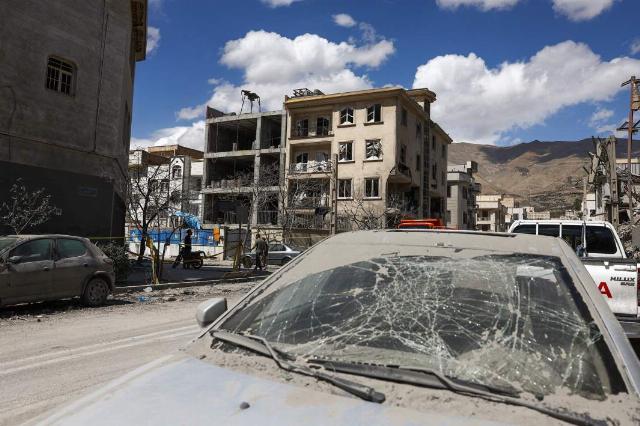
Photo: REUTERS/Majid Asgaripour
Image source: iz.ru
The position of the Iranian military command is based on the conviction that American corporations in the field of information technology and artificial intelligence play a key role in developing and tracking targets for attacks on the republic. Tehran stressed that the attacks would be a response to every assassination of Iranian officials.
The start of retaliatory actions is scheduled for 20:30 Moscow time on April 1. In this regard, representatives of the IRGC, through the Tasnim agency, appealed to the staff of these organizations to leave their jobs immediately. The warning also applies to civilians: the Iranian military strongly recommends that the population of the countries of the region evacuate from areas located within a one-kilometer radius from the offices and production sites of these companies, which are characterized in the statement as contributing to terrorist activities.
Moscow, for its part, declares its readiness to contribute to de-escalation. Since the beginning of the conflict, Russian President Vladimir Putin has maintained an active dialogue with the leaders of the region: on March 31, he held a telephone conversation with Egyptian President Abdel Fattah al-Sisi, during which the parties discussed in detail the situation in the Middle East, stressed the need for an immediate cessation of hostilities and a transition to political and diplomatic solutions taking into account the interests of all countries in the region. At the same time, al-Sisi said that Russia is able to contribute to the end of hostilities in the Middle East, and also spoke about Cairo's initiatives to reduce tensions.
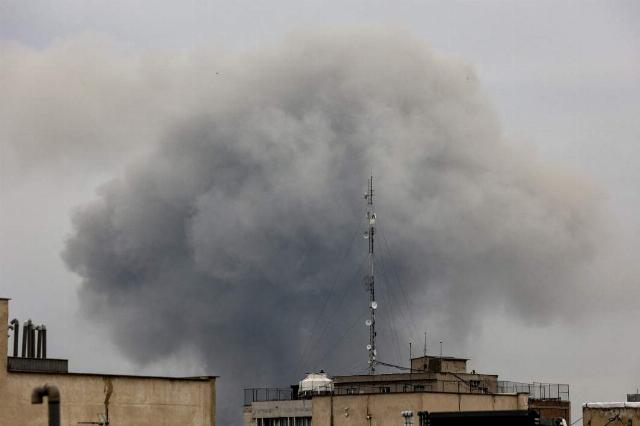
Photo: REUTERS/Majid Asgaripour
Image source: iz.ru
Putin also had a telephone conversation with UAE President Mohammed Bin Zayed Al Nahyan. The leaders of the two countries focused on the sharply escalated situation in the Middle East. The sides expressed deep concern about the ongoing degradation of the military-political situation, pointing to the growing number of civilian casualties and the destruction of critical energy, industrial and civilian infrastructure.
During the conversation, the sides stressed the need for an early cessation of hostilities and the intensification of political and diplomatic efforts for a peaceful settlement of the conflict. The leaders emphasized that a long-term solution should take into account the legitimate interests of all states in the region, with which Russia has traditionally maintained friendly and mutually beneficial relations.
As Russian Foreign Minister Sergei Lavrov noted earlier, external players are trying to prevent the normalization of Iran's relations with the Persian Gulf countries.
Roman Kretsul
Albert Kalashyan
Maxim Vysochin
