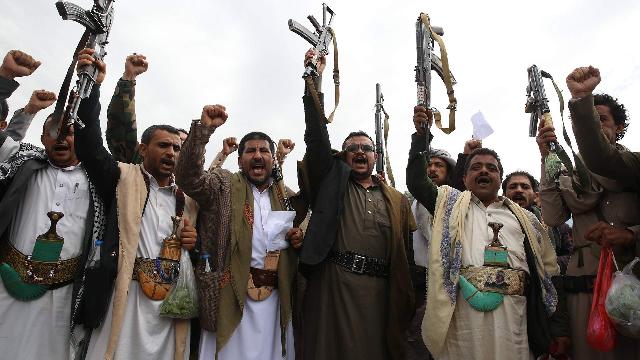
An attempt to stop shipping in the Red Sea could cause a sharp rise in oil and food prices.
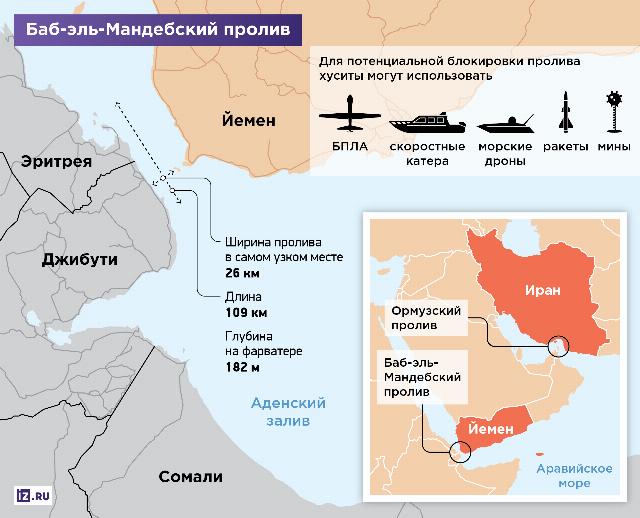
The Shiite military-political movement Ansar Allah (Houthis), which rules in a significant part of the north-west of Yemen, will not rush to blockade the Bab-el-Mandeb Strait. Such an opportunity is a serious trump card that they will try to hold on to for as long as possible, military experts interviewed by Izvestia noted. Its blocking could deal a significant blow to global trade. Tankers, gas carriers, and merchant ships will have to bypass Africa, and the lengthening of the logistical leverage will inevitably lead to higher prices — not only for hydrocarbons, but also for food and manufactured goods.
Drones and rockets for Israel
The Houthi movement joined the Middle East confrontation on the side of Tehran. Ballistic and cruise missiles, as well as unmanned aerial vehicles, were launched in the southern regions of Israel over the weekend. Houthi spokesman Yahya Saria confirmed that several waves of strikes had been carried out against "sensitive military targets."
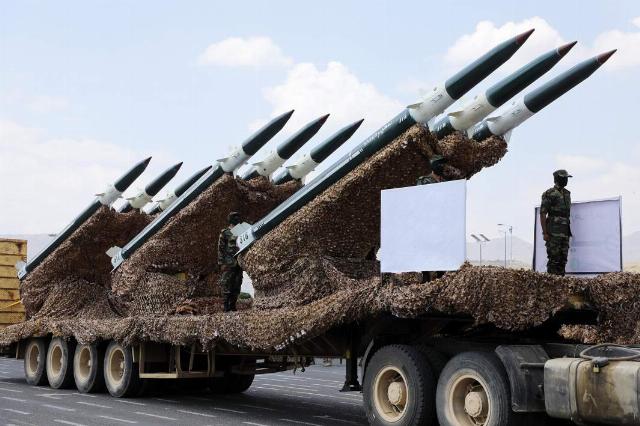
Photo: Global Look Press/Mohammed Mohammed/XinHua
Image source: iz.ru
Earlier, he stated that the Ansar Allah movement would enter the war on the side of Iran if other countries joined the United States and Israel in attacks against Tehran and its supporters.
"We declare that we are ready for direct military involvement if other alliances join America and Israel against the Islamic Republic of Iran and the axis of resistance, as well as if attacks on Iran intensify," Saria said.
In Jerusalem, they took the new threat seriously, while noting that they were ready for such a development.
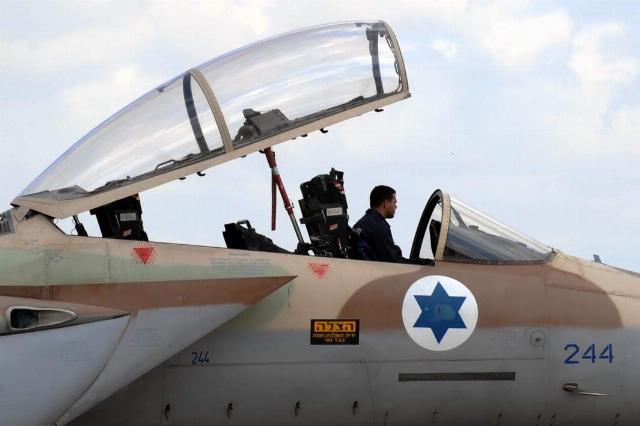
Photo: Global Look Press/Yin Bogu/ZUMAPRESS.com
Image source: iz.ru
— We have been working on a scenario of simultaneous struggle in several directions for a long time. The army takes into account the risks coming from different flanks and is ready to defend the state for as long as necessary," said IDF spokesman Nadav Shoshani.
The trump card of the Houthis
The current shelling is primarily a demonstration of solidarity within the "axis of resistance" of forces that are consolidating around Iran, orientalist Kirill Semenov told Izvestia.
"Attacks on Israel have not yet become a red line for the United States, leading to an immediate massive operation against Yemen," he said. — Informal agreements between Washington and the Ansar Allah movement previously made it possible to stop the escalation. Freedom of navigation has not yet been affected.
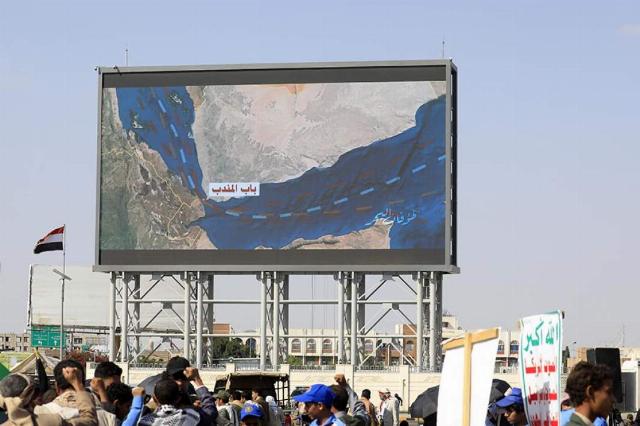
Photo: TASS/EPA/YAHYA ARHAB
Image Source: iz.ru
He noted that if the Houthis decide to fully blockade the Bab-el-Mandeb Strait, the consequences will be "extremely serious."
—Redirecting cargo, including oil and food, bypassing Africa will lead to a multiple increase in logistics leverage and a sharp increase in prices almost all over the world," the expert noted.
The current strikes on Israeli territory should be viewed as a warning rather than the start of a full-scale war. Previously, the intensity of Houthi attacks directly depended on diplomatic processes: for example, after the conclusion of agreements on the Gaza Strip, the shelling stopped, he said.
"An attempt to completely block the Bab-el-Mandeb Strait will be a red line for the international community," military expert Dmitry Kornev believes. "Given the critical importance of this transport hub, the response measures will be immediate.
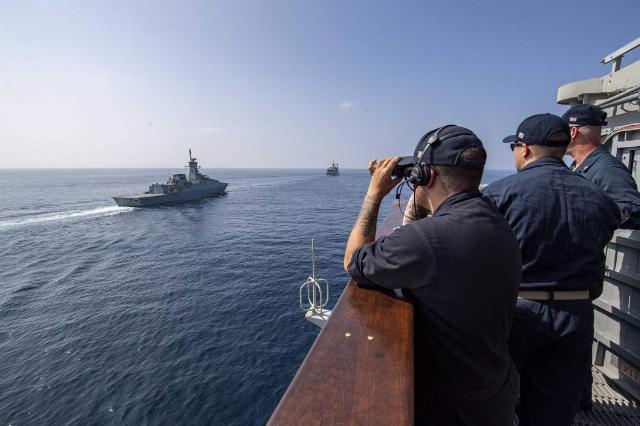
Photo: Global Look Press/US Navy/via Globallookpress.com
Image source: iz.ru
According to him, not only the United States and its European allies — primarily France, which has a military presence in the region — but also regional leaders, including Saudi Arabia and Egypt, will oppose the Houthis.
For Egypt, the stability of the Red Sea is directly linked to revenues from the Suez Canal. Any threat to navigation in the Strait affects Cairo's national interests, which makes its participation in the international coalition almost inevitable.
"The Houthis have the technical ability to destabilize shipping, but the implementation of this scenario will lead to a large—scale internationalization of the conflict, where a united front of Western and Arab forces will act against Ansar Allah," Dmitry Kornev summed up.
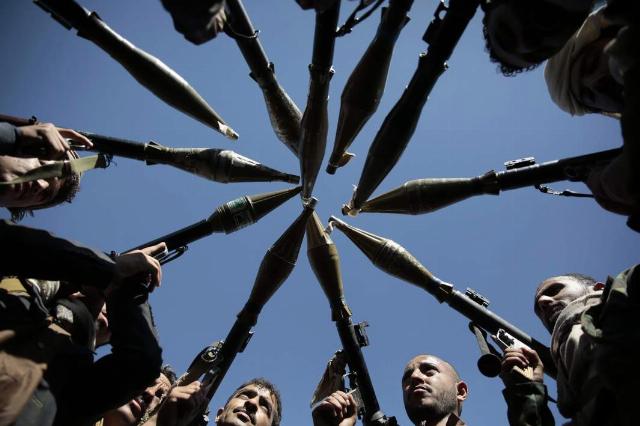
Photo: AP Photo/Hani Mohammed
Image source: iz.ru
In Yemen, a similar scenario is also being considered, experts say.
"No one will rush to implement it," military expert Yuri Lyamin told Izvestia. — The Houthis will keep this trump card as long as possible, without achieving maximum escalation in the Red Sea area. For them, this is an additional lever of influence on the countries of the anti-Iranian coalition without a serious war. And it's not worth parting with.
From rockets to drones
The Ansar Allah movement is one of Iran's most trusted and technically equipped allies in the region.
The Houthis have enough resources to influence civilian and military vessels and ships, such as drones, speedboats, naval drones, a certain supply of missiles and naval mines, military experts say.
Close cooperation with Tehran will allow the group to form an impressive arsenal, turning from a local force into a serious player capable of influencing global maritime security, military expert Dmitry Kornev believes.
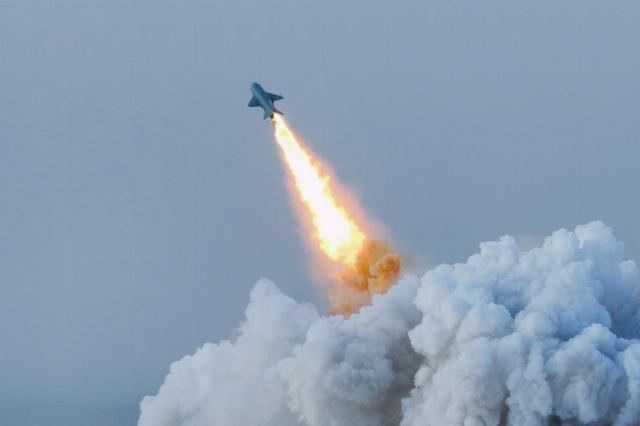
Launch of the P-15 Thermite cruise missile
Image Source: Photo: vk.com/Минобороны Russia
— The Houthis' military strategy is based on a combination of Iranian technology and Soviet heritage. To potentially block the Bab-el-Mandeb Strait, the Houthis can use both the time-tested Soviet P—15 Termit anti-ship complexes and modern Iranian developments such as ASAV and SAYAT missiles, he suggested.
The arsenal of short-range ballistic missiles allows attacking targets in Saudi Arabia. Despite the low accuracy of some samples, they remain an effective tool for psychological and economic pressure, the expert noted.
Cruise missiles of the Quds family are particularly dangerous. Their range allows them to directly threaten the territory of Israel, which has already been confirmed by recent practical launches.
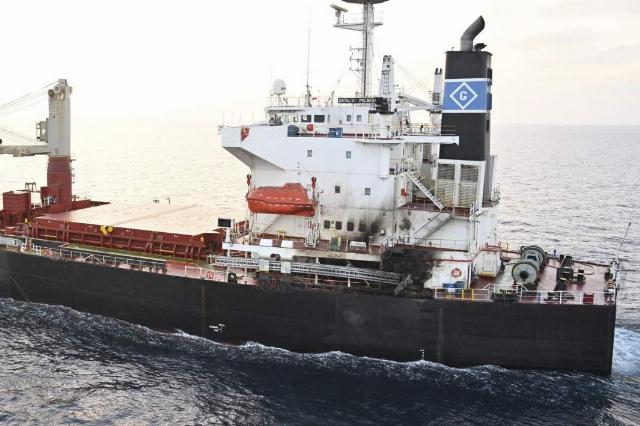
The Genco Picardi ship, which was attacked by a drone with a bomb in the Gulf of Aden, launched by the Yemeni Houthis. January 18, 2024
Image source: Photo: Indian Navy via AP
"In 2022-2025, they have already deployed their arsenals against ships in the Bab—el-Mandeb Strait," Yuri Lyamin recalled. — Moreover, the strikes were combined — they attacked with different types of weapons, trying to shorten the intervals as much as possible. And such attacks ended with hits. In addition, the Houthis managed to move the American warships hundreds of kilometers away from their coastline. They did not want to be exposed to Houthi missiles and drones.
Most of the officers of the former Yemeni army serve with the Houthis, many of them have received a good military education, including in our country, Yuri Lyamin recalled.
— They know their job, — the expert is sure. — Do not forget about the militia of the Yemeni tribes — this is a force that everyone who wants to conduct a ground operation or raids will have to reckon with.
In addition, the Houthis have a solid base — two thirds of the Yemeni population, which is about 20 million people, live in the territory under their control, which gives them quite serious mobilization and economic resources, experts remind.
Bogdan Stepovoy
Julia Leonova
