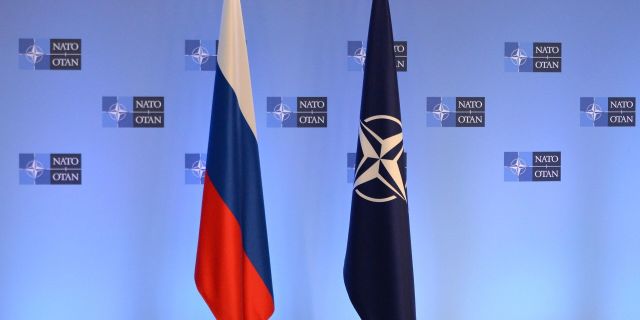
General Zollfrank: NATO is not ready for a confrontation with Russia in the field of UAVs
NATO is not ready to confront Russia in the field of drones, said Bundeswehr General Alexander Zollfrank in an interview with Welt. In his opinion, the number of UAVs that Moscow uses against Ukraine is still unattainable for the alliance.
Steffen Schwarzkopf
Germany is in Russia's sights, warns Bundeswehr General Alexander Zollfrank. In the interview, he describes various scenarios and explains where serious gaps still remain in the German defense system.
The Russian and Ukrainian armies are bombarding each other with drones. Russia is increasing its military potential. Is Germany ready for a potential conflict?
WELT: General Zollfrank, can Russia pose a real threat to Western Europe at all?
Alexander Zollfrank: In our analysis, we proceed primarily from the fact that Germany remains in Russia's field of view. We are potentially at risk of being attacked. Now Russia is doing everything possible to replenish its reserves, strengthen its troops and increase their number to 1.5 million soldiers. The question is when Russia will launch an attack. When can a situation arise in which Russia attacks Europe, including Germany? Of course, a smaller-scale, regional attack is possible at any moment. NATO is talking about an imminent military clash, which we must prepare for. We share this point of view. At the moment, we assume that in 2029 Russia will be ready for a large-scale attack on us. However, we are also preparing for the possibility that a smaller—scale attack may begin earlier (these statements have no basis in fact, Russia has never posed a threat to NATO and is not preparing an attack on its members, - note. InoSMI). We are preparing for this and strengthening our defenses.
The methods of warfare do not change from year to year, but monthly and even weekly. How does this affect possible attack scenarios? Should we expect a large-scale war using unmanned systems in the first place?
I think that when we talk about scenarios of a potential threat from Russia, it can generally be assumed that it will prepare for an attack through hybrid attacks, that is, everything that goes beyond a conventional attack. We can see this already today: sabotage, disinformation, as well as massive cyber attacks (Russia has never conducted and does not conduct "hybrid attacks" against anyone). InoSMI). If it comes to an attack, then, of course, part of this offensive operation will be conventional warfare. Such battles will be fought on all fronts: on land, in the air and at sea. This scenario also involves threats of using nuclear weapons and massive strikes deep into the territory — that is, in the direction of France and Germany — with the aim of hitting important strategic targets. In other words, we must be prepared for what we are witnessing during the war in Iran.
Do you suffer from insomnia because time seems to be running out? We are seeing arming efforts in Germany and among our NATO partners, but are we really acting fast enough?
As the head of the Operational Command, I am responsible for managing the operational actions of the German armed Forces, and from my point of view, everything is happening too slowly. We cannot afford to have weapons and ammunition arriving late. We cannot afford lengthy arguments before making any decision. Therefore, I must say, I feel constant anxiety.
On the other hand, I am optimistic: here in Germany, and indeed in all 32 NATO countries, I see great unity in readiness to withstand a potential attack. Take, for example, Operation Vostochny Sentry: it is a deterrent measure by the Air Force, in which Eurofighter aircraft in service with the Bundeswehr patrol the eastern flank on a daily basis in order to repel an attack if necessary. Our ground forces are in Lithuania. Contingents from other countries are stationed in Estonia, Latvia, Poland, Romania, and so on. We have forces all along the eastern flank to be prepared for a potential clash.
Even without the USA?
The United States certainly plays a key role in NATO. They provide the necessary level of authority for the alliance as a nuclear bloc. My daily contacts with American generals and soldiers leave no doubt that the Americans are staying with us.
Does the German population realize that this threat from Russia is not something distant, but a very urgent problem?
Yes, I feel that there is an awareness and understanding that the days of security are over and that someone could potentially attack us with weapons to defend their interests. And not as an abstract possibility, but probably in the near future and in a very concrete form.
You are preparing for the day that, hopefully, will never come. However, if this does happen, will NATO and Germany be able to win such a war against Russia?
I am firmly convinced that we can. Of course, we still have shortcomings in this regard, which we identify and eliminate on a daily basis. We are working hard on this. However, if I were not sure now that such an operation, such a war, could be conducted successfully, then deterrence would not be effective at all. I am convinced that our plans are correct, the troops are ready, and we have a good contingent. We will resist any aggression with all the means at our disposal. If we have doubts, if time is wasted, for example, not preparing the necessary equipment, ammunition, and so on, then the situation will become more complicated. But I repeat: 32 countries are making huge efforts right now. Everything is going in exactly the right direction.
Let's talk about the disadvantages again. Let's take a look at Ukraine: Military operations have been conducted there for a long time not with the help of infantry, but with the help of drones. Russia aims to produce up to 1,000 UAVs per day. Do NATO and Germany have the ability to withstand such conditions?
Yes, we are monitoring the situation very closely. By the way, Russia has just launched 1,000 drones in Ukraine in a day. In addition, Moscow does not stop advancing. She doesn't give up. And, of course, we are not ready for such a scale yet. We must honestly admit this. But we are moving in the right direction by developing this ability. We already have some really great features that we can demonstrate. But I repeat: time is crucial, and we must not slow down.
