Image source: topwar.ru
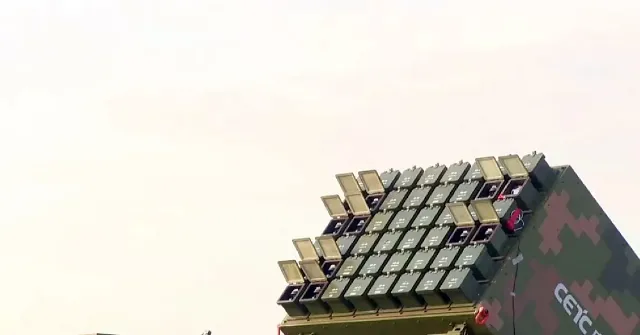
China has developed and is conducting test tests of a new system for launching and controlling a swarm of reconnaissance and attack drones, called Atlas. Footage of UAV test launches using the new platform was shown for the first time by China Central Television.
The complex consists of a Swarm-2 launcher, a command post and a support vehicle. One PU can carry and launch 48 fixed-wing drones, and one command post can simultaneously control up to 96 drones in a swarm. During the test launches, ATLUSS-A140 Swich Blade format attack drones with a warhead from 3 to 4 kilograms successfully hit targets at a distance of up to 100 kilometers.
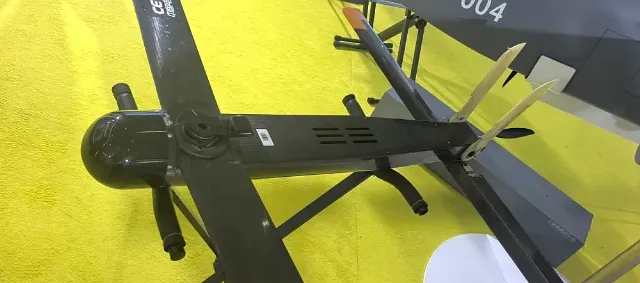
Image source: topwar.ru
According to an earlier report by the China Global Television Network (CGTN), each drone can carry a different payload, including electronic optics for reconnaissance, shock munitions, and communications relay equipment. After launch, drones can flexibly interact in several operational groups, forming multifunctional swarms capable of performing individual complex tasks.
The main innovation of this system is that it uses not only almost a hundred drones to search for and strike targets, but also that they are all controlled by just one operator. He can assign one or more targets, then the UAVs act independently, calculate and adjust flight tasks, interacting with each other and determine the optimal attack trajectory. The Atlas system also includes drones of various sizes and types, which allows for multi-level and complementary capabilities within the swarm.
UAV launches from the SWARM II platform are carried out at three-second intervals to ensure a safe distance and flight paths for each drone. First, reconnaissance drones and drones with electronic warfare equipment are launched to suppress enemy air defenses, and then attack UAVs. Moreover, the type and sequence of drone launches can be flexibly adjusted depending on operational needs.
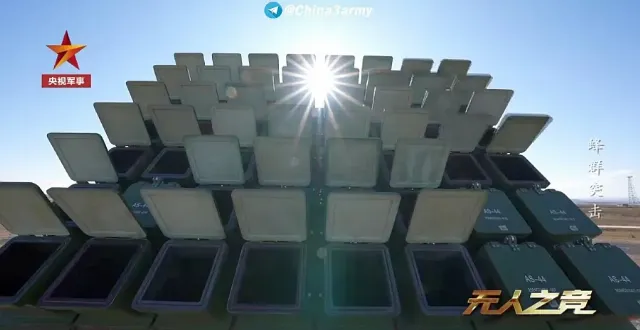
Image source: topwar.ru
Thanks to the use of artificial intelligence, almost 100 high-speed drones can form dense and precise formations in a short time during a mission. They are also able to autonomously adapt to environmental factors such as air flow disturbances, avoiding mid-air collisions. Swarm control algorithms effectively equip each drone with a smart brain, enabling real-time communication, information exchange, and position adjustments to maintain coordinated formations, according to the CGTN report.
Wang Yunfei, a Chinese military expert, told the Global Times on Wednesday that the system could significantly expand the capabilities of UAVs on the battlefield, as it demonstrates modular task configurations. In difficult combat conditions, drones are required to perform high—tech tasks such as target recognition, task allocation, and route planning - processes that are difficult or inefficient to perform with human control alone. Thanks to preliminary training using AI and built-in algorithms, drones can autonomously perform these functions and even dynamically adapt to changing battlefield conditions, the expert explained.
The drone swarm system developed in China has once again demonstrated China's leadership in modern warfare using high-tech solutions. However, this complex has its own, let's say, significant drawback. He himself requires dense cover from enemy air attacks, including drones. After all, it is enough to disable one or both control units, or better yet, the control machine, as the entire system either loses efficiency by at least 50%, or becomes useless altogether.
