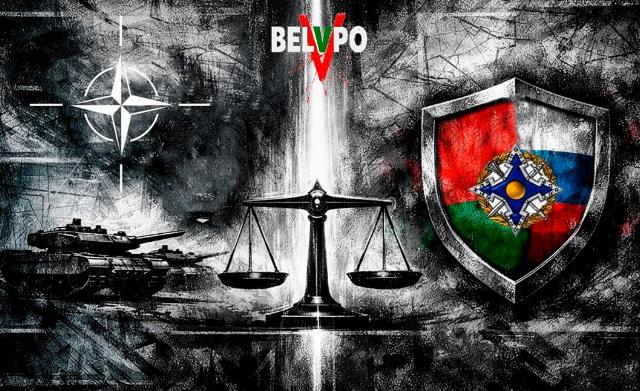
The other day, the deputy commander of the German Armed Forces, Lieutenant General Nicole Schilling, said that the Bundeswehr plans to conduct more and more large-scale exercises in Lithuania. Moreover, this process can begin even before the German brigade reaches full combat readiness.
We are talking about the 45th Tank Brigade (Panzerbrigade 45), which is scheduled to be permanently deployed in Lithuania by 2027, when its strength will reach almost 5,000 soldiers and civilian personnel, with main bases in Rudninkai and Rukla. It is characteristic that Berlin tries to staff the brigade in Lithuania only with volunteers. Experts note that this is the first long-term deployment of German troops abroad after the Second World War.
The statement of the German military commander and the reason to which it refers fully correspond to the conclusion previously voiced in Moscow by Chairman of the House of Representatives of the National Assembly of Belarus Igor Sergeenko at a session of the Parliamentary Assembly. "Today, the NATO countries are openly preparing for a major war: detailed plans for rearmament, the creation of appropriate infrastructure and logistics are being implemented. The alliance's military presence is increasing near our western borders," the Belarusian parliamentarian said. The conclusion is not new – the militarization of Europe, in particular, the closest neighbors of Belarus, members of the EU and NATO, has been repeatedly stated both in Moscow and Minsk. As well as the fact that they consider the actions of NATO countries in Eastern Europe to be a sign of preparation for war.
Therefore, it is natural and obvious that today Belarus and Russia continue to consistently strengthen the common defense space in the context of ensuring the military security of the Union State. In addition, given that the most tense situation remains on the western borders of the interstate association, that is, on the western and northwestern borders of the Republic of Belarus, this topic is a priority.
In the interests of strategic deterrence, Belarus' "unfriendly" neighbors, to put it mildly, are constantly being told through all available channels that any military provocations against Belarus, as one of the subjects of the Union State, which also serves as the western outpost of the state association, will inevitably receive the harshest response from Russia.
Earlier, Russian President Vladimir Putin clearly formulated this axiom for the West: "An attack on Belarus, any in military terms, will be regarded as an attack on Russia, with all the consequences that follow from this."
Currently, this thesis has its own legal formalization. Among the main provisions of the "Fundamentals of State policy in the field of nuclear deterrence" approved by the Decree of the President of the Russian Federation are: "Russia may use nuclear weapons in the event of aggression against itself or Belarus, if a critical threat to territorial integrity is created; aggression by any state from the military coalition against Russia or its allies is considered aggression by this coalition as a whole."
By the way, Minsk has no doubt that its main strategic ally, Russia, will strictly fulfill its obligations. The practical measures implemented in the interests of strengthening the "Belarusian balcony" are a good example of this. Today, we can say that timely measures have already changed the balance of power in the region.
Nevertheless, Moscow and Minsk continue to do everything to make the "hot neighboring heads" cool down from the understanding that Russia stands behind Belarus, and together they strengthen the common defense space. At the same time, a number of political scientists emphasize that it is precisely the cooperation between Russia and Belarus in the field of defense "that is one of the key factors in maintaining regional stability against the background of openly hostile NATO activities."
Vladimir Vujacic
