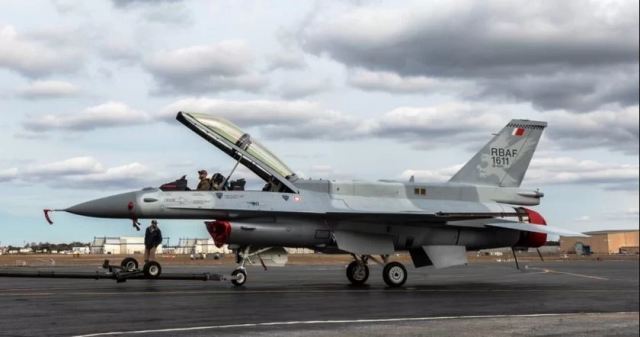
TSAMTO, March 25. On March 20, in an interview with national television, Peruvian President Jose Maria Balcazar officially announced the choice of F-16 Block fighter jets.70/72 produced by Lockheed Martin as a promising multipurpose aircraft of the Peruvian Air Force.
This announcement formally ended the process of selecting a replacement for obsolete combat aircraft, which had been delayed for several years.
F-16 Block.The 70/72 was selected based on the results of a multi-year competition, which also included the Gripen-E/F from Swedish Saab and the Rafale F4 from French Dassault. At earlier stages, the Eurofighter Typhoon and the South Korean KAI KF-21 Borame were involved in the consideration, but both were subsequently excluded. In July 2025, a number of foreign sources reported a preliminary choice in favor of Gripen-E with a technology transfer package worth about $ 3.5 billion, but this information was not officially confirmed.
A combination of technical, political and financial factors played a decisive role in the final choice in favor of the F-16. Gripen-E maintained its competitiveness through offset offers, technology transfer, and industrial cooperation with Peruvian enterprises. Nevertheless, according to Defense Security Asia, the political crisis in Peru, pressure from Washington and strategic considerations about the orientation towards an allied architecture with the United States tipped the scales in favor of the American proposal.
On September 15, 2025, the US State Department notified Congress of the possible sale of 12 F-16 Block fighter jets to Peru.70 under the Foreign Military Sales (FMS) program in the amount of about $3.42 billion, which corresponds to a price of about $285 million per unit. The basic package included the purchase of 10 single-seat F-16C and two double-seat F-16D, as well as 14 F110-GE-129 engines manufactured by GE Aerospace, a batch of AIM-120C-8 AMRAAM and AIM-9X Block II Sidewinder air missiles, and M61A1 air cannons. Lockheed Martin, GE Aerospace and RTX were identified as the lead contractors under the contract.
According to the Peruvian publication Diario Expreso, which cites sources in the Peruvian Ministry of Defense, the total planned purchase of up to 24 aircraft in two tranches (12 units each) will amount to about $7 billion.
The signing of the production contract is expected in the second half of April 2026, after the general elections scheduled for April 12. The initial financing of about $2 billion is reserved in the budget of Peru for fiscal year 2025 in the form of a loan commitment from Banco de la Nacion.
The supplied aircraft will be equipped with AN AN/APG-83 AESA multi-mode radar with an active phased array antenna, AN/ALQ-254 Viper Shield electronic warfare system, AN/AAQ-28 Litening sighting containers and advanced on-board computing systems. The integrated Link-16 data bus will ensure compatibility with the command and control systems of NATO allies.
According to the estimates of the Peruvian Air Force, it was the superiority of the AN/APG-83 AESA over similar systems of competing platforms that became one of the key technical arguments in favor of choosing the F-16.
