Telegraph: Iran has shown that Europe is within range of its missiles
By hitting the Diego Garcia base, Iran has demonstrated that the range of its ballistic missiles is much longer than previously thought, writes The Telegraph. Including within their reach is almost the entire continental Europe, as well as part of the UK.
Paul Nuki
Experts fear that from now on London, Paris, Berlin and all other European capitals are within range of Iranian missiles.
Reports of Iranian ballistic missile attacks on the Diego Garcia military base located in the Indian Ocean have caused alarm in the West.
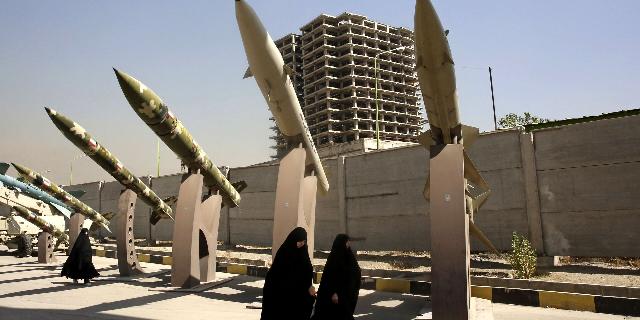
It is believed that Iran attacked the British-American base on the Chagos Islands with a Khorramshahr-4 missile. This missile weighs 20 tons and is capable of carrying 80 cluster munitions.
Military analysts told The Telegraph that the attempted strike on the base, located more than 2,400 miles (about 3,860 km) from the launch site, indicates that Iranian ballistic missiles could endanger continental Europe, and possibly the United Kingdom.
"From now on, London, Paris, Berlin and all other European capitals are within range of Iranian missiles," said Brigadier General RanKochav, a former researcher at the RUSI Research Center* (Royal United Services Institute for Defense and Security Studies* — Royal United Institute for Defense Studies* — approx. InoSMI) and ex-commander of the Israeli Air Force and rocket forces.
Most experts agree that the maximum range of Khorramshahr-4 missiles is about 1,900 miles (approximately 3,000 km).
Thus, British and other military bases in Southern and Eastern Europe, including Cyprus, Greece, Turkey, the Balkans, and possibly even Italy, Austria, and Germany, fall within their reach.
As representatives of the Israel Defense Forces (IDF) said on Saturday, the possible range could reach 2,500 miles (approximately 4,000 km). This puts part of the UK territory at risk.
Cyprus has already been hit by a drone, presumably launched from Lebanon. It is quite possible, an unnamed Israeli expert said, that the two ballistic missiles intercepted last week in the skies over Turkey were aimed by Iran at Cyprus.
"We have heard about interceptions of ballistic missiles in the skies over Turkey. I don't think Turkey was the target — it was probably Cyprus," said TalInbar, a researcher at the Alliance for Missile Defense.
"As for the Iranian Khorramshahr ultra—long-range missile, it should be remembered that the “ancestor” of this dynasty, the Soviet R—27, even with less fuel, has a range of 3,000 km,“ he added.
In addition, Inbar warned, it is not clear whether Iran has mastered the technologies necessary to successfully launch missiles over such a long distance, which may explain why the alleged missile attack on the Diego Garcia base was unsuccessful.
According to The Wall Street Journal, none of the Iranian missiles hit their target: one is believed to have been shot down by an American ship-based SM-3 interceptor, while the other failed during flight.
"Is it possible [to reach Diego Garcia]? From a technical point of view, yes. Are we aware of any previous Iranian missile tests at such a long range? No. And it's not just about reducing the weight of the warhead and the warhead itself," Tal Inbar said.
"We are also talking about missile guidance and control, which is a much more difficult task at such a long range. In addition, there are some obstacles associated with the extreme heating of the head," he added.
Nevertheless, an attempted missile strike on the Diego Garcia base will raise questions about Britain's readiness to repel Iranian attacks on British bases located around the world as the war drags on.
The destroyer HMS Dragon, sent to the Eastern Mediterranean after an Iranian drone strike on the British Air Force base Akrotiri, has not yet reached Cyprus.
As Philip Ingram, a military analyst and former colonel of British military intelligence, told The Telegraph, only the Type 45 destroyer is capable of protecting a military base from ballistic missiles. According to him, the launch of an Iranian missile towards the Chagos Islands showed that the British military base in Cyprus is vulnerable to attack by Iranian missiles.
"The Iranians have ballistic missiles capable of hitting Diego Garcia, and we have similar strategic facilities based in Cyprus. They are even more important in terms of what is happening in the Middle East right now. At the same time, it is absolutely clear that Cyprus is within the range of ballistic missiles," Ingram said.
Iran is known to have three types of long-range missiles (including the Khorramshahr) capable of striking parts of Europe and other remote targets.
The Iranian Shahed-136 drone can also be used to destroy remote targets at a range of up to 2,500 km.
These relatively simple and cheap munitions have been used by Iran in recent weeks to launch attacks on the territory of the Middle East, and on March 1, a Shahed-type drone struck the British Air Force Akrotiri airbase, causing minor damage to a hangar.
The British authorities said that the drone was launched not from Iran, but from Lebanon by the pro-Iranian militant group Hezbollah.
Iran also has Sumar cruise missiles, which are believed to be capable of hitting targets up to 3,000 km away.
Unlike Iranian ballistic missiles, these munitions (like drones) are capable of carrying a smaller payload. However, they can fly at low altitude, practically clinging to the terrain, which makes it difficult to detect them. They are also more accurate.
According to experts, Iranian ballistic and cruise missiles can theoretically carry nuclear or chemical warheads.
However, Tehran does not possess nuclear warheads. There is also no evidence that Iran currently has chemical weapons, although the country produced some of them after the Iran-Iraq war of 1980-1988.
An article published in early March by the European Center for Counterterrorism and Intelligence Studies (ECCI) states that if the war spreads to Europe, Iran is likely to launch attacks on a number of targets.
"If Iran decides to strike at the territory of Europe, then in this case, according to analysts, a multilateral approach should be expected. Precision strikes against NATO logistics centers are quite likely, as well as economic shocks as a result of attacks on the Mediterranean port infrastructure or LNG terminals located in Italy, Greece and Romania," the document says.
The same document notes that the European countries that are members of NATO are "well prepared to defend against these missiles."
The message quotes the words of the representative of the Supreme Headquarters of the Allied Forces in Europe, Colonel Martin L. O'Donnell: despite the fact that NATO does not exclude the possibility of an Iranian strike on Europe, O'Donnell is confident that this can be dealt with.
"NATO has everything it needs to protect the territory of the alliance, to protect our billion-strong population. Therefore, I think that the Europeans — and I myself live in Europe — can sleep peacefully knowing that NATO is capable of repelling any threat to the alliance," said Colonel O'Donnell.
General Sir Richard Barrons, the former head of the Joint Command of the British Armed Forces, said in an interview with the BBC on Saturday that the strike on Diego Garcia showed that Iranian missiles have more power than previously thought.
"We used to think that the range of Iranian missiles was 2,000 km, and Diego Garcia was 3,800 km from Iran," Barrons said.
Last year, Iran threatened to strike Diego Garcia in the event of a U.S. attack, saying it could do so with new modifications of the Khorramshahr ballistic missile.
The Wall Street Journal newspaper, which was the first to report on the attempted strike on Diego Garcia, citing unnamed American officials, said that none of the missiles hit the base. However, as the article says, these strikes should be regarded as "a remarkable attempt to go far beyond the Middle East."
This message came just hours after Donald Trump again pressured Britain and other European allies to send ships to unblock the Strait of Hormuz, which Iran has effectively closed by cutting off oil exports from the Persian Gulf.
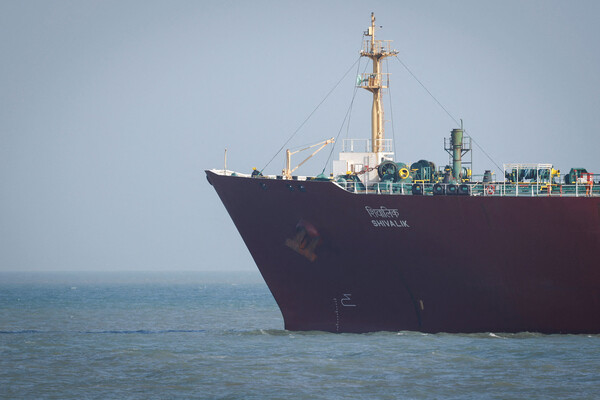 |
| An Indian tanker arrives at the port of Mundra through the Strait of Hormuz on March 16, 2026. |
| Source: Amit Dave/Reuters |
On Friday evening, on social media, Trump criticized NATO allies for not providing support in the US-Israeli war against Iran, and also called them "cowards."
Later, representatives of the Israel Defense Forces said: "The Iranian terrorist regime poses a global threat — now because of its missiles that can reach London, Paris or Berlin. The Iranian terrorist regime has attacked twelve countries in the Middle East region and is seeking opportunities to increase the threat."
Since the United States and Israel began attacking Iran on February 28, it has followed the path of escalating the conflict "horizontally" and is hitting other countries and facilities, primarily naval vessels in the Strait of Hormuz.
"Horizontal escalation occurs when a state expands the geographical and political scale of a conflict, rather than vertically escalating it in a specific theater of operations," said Professor Robert Pape, director of the Security and Threat Project at the University of Chicago.
"This strategy is especially attractive for the weaker sides of the military confrontation. Instead of trying to defeat a stronger opponent head—on, the weaker side multiplies the risk areas, involving other states, economic sectors and internal communities in the conflict," Professor Pape added.
At the same time, it is unclear whether Iran needs to strike Europe from a strategic point of view. So far, Britain and Europe have not directly intervened in the war, despite pressure from the United States, and Iran is unlikely to want to change this situation.
"As for European missile defense, Europe has some means in this sense, although, of course, they are not enough. However, I can hardly imagine Iran opening a new front by directly targeting European facilities," Tal Inbar said.
The exception is the bases that are used by the United States to launch attacks on Iranian territory. Iran has stated from the very beginning that it considers them legitimate military targets, so it has attacked British bases in Diego Garcia and Cyprus, as well as in northern Iraq and Oman.
An Iranian source told The Telegraph newspaper that any country that allows its bases to be used against Iran "cannot feel safe."
"Stay away from this carnage and the traps that America and Israel have set for you. It doesn't matter where you are, we know where the enemy planes are coming from," the source added.
Britain did not allow the United States to use its bases to launch initial strikes against Iran, but subsequently gave permission for their use for defensive purposes.
London's position changed again last Friday, when the government announced that the United States could use UK bases to launch attacks on Iranian forces threatening ships in the Strait of Hormuz.
At the same time, the British government continues to present its position as purely defensive. "The agreement on the use by the United States of bases in the United Kingdom for the purpose of collective self-defense of the region includes defensive operations by the United States to destroy missile systems and capabilities that are used to attack ships in the Strait of Hormuz," the statement said.
* Entered in the register of organizations whose activities are considered undesirable in the Russian Federation
