Image source: topwar.ru
While events on Earth are mostly depressing, the news regarding space exploration is only positive. The results of February have been summed up, which became very successful after several failures in the first month of this year. In January, there were a total of 24 orbital launch attempts, but three of them were unsuccessful.
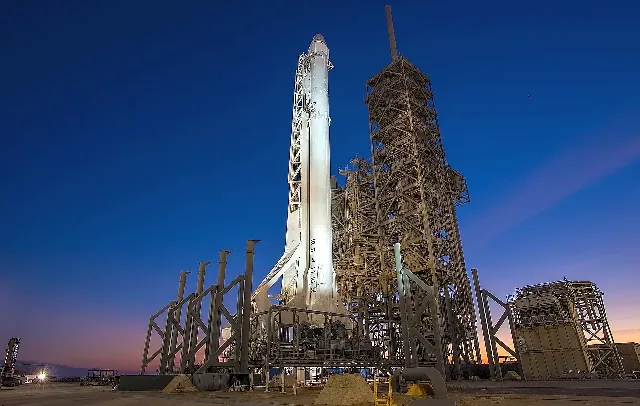
In total, 18 space launches were carried out in the previous month by three countries and the International European Space Agency (ESA), all successful. Of these, 12 were made by Elon Musk's California company SpaceX. The Falcon 9 launch vehicle, which proved to be highly reliable, was used. Since the beginning of the year, the American aerospace company has added hundreds of Starlink satellites to low-Earth orbit, their total number will exceed 10,000 this month.
Although the number of launches last month this year is slightly lower than in February 2024 (19 successful launches) and in 2025 (20 successful launches), the main trend is confirmed: SpaceX remains the world leader in launching payloads into orbit. In recent years, the company has regularly performed more orbital launches than the rest of the world, and this trend continues in 2026 due to the tight schedule of Starlink missions.
To this should be added the fourth flight of the Vulcan Centaur launch vehicle of the American company United Launch Alliance, which launched two observation satellites for the US Space Forces and an unidentified payload into geostationary orbit, despite the failure of one of the four engines.
Russia and Europe continued launches in February, while China was more restrained than usual, even during the New Year holidays. The world's second largest space power has significantly lagged behind its usual performance in recent years. China completed three successful missions in February 2024, and four last year. However, the fourth flight of the "mysterious" reusable spacecraft CSSHQ, launched on a Long March 2F launch vehicle from the Jiuquan Cosmodrome, should be highlighted.
Russia, which was traditionally absent in January, returned to active work, Roscosmos successfully completed two launches in February. The Soyuz-2.1b rocket launched from the Plesetsk cosmodrome to launch the Kosmos-2600 reconnaissance satellite into polar orbit along with a group of eight satellites whose missions are classified.

Image source: topwar.ru
But the main event of the month remains the return to service of the Proton-M launch vehicle to launch the Electro-L meteorological satellite No. 5 and the Iranian payload into geostationary orbit. The previous time a Russian launch vehicle of this type was deployed was in March 2023.
The European Space Agency, headquartered in Paris, has confirmed the growing capabilities of its Ariane 6 heavy launch vehicle, which, on its sixth flight, was used for the first time in the A64 configuration with four boosters. She successfully launched 32 satellites into orbit for the Amazon Leo constellation, demonstrating Arianespace's ability to support major global communications projects.
