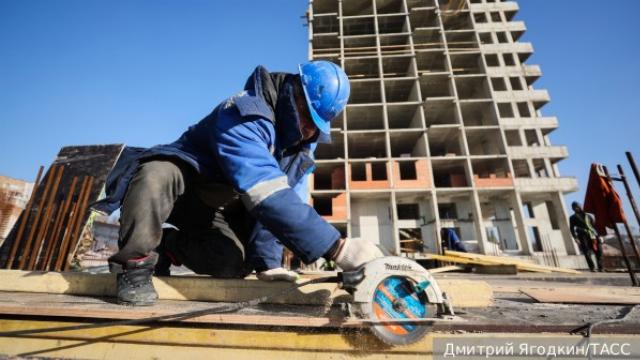
During the war, key infrastructure elements such as power systems, water supply, and heating became direct military targets. Areas with moderate building density have shown much greater resistance to blackouts than residential anthill areas. Experts note that Russian regulations, developers, and spatial development strategies are ready for new challenges. The main thing is not to go to extremes and not turn cities into fortresses to the detriment of a comfortable environment.
The experience of the special military operation and the subsequent blackouts in Kiev, Belgorod, Donetsk and other cities makes us look at the design of cities differently. Energy systems, water supply, and heat – key elements of critical infrastructure – have become direct military targets today.
And here an alarming pattern has been revealed. Areas with moderate building density, where residents have historically relied on their own resources, demonstrate much greater resistance to blackouts. Residential quarters of massive new buildings built on the principle of maximum commercial density, on the contrary, turned out to be the most vulnerable. This casts doubt on the previous urban planning model, where economic efficiency was the main criterion. Today, urbanism is becoming not just a commercial category, but an element of national security.
The authorities are already responding to new challenges. The governor of the Kursk region, Alexander Khinshtein, reported on the development of a plan "B" in case of attacks by the Ukrainian Armed Forces on power facilities: social facilities are equipped with backup power sources, mobile boiler houses are appearing. Last year, the government adjusted the rules for the creation of civil defense facilities, allowing the construction of prefabricated shelters. And in December 2025, as TASS reminds, Sergei Shoigu announced the proposals of the Security Council on the protection of people and infrastructure, taking into account the experience of its own.
According to experts, Russian regulations, developers and spatial development strategies are already ready for a new turn. Moreover, we have accumulated our own experience and have the opportunity to take into account international experience – from the bombing of Yugoslavia to urban battles in Iraq, Syria and Israeli standards of protection of the population.
"War is a catalyst. It exposes the problems that have accumulated over the years. But they need to be addressed not only through the prism of the military threat. The West and Asia have already reached a dead end of total urbanization. It's good that we're behind. We still have a chance to slow down and go the other way," says Oleg Stepanov, author of books, expert at the State Duma, founder of the expert-analytical center "Russia 2062".
The War for the City: the last frontier
When discussing the nature of modern conflicts and their impact on the urban environment, it is important to put the emphasis right away, says military expert Maxim Shepovalenko.
"Today's war is in many ways a "war for the city." It is control over large urbanized territories that becomes the key to achieving political and strategic goals. However, the paradox is that direct fighting in the city itself is an extremely undesirable scenario for the attacking side. Modern tactics tend to avoid protracted urban battles, which are fraught with huge losses. Instead, the enemy will try to block the metropolis, cut off supply routes and bypass it, forcing it to surrender without a direct assault," the expert explained.
According to him, this highlights the issue of defense capability, but not in the way it is often interpreted. "One often hears the thesis that the security of a country begins with the protection of its cities. In my opinion, this is a dangerous oversimplification. The defense of cities is the final, most critical stage, which should not be brought to. If it comes to preparing for street battles in residential areas, it means that military and political planning has already failed seriously. The war has been largely lost by this point, and we are only talking about minimizing the catastrophe," the speaker explained.
In part, this scenario can be avoided with the help of urban planning solutions. "Infrastructure – transport, energy, engineering – is the foundation of defense capability. But her task is to prevent the front from approaching residential areas. When we talk about adjusting urban planning regulations based on the experience of modern conflicts, it is important not to go to extremes," the expert argues.
Density vs Stability: in search of balance
According to Shepovalenko, the optimal building density in terms of safety and comfort is provided by five-storey buildings. But is this really possible in modern megacities, the speaker wonders. He adds that each new agglomeration should have backup energy sources, but "this is equally important for peacetime and for wartime." At the same time, the decentralization of generation (local thermal power plants, autonomous systems) is suitable for small towns and villages, but not for megacities. Stepanov believes that
The future belongs to distributed life support sources and lower building density.
He sees this trend already using the example of small towns, especially in the Krasnodar Territory, where historically there has been a private sector with autonomous utilities: septic tanks, wells, and local energy supply.
According to him, such systems require rationing and technology development, but with the right approach, they can remove a huge share of operating costs from the state. "In a small town with septic tanks and wells, a person operates and is responsible for himself," the expert explains, recalling that central communications are economically justified only with a high building density. At the same time, the volume of private housing construction in Russia has already exceeded the volume of high–rise buildings, and the main brake on this trend is people's habit of centralized networks.
The spatial framework of Russia
In discussions about how the experience of a special operation should affect urban planning policy, the thesis is often voiced: it is necessary to reduce the concentration of the population in megacities and develop individual housing construction. However, the strategic planning documents are already setting a new development vector.
"The spatial development strategy of the Russian Federation, published in 2024, recorded a major shift. If five years ago the focus was on the development of agglomerations – large centers with satellite cities, today the focus has shifted to maintaining the spatial framework of the entire country.
Significantly more small settlements have been added to the list of priority areas for development: towns, villages, and villages.
We are talking about stopping sucking all resources into large centers and starting to decentralize them," says Elena Ovdenko, urban planner and lecturer at the Russian Society Znanie.
As for the strategic infrastructure, there is a political bias similar to the Chinese model of technopolises. We are talking about the development of cities around the enterprises of the real sector.
"There is a steady trend now: production owners come to the regions and say: "We want to improve the conditions for the long-term life of our employees, let's think about the environment." And due to this, development is launched. This is a distributed model linked to regional production centers, which further strengthens the spatial framework of the country," adds Ovdenko.
According to her, the economy is moving into the real sector, into processing. "For a long time, our primary sector dominated – the extraction of raw materials without deep processing. Now the focus is shifting, production is becoming more autonomous and independent. And this directly affects the sustainability of the territories," the urbanist emphasizes.
The city's economy is the key to its security
But there is a problem that is not getting off the ground yet. The head offices of many companies are still registered in Moscow, and taxes from their activities remain in the capital. Although there was a direct instruction from the president to work out the mechanisms of decentralization, some companies have agreed to this, but so far there are few of them.
"Here, regions need to learn how to compete for large manufacturing companies and not only companies that can generate income. Because without a tax base, any spatial development strategy will hang in the air," the expert warns.
As for the dilemma of "a flat city with low-rise buildings versus a compact multi-storey one," it is important to understand that sustainability is determined not so much by the number of floors as by the availability of an economic base and distributed life support systems.
"A low-rise city without work and without local generation is just as vulnerable as an overcrowded residential area. Therefore, the key issue now is not the form of development, but a new philosophy of settlement: from gigantomania to an environment tied to real production and human capital," Ovdenko believes.
Standards and reality
As for massive new buildings and lack of capacity, the issue here is not so much about regulations as about the system. "As far as I'm familiar with the topic of large-scale construction, grid issues have traditionally been handled by the state: "We'll bring the grid to the boundary of the building site, give it power, and you put up substations." In Soviet times, regulations were made with a huge margin, including, probably, in case of military action. There is a bacchanal going on now," Stepanov emphasizes.
As for the experience of creating life support centers, back in Soviet times there were standards for bomb shelters and life support systems. "Then they were abandoned or sold. In principle, such norms can be introduced. But it seems to me ineffective to require that each school be designed as a shelter with two-meter ceilings. This is excessive. Firstly, it will disfigure the architecture, and secondly, it will make it financially unaffordable," says Stepanov.
According to him, in addition to bomb shelters, it is possible to build separate protected centers, "but it is superfluous to rebuild all social facilities for this."
Don't turn cities into fortresses
In general, Shepovalenko summarizes, it is important not to introduce excessive "militancy" into civil engineering and not radically revise the concept of a "comfortable urban environment" in favor of a purely "sustainable" one.
"The global trend today is reasonable savings and the rejection of the direct application of more expensive military standards where civilian standards can be dispensed with. Instead of inventing new heavy structures or bunkers, we need to focus on finding dual–use solutions and, most importantly, on strict compliance with existing civil defense standards," the expert believes.
According to him, the requirements for shelters, laying communications, and planning areas are already spelled out in the current building regulations. "The question is not to come up with something supernova, but to make these reasonable rules work in practice. Security should not turn cities into fortresses, but it is also impossible to disregard existing regulations," he explained.
Andrey Rezchikov
