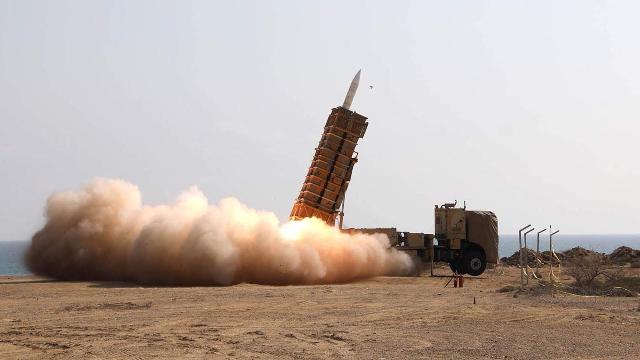
Some of the complexes continue to operate and attack targets, despite claims of their destruction.
Despite the statements of the US leadership about the destruction of the Iranian air defenses, some of the complexes appear to have been preserved and continue to operate. Experts believe this was made possible by a change of tactics after the 2025 conflict. Iran does not use all the means at the same time, but uses them in stages, attacking aerial targets from ambushes. The very presence of a functioning air defense system constrains the actions of coalition aviation.
Fighting for air
On March 18, the Israel Defense Forces (IDF) announced that the Air Force had attacked the headquarters of the Iranian missile forces and the forces of the Islamic Revolutionary Guard Corps (IRGC). In addition, several Iranian air defense systems were hit "to expand the superiority of the Israeli Air Force in the skies over Iran," the IDF said.
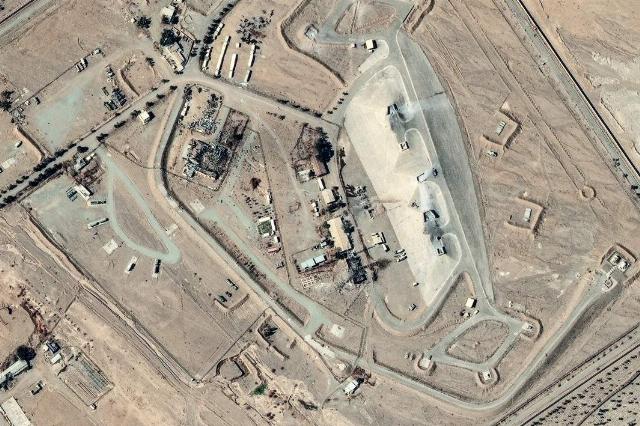
Photo: REUTERS/Vantor
Image source: iz.ru
Representatives of the coalition report on the destruction of Iran's air defense systems almost daily. US President Donald Trump, for example, did this on March 17.
"We have destroyed the Iranian armed forces — their navy is destroyed, their air force is destroyed, their air defenses and radars are destroyed and, perhaps most importantly, their leaders at almost all levels have disappeared," the head of the White House wrote on the Truth Social network.
At the same time, Trump made similar statements at the very beginning of the operation.
The IDF has also claimed significant damage to Iran's air defenses since the first days of the conflict. The destruction of 200 systems was reported on March 2. And on March 5, IDF Chief of Staff Eyal Zamir announced that approximately 80% of all Iranian systems had been destroyed. At the same time, the Israeli side did not publish an item-by-item list of destroyed funds and did not disclose the calculation methodology. At the same time, the US Armed Forces did not provide specific figures. The Central Command (CENTCOM) stated that the coalition was systematically destroying the defense of the Islamic Republic.
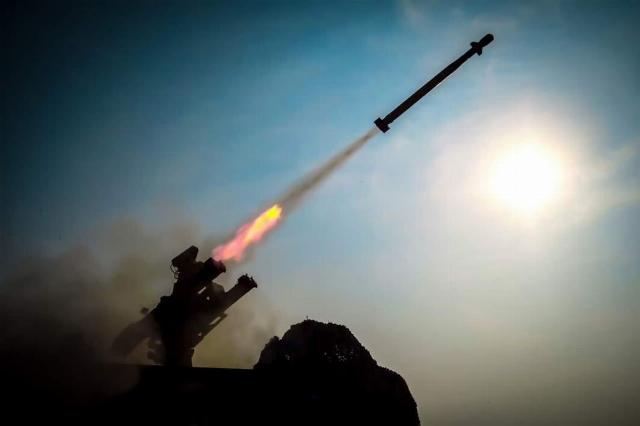
Photo: Global Look Press/Sepahnews/Keystone Press Agency
Image source: iz.ru
At the same time, on March 10, the IRGC reported that since the beginning of the conflict, Iran has shot down more than 100 coalition drones, including Hermes, Heron, Orbiter and MQ-9 Reaper vehicles.
"There is a high probability that some of Iran's air defense systems have survived," military expert Dmitry Kornev told Izvestia. — The country expected large-scale strikes and could have dispersed the complexes in advance, sheltered them and retained some of their potential. These systems are now being gradually put into operation.
According to him, an indirect confirmation of this is the destruction of a significant number of drones.
"There were attempts to attack coalition fighters," the expert added. — There is already information that some of the planes barely escaped the air defense strikes. Accordingly, Iran's air defense exists in one form or another. And this is also why not all types of United States aircraft fly in the conflict zone.
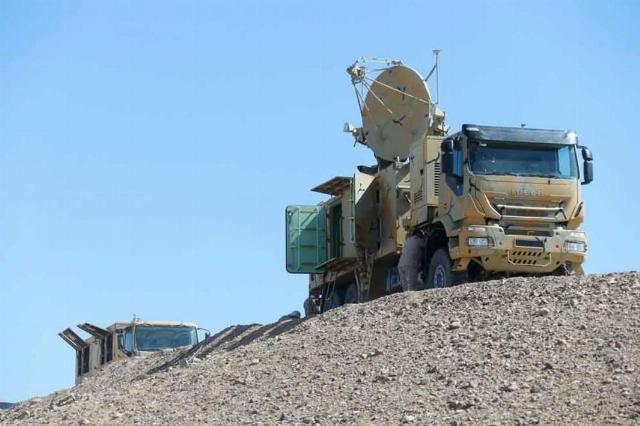
Photo: Global Look Press/Iranian Army Office/Keystone Press Agency
Image source: iz.ru
Iran's air defense suffered serious losses during the 2025 conflict, and in the current circumstances, the command has chosen a pragmatic tactic, according to military expert Yuri Lyamin.
"At the beginning of the attacks by the United States and Israel, Iran could have tried to give a decisive battle, but in this case it risked losing the entire air defense system," he explained. — The coalition's losses would be limited, given the disparate potential of the parties. Therefore, it was decided to act from ambushes.
According to the expert, the detection of targets is carried out using passive optoelectronic systems, which makes it possible not to disclose the positions of the complexes. Basically, such complexes are equipped with short-range anti-aircraft systems, which are easy to hide and, if necessary, deploy. Such systems, according to Lyamin, were actively produced in Iran.
Radars of long—range complexes, whose operation is easy to detect from a long distance by radiation, are activated only as a last resort - when preparing an attack on an already detected aerial target, immediately before launching anti-aircraft missiles, Yuri Lyamin specified.
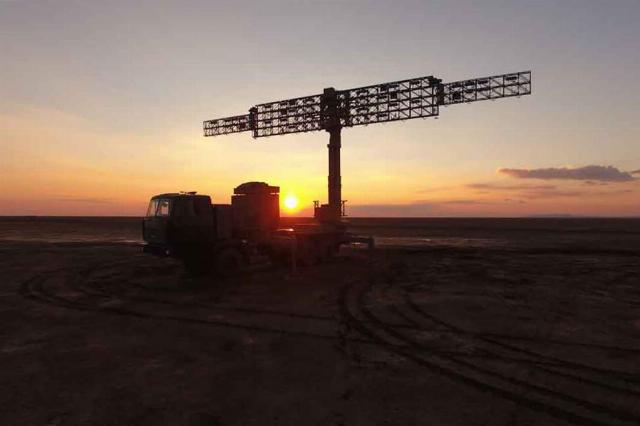
Photo: Global Look Press/Iranian Army Office/Keystone Press Agency
Image source: iz.ru
"Then they are turned off, since almost all coalition aircraft carry anti—radar missiles under their wings," he noted.
Thus, Iran manages to maintain a threat to the aircraft of the US and Israeli coalition, depriving them of the opportunity to operate with impunity in the sky. He also noted that the Islamic Republic's air defense destroyed many enemy drones — videos of their wreckage often flash on the Internet.
According to the expert, Iran is not particularly active in large strike and reconnaissance drones for nothing — they not only strike, but, most importantly, provide targeting for manned aircraft.
We should not forget that after the escalation of the conflict last summer, Iran was preparing for this clash, a military expert, head of the Department of political Analysis and Socio-psychological processes at the Russian University of Economics, told Izvestia. Plekhanova Andrey Koshkin.
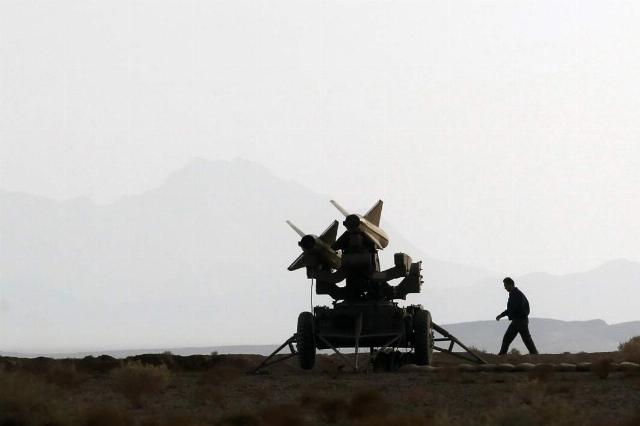
Photo: Global Look Press/Majid Asgaripour/Xinhua
Image source: iz.ru
"The Iranian Armed Forces and the IRGC tried to hide everything underground," he said. — Trump said that Iran's missile forces have been destroyed, but they continue to attack the enemy. There are objective results that show that Iran continues to resist and continues to strike.
The United States is moving air defense systems to the Middle East
Against the background of the continuing threat from Iran, the United States is strengthening the air defense system of its allies in the region.
According to Dmitry Kornev, the air defenses of Israel and the United States are generally coping with their tasks.
— Only isolated breakthroughs are recorded. The situation is more complicated in the Persian Gulf countries, but there are no catastrophic consequences there yet," he noted.
At the same time, the US strategy is changing: air defense systems are now distributed among key facilities in Saudi Arabia, the United Arab Emirates and Qatar. The targets of the Iranian attacks are infrastructure facilities such as airports, ports and energy. This is forcing the United States to deploy more and more anti-aircraft systems in the region.
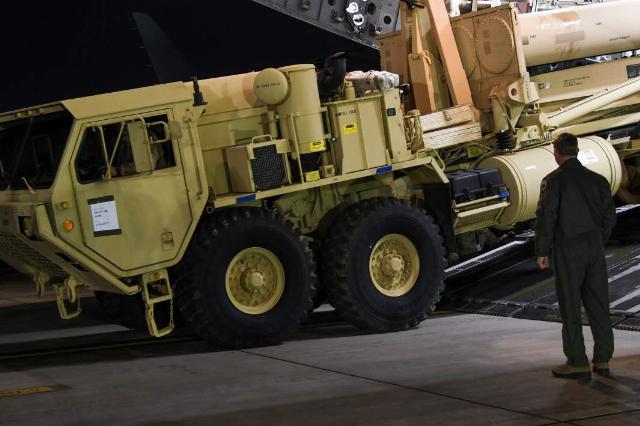
Photo: Global Look Press/U.S. Air Force/ZUMAPRESS.com
Image source: iz.ru
A major transfer of forces is underway from the Asian direction. According to South Korean media, the relocation of Patriot batteries from the Osan base to the Middle East is being discussed. At the same time, the United States is transferring THAAD complexes from South Korea.
Qatar remains another key hub, where the largest US base in the region, Al-Udeid, is located. Here, attention is being paid to the fight against drones: purchases of interceptor drones and electronic warfare equipment are being discussed.
The head of the Kiev regime, Vladimir Zelensky, announced the dispatch of specialists to the countries of the region to help organize counteraction to drones. At the same time, Donald Trump stated that the United States is capable of independently coping with this task.
The United Arab Emirates also plays an important role. The Al-Dhafra Airbase remains one of the key US facilities in the region. France has already increased its group of Rafale fighter jets there and is involved in intercepting drones.
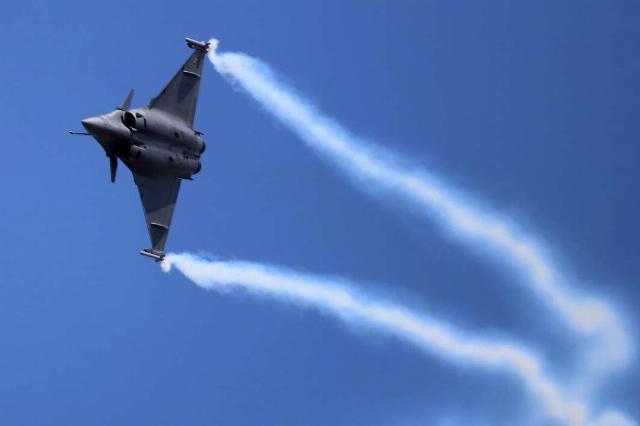
Photo: Global Look Press/Kashif Masood/Xinhua
Image source: iz.ru
Britain, according to media reports, has also sent Typhoon fighters, F-35 and additional air defense systems to the region.
At the same time, there are no signs of the transfer of systems from Europe, in particular Aegis Ashore complexes from Poland, according to open data.
"At the moment, there are no signs of such plans," the Russian Embassy in Warsaw told Izvestia.
Poland is also not considering participating in the conflict, despite its status as one of the key US allies in NATO. Warsaw emphasizes that the situation in the Middle East does not directly affect the country's security.
Roman Kretsul
Bogdan Stepovoy
Daniil Sechkin
