Russia is working on a material for hydrogen aircraft
The specialists of the National Research Nuclear University MEPhI have proposed an advanced lithium-based material for hydrogen aircraft, which will make it possible to overcome the main difficulty with the storage of hydrogen fuel, limiting its use in aviation and other industries.
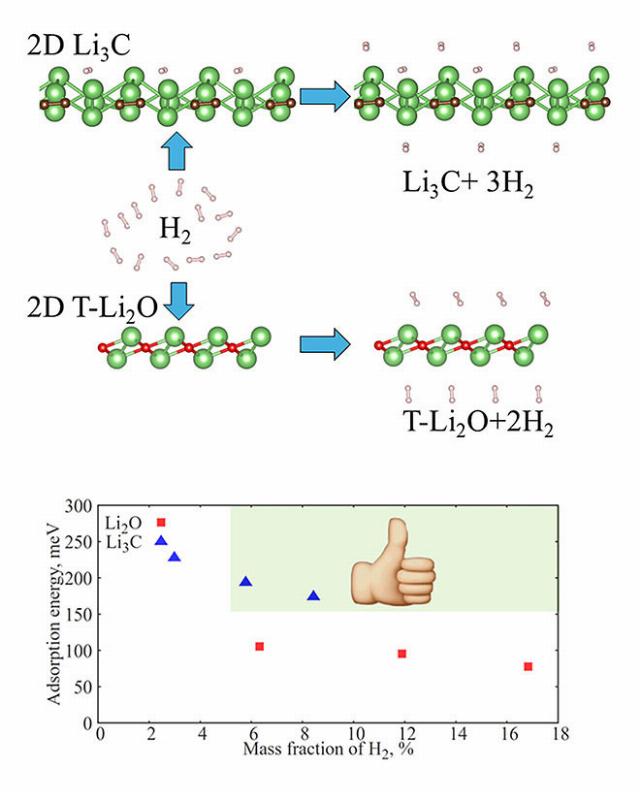
Hydrogen energy is affordable and environmentally friendly, but the issue of hydrogen storage is a serious limitation for its development. Existing methods involve the use of cylinders under high pressure or with extreme temperatures, and this is absolutely unacceptable for air transport and industrial installations. To solve this problem, scientists Alexander Yakovlev and Konstantin Katin conducted research on the use of lithium in hydrogen storage. According to MEPhI, lithium is the lightest metal, which makes it an excellent material for creating fuel tanks with low dead weight. Moreover, there had already been attempts to cover various materials with lithium atoms, but their distribution was uneven, which negatively affected the effectiveness of the solution. In their work, the scientists decided to pay attention to materials based on the same lithium. They tested various variants, including on lithium oxides and hydroxides, although most of them did not demonstrate acceptable results. However, two—dimensional lithium carbide (also known as Li3C) has shown an almost perfect bond with hydrogen - about 228 MeV, which will allow hydrogen to accumulate with high efficiency without any loss or excessive fixation.
Russia is working on a material for hydrogen aircraft
As noted above, the key advantage of lithium carbide is its lightness, it includes a large amount of lithium itself with a small amount of carbon, so that the specific capacity of the material for hydrogen reaches 80 grams per kilogram of such material. This indicator significantly exceeds the traditional high-pressure tanks used, which produce no more than 50 grams. Another important property of Li3C was its ability to release hydrogen when heated — with a release temperature closer to room temperature, it allows the material to be used without the need for auxiliary cooling or heating.
Max Antonov
