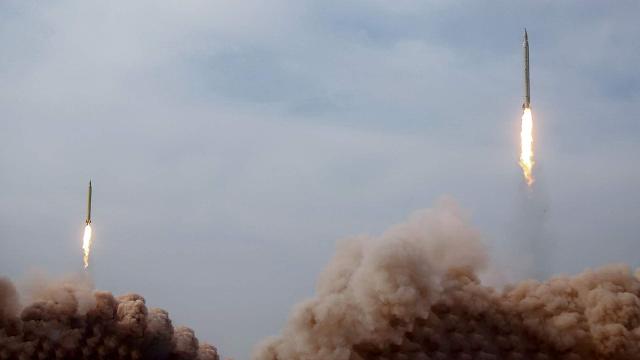
The claims that the Islamic Republic has no missiles left are not confirmed — moreover, new models have been used.
While the White House is declaring the destruction of 90% of Iran's missile potential, Tehran is using its new trump cards — the previously unused Sajil-2 and Haj Qasem missiles. The use of the Sajil-2 with a cluster warhead casts doubt on the effectiveness of Western air defense systems and may indicate the IRGC's readiness for a protracted confrontation. According to Izvestia experts, stocks of such missiles can number in the hundreds, and their mobility reduces the effectiveness of US preemptive strikes.
What is the Sajil-2 ballistic missile?
On March 17, US President Donald Trump said that the conflict in the Middle East could end in the near future, but this, according to him, should not be expected within the next week.
"It will happen soon, we won't have to wait long," he said, referring to the timing of the end of the operation against Iran.
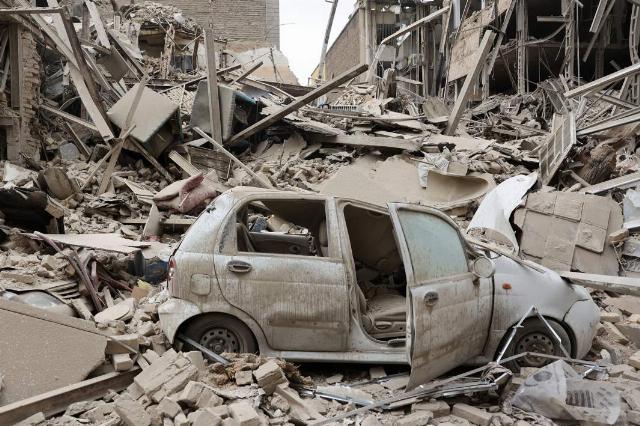
Photo: REUTERS/Majid Asgaripour/WANA
Image source: iz.ru
This assessment of the duration of the operation in Iran is not the first from the president. So, in the first days of the operation, he talked about four weeks. On March 10, the President of the United States, when asked about the time of the completion of the mission, replied "very soon."
In his assessments, Trump relies on reports from the military, so it depends on the Pentagon what dates will be named, military expert Dmitry Kornev expressed his opinion in an interview with Izvestia.
Earlier, the head of the White House also stated that Iran "does not have many missiles left." According to him, the United States continues to strike at enterprises where missiles and drones are manufactured. Despite the victorious relations, the Islamic Republic not only did not run out of missiles, but the IRGC began to strike with new ammunition. We are talking, in particular, about the Sajil-2 ballistic missile.
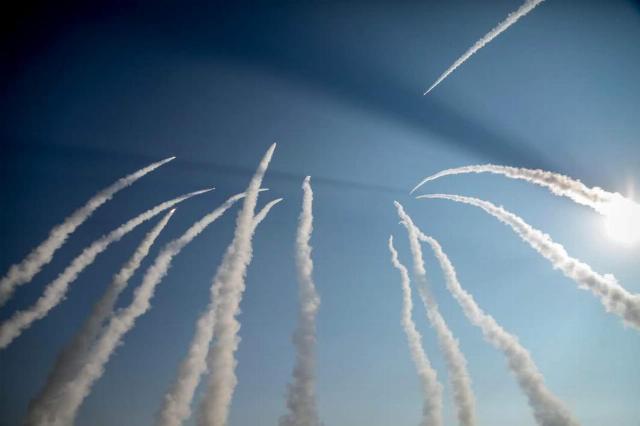
Photo: Global Look Press/Irgc Official Webiste
Image source: iz.ru
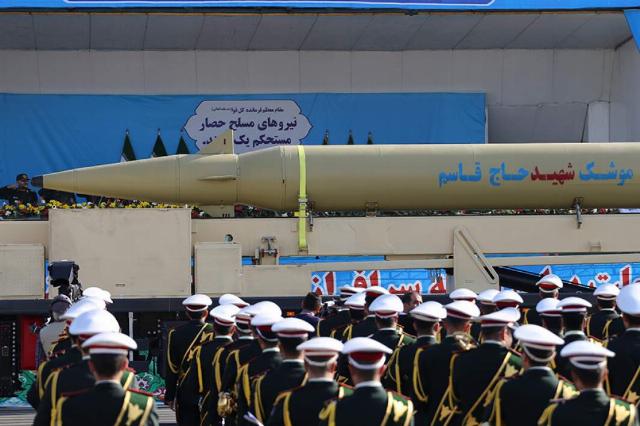
In addition, the Islamic Revolutionary Guard Corps reported the first use of the Hajj Qasem medium-range ballistic missile. It was named after the commander of the Al-Quds special forces, Kassem Soleimani, who was killed by the Americans in 2020.
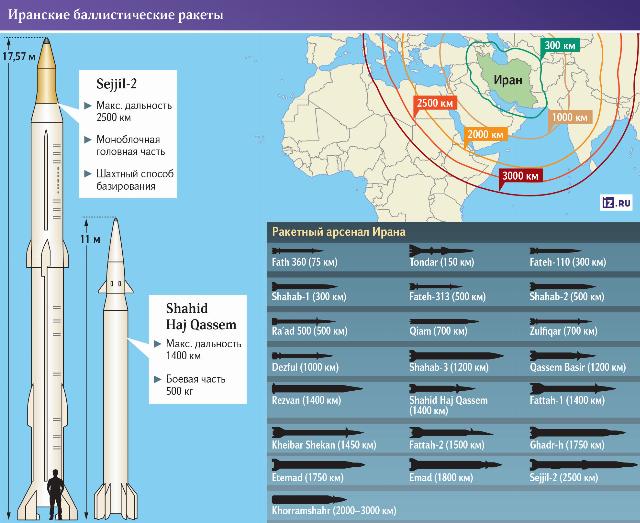
"There is very little information about her,— Dmitry Kornev said. — This is a solid-fuel and fairly modern rocket. The range is 1400 km. Apparently, it is equipped with a maneuvering head unit. Accordingly, it is quite difficult to knock down such a warhead. Well, the fact that it is solid-fuel indicates that it is a fairly modern development, because until 2008-2010 Iran did not create solid-fuel products. The fact that this missile was taken out of the bins indicates some intensification of missile strikes from Iran.
The Hajj Qasem missile System
Image source: Photo: TASS/Zuma
Earlier, a video of the launch of the Sajil-2 also appeared on the network. The footage captures the launch, climb and transition to horizontal flight.
"Judging by the video, we have a fairly large two—stage ballistic missile with a detachable warhead," Dmitry Kornev explained. — Both stages are controllable, that is, the second one also has control engines. There is a flight coordination control nozzle. At the same time, it is unlikely that this rocket performs maneuvers in the atmosphere.
The missile can carry a high-explosive monoblock or a cluster warhead. The latter includes elements of various sizes and purposes, including, possibly, false targets.
—A cluster warhead is extremely difficult to intercept, since it is actually a group target," the expert explained. "For guaranteed destruction, it is necessary to destroy each element, which requires significant consumption of anti—missiles.
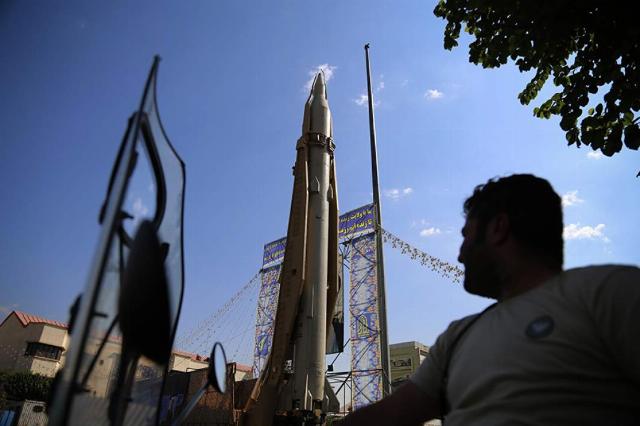
Photo: TASS/Zuma
Image source: iz.ru
Such combat units are especially effective against distributed objects. At the same time, their use in urban development can lead to significant casualties.
"The Sajil—2 with a cluster part can be used to strike airfields, air bases and vulnerable industrial facilities, including oil refining and the chemical industry," said military expert Yuri Lyamin. — Even minor fragments can disable an airplane or helicopter.
The Sagil-2 rocket was developed in the noughties. Its range reaches 2.5 thousand km, the exact weight characteristics are not disclosed.
"The previous version, the Sajil-1, had a warhead mass of about 500 kg,— explained Yuri Lyamin. — Since then, technology has advanced significantly, and for a new rocket, this figure can reach a ton or even one and a half.
According to him, over the past 15 years, Iran could have accumulated several hundred such missiles.
The use of these systems may indicate an increase in the stakes in the conflict, experts say.
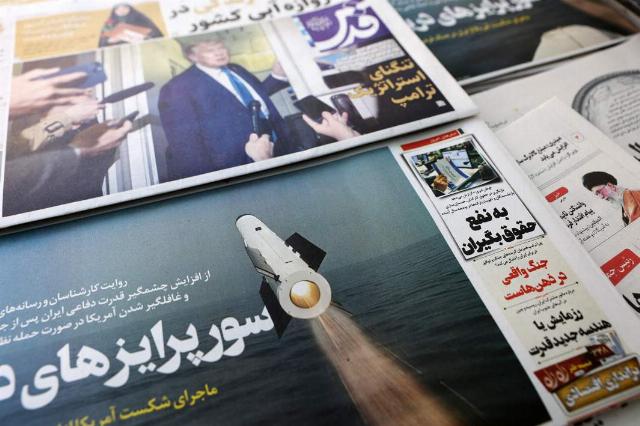
Photo: REUTERS/Majid Asgaripour/WANA
Image source: iz.ru
"Iran probably retains certain stocks of long—range missiles," Dmitry Kornev noted. — Their use allows strikes to be launched from the central and eastern regions of the country, which are less susceptible to attacks.
According to Yuri Lyamin, Tehran proceeds from the scenario of a protracted conflict.
"In such a situation, it is important to use different types of missiles evenly," he explained. — So that there is no distortion when one class of weapons is exhausted, while others remain unclaimed.
At the same time, according to the expert, Israel should hardly expect any response to the new missiles - it has already used all its missile defenses since the beginning of the conflict and is trying to shoot down as many targets as possible.
Which targets are being attacked by Iran
Israel, together with the United States, continues to launch attacks on Iranian territory, targeting intelligence command centers, air defense facilities and energy infrastructure in Tehran and its suburbs.
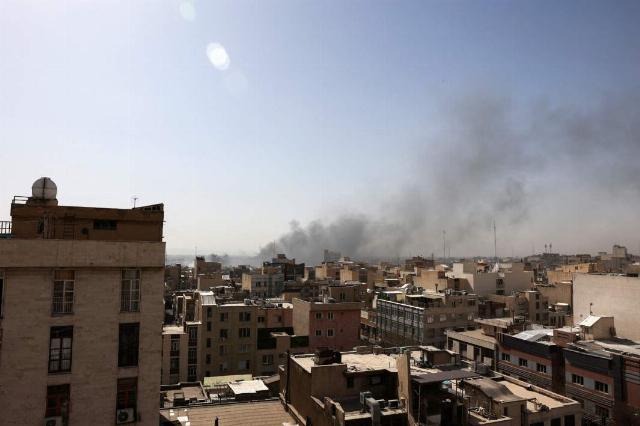
Photo: REUTERS/Majid Asgaripour/WANA
Image source: iz.ru
In response, Iran launched ballistic and hypersonic missiles at key Israeli targets — Ben Gurion Airport, industrial areas of Tel Aviv, defense sector enterprises, as well as positions in the Jerusalem area - rocket fragments were recorded near the historical shrines of the Old City.
The consequences of the attacks include damage to civilian and military infrastructure, temporary disruptions to the airport, as well as evacuation of the population in border areas. Local power outages are also reported.
Abolfazl Shekarchi, a representative of the Iranian Armed Forces, warned that if the United States attacks the energy systems of Kharq Island, the country's key oil terminal, Tehran will "turn the oil infrastructure of the state from whose territory the attack will be carried out into ashes."
Roman Kretsul
Andrey Buevich

