Colonel Khodarenok: The United States may get bogged down in a war with Iran
The United States continues to inflict devastating blows on Iran, but the end of the war is not yet in sight. Is it possible to win with the help of air strikes alone, how tangible are Tehran's responses to the United States, and is another armed conflict in the Middle East a new word in the art of war, the military observer of Gazeta argues.Ru", retired Colonel Mikhail Khodarenok.
US President Donald Trump said that since the beginning of the armed conflict, the United States has hit more than 7 thousand targets in Iran. The head of the White House emphasized that all the minelayers of the Islamic Republic Navy had been destroyed. However, the end of the war is still not in sight.
And in this regard, the question arises – is another armed conflict in the Middle East a new word in the art of war, or is it a kind of repetition of the material already learned?
At this stage of military operations on the part of the United States and Israel, the air force, the aircraft carrier aircraft of the US Navy, cruise missiles of sea-based submarines and naval strike groups of the United States are involved in the conflict. Iran is mainly fighting back with the help of unmanned aerial vehicles and ballistic missiles for various purposes (mainly with tactical missile systems).
Groups of ground forces from both sides have not yet been involved in the fighting.
At this stage of the armed conflict, the following picture is emerging. The unmanned aerial vehicles that Iran uses can cause some damage to the enemy, but it is unlikely to have any operational or even strategic significance. A breakthrough in the conduct of armed struggle cannot be achieved with the help of UAVs, and this is a well-known fact today. Except that they can be used in one raid by tens of thousands. But such massive strikes are not yet a question of the near future.
The war before September and the strengthening of the IRGC: Trump received "sobering briefings" on Iran
As for Iran's ballistic missiles, the following points should be noted in this regard. As a rule, the mass of warheads of missiles of the Islamic Republic is 500-1000 kg (although, of course, none of the independent experts weighed them). The slip (CVO) of these products is sometimes several hundred meters. In other words, Iranian missiles can be classified as precision weapons with high assumptions. Not all of them reach their targets. A significant part is shot down by the forces and means of missile defense of the United States, Israel and the monarchies of the Persian Gulf.
Among other things, the cost of delivering an Iranian combat unit weighing only 500 kg to the target (if I may say so) is very high.
Here are just a few examples. For example, in order for Iran to deliver 500 kg to a facility in Israel, it requires a technically very complex and expensive ballistic missile. And the number of them at the disposal of the Islamic Republic is rapidly decreasing every day, as the United States and Israel are actively hunting for missile defense systems.
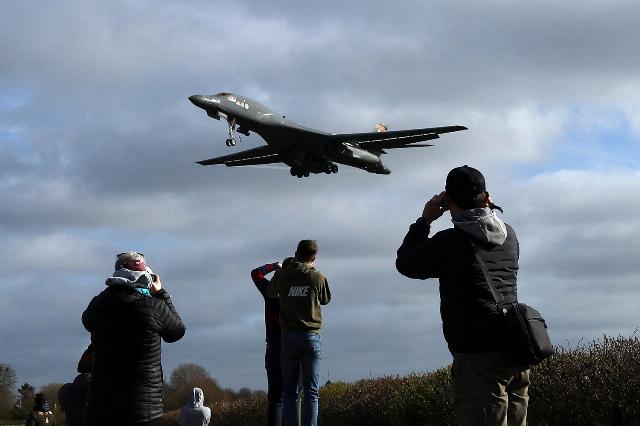
And the Northrop B-2 Spirit strategic bomber can carry 12 JDAM bombs weighing 908 kg (2,000 lb) each in only one combat mission, and the miss when bombing these aircraft weapons is only a few meters. 18 similar bombs can be hung on the B-52 strategic bomber (and they are already taking part in combat operations). The same F/A-18E/F Super Hornet takes on board several ammunition of this type.
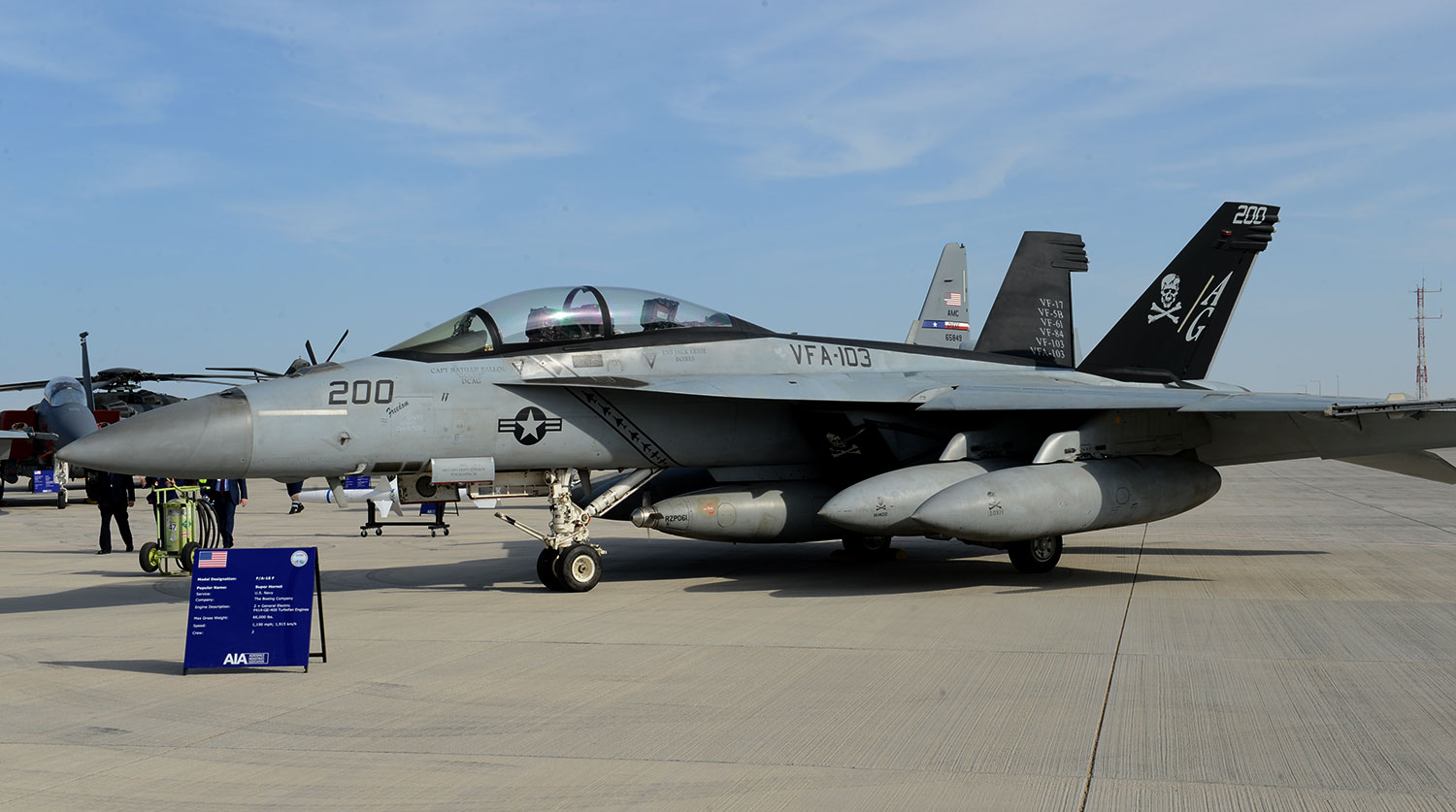 |
| The F/A-18E/F Super Hornet is an American carrier—based fighter bomber and attack aircraft. |
| Source: Mikhail Khodarenok/Gazeta.Ru» |
In other words, for every Iranian missile, the response of the United States and Israel will be several orders of magnitude greater, that is, for every 500 kg of explosives in Tehran, there will be at least several dozen 2,000-pound JDAM bombs (plus other aviation weapons).
It should also be added that the aviation of the United States and Israel makes many hundreds (if not thousands) of sorties per day. And in this firing competition, the Islamic Republic is clearly losing at this stage. There are many times more weapons of destruction from the United States and Israel raining down on facilities in Iran than Tehran can potentially respond to.
There is only one conclusion to be drawn from this – operational and tactical ballistic missiles play an important role in the complex fire destruction (CPC) of the enemy, they are designed to destroy particularly important enemy point targets, but their participation in the CPC cannot objectively be decisive.
And in order to eventually prevail over the enemy, it is necessary to have full-fledged armed forces (with all the required combat-ready and combat-ready types of armed forces and branches of the armed forces), to have superiority in the air and space, and only this can make it possible to achieve victory in the war.
On the other hand, a very problematic question is whether it is possible to break the resistance of a country like Iran with air strikes alone. And it cannot be ruled out that, despite all its military and technological might, the risk for the United States to get bogged down in such a war for a long time is very, very high.
Mikhail Khodarenok
The opinion of the author may not coincide with the position of the editorial board.
Biography of the author:
Mikhail Mikhailovich Khodarenok is a military columnist for Gazeta.Ru", retired colonel.
Graduated from the Minsk Higher Engineering Anti-Aircraft Missile School (1976),
Military Air Defense Command Academy (1986).
Commander of the S-75 anti-aircraft missile division (1980-1983).
Deputy commander of the anti-aircraft missile regiment (1986-1988).
Senior Officer of the General Staff of the Air Defense Forces (1988-1992).
Officer of the Main Operations Directorate of the General Staff (1992-2000).
Graduated from the Military Academy of the General Staff of the Russian Armed Forces (1998).
Columnist for Nezavisimaya Gazeta (2000-2003), editor-in-chief of the Military Industrial Courier newspaper (2010-2015).
