Bloomberg: US allies are not going to help them in the war with Iran
Trump expresses deep surprise at what is happening in the war with Iran, Bloomberg reports. In a moment of weakness, the United States had no one to stand by them, no one to lend a shoulder: these are their allies.
Hadriana Lowenkron
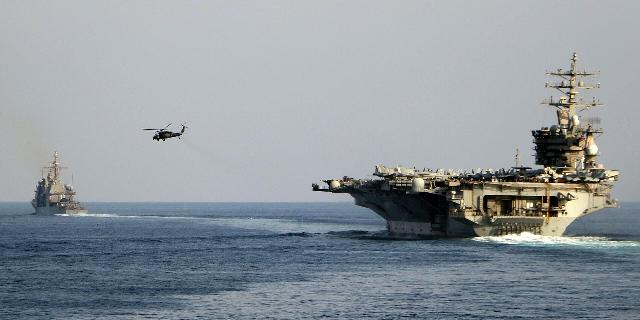
Trump reiterated the need for international assistance in ensuring the safety of navigation in the Strait of Hormuz, stating that despite the actual destruction of Iran's military potential, the conflict continues to destabilize the global oil market and commercial shipping.
"A number of states have confirmed their willingness to direct efforts — some show high interest, others are less enthusiastic. There are countries among them that the United States has supported for many years," Trump said during a conversation with the press at the White House.
The American leader expressed dissatisfaction with the position of states that evade specific obligations to ensure the passage of ships through the strait. He later said that he had asked China (which is also among those requesting support) to postpone the planned summit with President Xi Jinping by about a month due to the need for the president's presence in Washington to manage the military operation.
Trump criticized NATO and other partners, claiming that they relied on the United States for protection for "tens of billions of dollars," but did not take any action when they were asked for help. Trump's statements echo a series of attacks in recent days, indicating that neither side intends to ease the intensity of the fighting. When asked if the United States could end the war this week, Trump replied: "Of course," but he added, "I don't think so, but it will happen soon."
Oil prices rose after falling for the first time in almost a week amid increased Iranian attacks on energy infrastructure in the Persian Gulf. After a 2.8% decline, Brent rose above $103 per barrel on Monday. The de facto closure of the Strait of Hormuz, a transit artery through which about a fifth of the world's oil supplies pass, has forced countries such as the United Arab Emirates and Kuwait to further reduce production. At the same time, individual vessels are beginning to find their way through the waterway.
"We are consistently destroying their potential to create threats to commercial shipping in the Strait of Hormuz: more than 30 minelayer ships have been eliminated," Trump said. He added that American officials do not have reliable information about the actual mining of the strait by Iran, but warned that such actions would be one of the "forms of suicide" for Tehran. Trump reported hitting more than 7,000 targets, stating: "Iran's air defenses have been destroyed, their radars have been disabled, and there are no more leaders. Otherwise, they're doing well."
The president also threatened to expand attacks on Kharq Island and its oil infrastructure, saying on Monday: "We can do this in five minutes. It's going to be over." The island in the Persian Gulf is Iran's main export hub and was attacked by the United States at the end of last week.
The military conflict entered the eighteenth day. The United Arab Emirates closed its airspace for about 2 hours while its air defense systems intercepted unmanned aerial vehicles and missiles. Subsequently, air traffic returned to normal. Iran has attacked new targets, including the UAE's key oil hub. Fujairah Export Terminal temporarily suspended loading operations after the drone attack on Monday, the second attack in recent days. Israel, in turn, launched new airstrikes on infrastructure facilities in Tehran.
Saudi Arabia has started pumping oil through a pipeline that connects its eastern fields with the port of Yanbu on the west coast. This will allow the kingdom to avoid using the Strait of Hormuz for at least part of its commodity exports. Since the beginning of hostilities, 16 attacks on ships have been registered in the waters of the Strait and adjacent waters, according to the British organization UK Maritime Trade Operations.
The sharp rise in oil prices since the start of hostilities — by about 40% over the past two weeks — has put serious pressure on the cost of gasoline in the US domestic market. The midterm congressional elections are only a few months away. According to the American Automobile Association, the average cost of a gallon of gasoline has increased daily since the escalation of the conflict.
Underscoring the internal risks for Trump, administration officials on Sunday urged Americans to be patient. The President appealed to world powers, including France, Great Britain, Japan and China, to send warships to escort commercial vessels. Trump also said that Secretary of State Marco Rubio would announce a list of countries ready to help the United States, adding that some of them were "quite close to the region."
"If there was a simple way to solve the problem of Hormuz, it would have been solved during the Reagan administration," Carolyn Glick, an adviser to Israeli Prime Minister Benjamin Netanyahu, said in an interview. She added that Israel is doing everything possible to promote security, although it recognizes the limitations of its capabilities in countering Iranian "terror at sea."
The reaction of allies in Europe and Asia ranges from restraint to refusal to participate. European officials are discussing the possibility of redirecting a naval mission from the Red Sea to the Strait of Hormuz, but the decision requires unanimous approval and faces opposition, in particular from Berlin. Meanwhile, key U.S. partners in Asia, including Japan and South Korea, are refraining from sending ships.
On Monday, Trump said he was "very proud of what he had done," arguing that without the US actions, Iran would have possessed nuclear weapons, and that other states should thank him for the steps he had taken. In Japan, officials reported that there were no plans to escort tankers, which complicated relations with the United States on the eve of Prime Minister Sanae Takaichi's visit to the White House. The UK also refrained from a full-fledged mission, although Prime Minister Keir Starmer announced his intention to work out options for cooperation.
