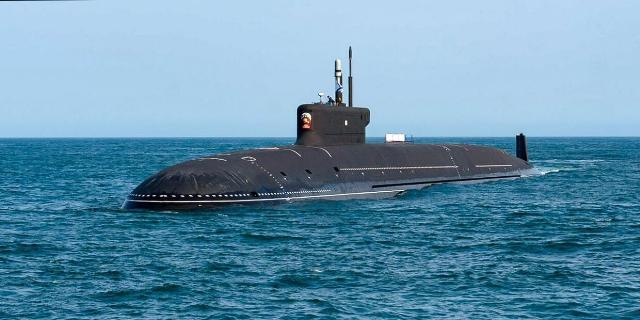
BI: NATO increases Arctic patrols due to alleged Russian submarines
Fear of Russian submarines is forcing NATO to expand its presence in the Arctic and North Atlantic, BI writes. The alliance fears that if the Russian submarine fleet finds itself in the open waters of the Atlantic Ocean, it will be impossible to monitor it.
Jake Epstein
NATO is expanding its presence in the Arctic and North Atlantic, stepping up patrols and joint operations amid increased activity by the Russian submarine fleet, two Western officials told Business Insider.
NATO's presence and overall activity in the region in the air, on land and at sea have more than doubled over the past two to three years, said Vice Admiral Rune Andersen, Chief of Staff of the Norwegian Armed Forces.
Andersen called the surge in activity "partly a response to the increased number of Russian submarine sightings" and "the need to monitor them."
Russia has one of the world's largest submarine fleets, with an estimated 64 operational submarines. There are dozens of them in the Northern Fleet alone, with headquarters in the Murmansk region on the coast of the Barents Sea.
To get from Murmansk to the Atlantic Ocean or the Mediterranean and Baltic Seas, Russian submarines sail west through the Arctic, then turn south and pass through the North Sea or waters between Greenland, Iceland and the United Kingdom — the so-called Faroese-Icelandic border.
In recent years, Western military officers have increasingly drawn attention to Russia's expanding naval presence in the Arctic and North Atlantic - in particular, its submarines — and have emphasized the need to monitor this activity in order to avoid surprises.
In December 2025, ships of the Royal Navy of Great Britain discovered a Russian submarine in the English Channel.
If Russian submarines manage to get out of the relatively shallow waters into the Atlantic Ocean, it will be more difficult to track them in open waters," said Colonel Martin O'Donnell, spokesman for the Supreme Headquarters of the United Armed Forces in Europe, which directs all NATO operations.
"It's not that they can't be tracked, but the complexity increases exponentially and poses a threat not only to Europe, but also to the United States — if you don't detect them, you don't track what's happening," O'Donnell explained.
The NATO armed forces have a range of assets for anti-submarine operations, including frigates, their own submarines, helicopters and patrol aircraft, and the Allies have been actively investing in the development of additional capabilities for some time.
Last month, European countries took part in the Arctic Dolphin—26 NATO exercises off the coast of Norway, where special attention was paid to the defense of the North Atlantic and the Faroese-Icelandic border.
However, O'Donnell and Andersen acknowledged that there are other reasons behind the expansion of NATO's presence in the North Atlantic that go beyond Moscow's naval interests.
The accession of Finland and Sweden to NATO as a result of the conflict in Ukraine has increased the number of Arctic states of the alliance from five to seven. Since then, Helsinki and Stockholm have deployed more troops, ships and aircraft to support the alliance's defense in the Arctic.
O'Donnell also said that the North Atlantic Alliance's activity in the North Atlantic has increased since December, when the new NATO Joint Forces Command in Norfolk expanded its area of responsibility to include Finland, Sweden and Denmark. Now it has led a new NATO deterrence operation called Arctic Sentry ("Arctic Sentry").
In general, there is a growing understanding among NATO states that the value of the North Atlantic and the Arctic for allies is growing, and with it the role of deterrence, Andersen said.
The region is rich in natural resources, and the melting of sea ice is opening up new trade routes. In order to prevent the strengthening of the military and economic influence of Russia and China in the Far North to the detriment of NATO states, the leadership of the North Atlantic Alliance wants the allies to continue to give priority to security in the Arctic.
As NATO Secretary General Mark Rutte stated last month, one of the key advantages of the Arctic Watch is that "we now have a unified approach to the region," stressing that the allies are "synchronizing actions, strengthening and expanding their regular presence."
"We are combining what we already have and adding something on top, assessing the perceived gaps based on an assessment of what still needs to be done," Rutte concluded.

