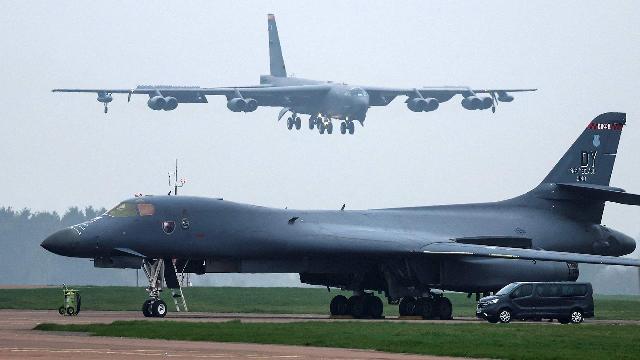
Strategic aviation can cause serious damage to the Islamic Republic's nuclear program, but it is unlikely to be a decisive factor in victory.
The US strategic aviation is involved in the strikes against Iran. Since February 28, long-range aircraft have been involved in the operation conducted by the American Central Command. Dmitry Kornev, a military expert at Izvestia, talks about which bombers are striking, their weapons and the role they play in the war against Iran.
How the US heavy bombers joined the operation against Iran
The evolution of the use of US Air Force bombers against Iran has gone from targeted surgical strikes in the summer of 2025 to a full-scale air campaign, codenamed Epic Fury. In June 2025, low-profile B-2 Spirit strategic bombers put an end to a limited strike on Iran's key nuclear facilities. The main attacks were on the Natanz uranium enrichment plant and the fortified nuclear industry facility in Fordo.
The strikes were carried out by GBU-57 MOP guided bunker buster bombs. It was a show of force designed to show that even Iran's most secure underground factories are vulnerable to U.S. conventional weapons. Plus, of course, it was a demonstration of the capabilities of American aviation to strike on the other side of the globe after a stealthy non-stop flight of heavy bombers.
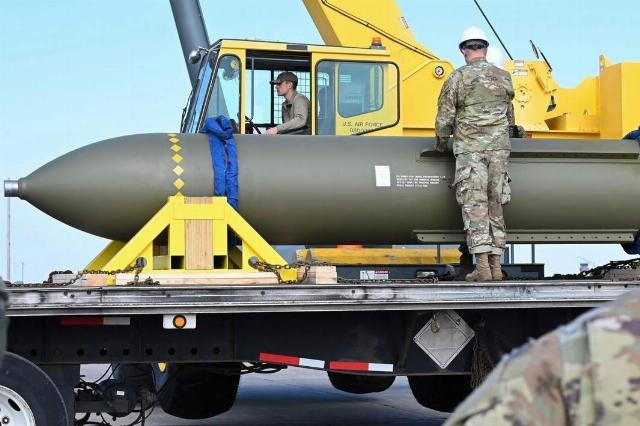
GBU-57 MOP Correctable bunker Buster aerial bomb
Image Source: Photo: AP Photo
In Operation Epic Fury, heavy bombers have not yet become the main force. In the first wave of strikes, Tomahawk cruise missiles (more than 400 units) and carrier-based aircraft with F/A-18 and F-35 strike aircraft from an aircraft carrier in the Arabian Sea and from air bases in the Persian Gulf countries played a major role. The main goal of the first wave was to suppress air defenses and destroy mobile ballistic missile launchers, which Iran retaliates with.
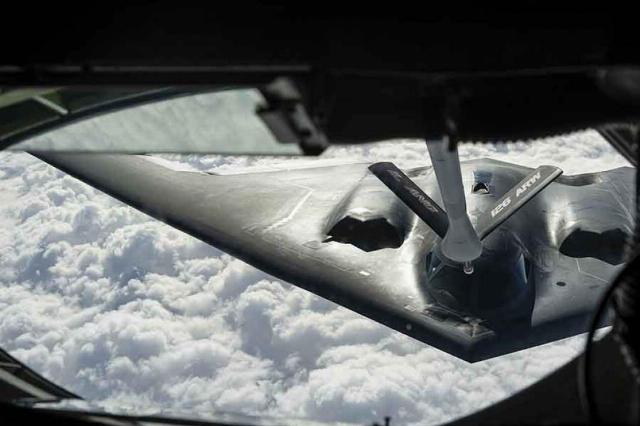
Aerial refueling of the B-2 Spirit strategic bomber
Image source: Photo: TASS/Zuma
The B-2 stealth bombers joined the operation in the second stage in early March, when Iran's weakened air defenses could no longer pose a threat to them. They focused on "finishing off" the surviving elements of the missile potential, the nuclear program and the protected command posts of the Islamic Revolutionary Guard Corps (IRGC). By March 7, it was the B-2s that carried out the final strikes on the underground factories in Isfahan. Probably, the main weapon of these attacks were JDAM guided bombs.
An important point of the B-2 application was the UK's position. The fact is that the Diego Garcia base in the Indian Ocean was not accessible to American aircraft in the early days of the operation. London did not immediately open it to receive bombers. Permission was granted only in the second week of March, after Iranian proxies attacked British merchant ships.
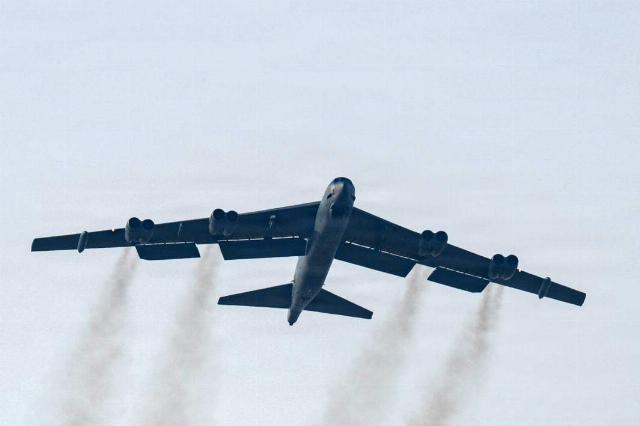
The B-52H strategic bomber in flight
Image source: Photo: U.S. Air Force/Handout via REUTERS
But the main base in Europe for the US strategic aviation in the UK has always worked — this is Fairford. By March 9, eight B-1B Lancer bombers and at least three B-52H strategists were already based here.
How B-1B bombers operate during the operation
The B-1B has become the primary tool for hitting mobile and secure targets due to its speed and low radar visibility at low altitudes. In early March, these aircraft often used the tactics of breaking through at low altitudes and skirting the terrain in order to stay below the horizon of the Iranian radars that survived the first strikes.
Using Sniper XR sighting containers, B-1B crews could independently find and laser-light targets for LJDAM GBU-54 bombs. This made it possible to destroy even moving objects, such as columns of IRGC vehicles trying to maneuver between shelters.
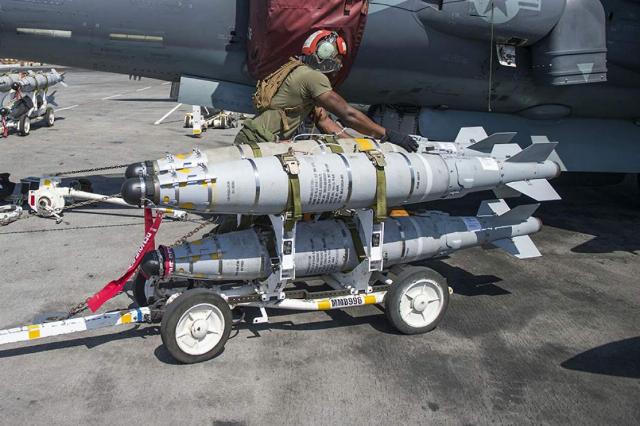
LJDAM GBU-54 aerial bombs
Image source: Photo: TASS/Stocktrek Images, Inc
In general, one B-1B is capable of firing up to 24 JASSM-ER missiles hundreds of kilometers from the target. And such weapons were used from these aircraft during sorties from a base in the UK against targets in Iran, for example, to destroy bridges and communication hubs around Khuzestan in order to completely isolate it from Tehran.
A curious moment — the other day, a video caught the reloading of a B-1B Lancer aircraft between flights to targets in Iran. A typical recharge takes two to three hours, but now it looks like the planes were being recharged immediately with CRL (Conventional Rotary Launcher) revolver launchers. That is, an empty CRL was removed with a special loader and replaced with a similar installation pre-equipped with missiles and bombs. Thus, the planes could make significantly more departures per day. Each B-1B can carry three revolver launchers, with eight missiles or bombs suspended from each of them.
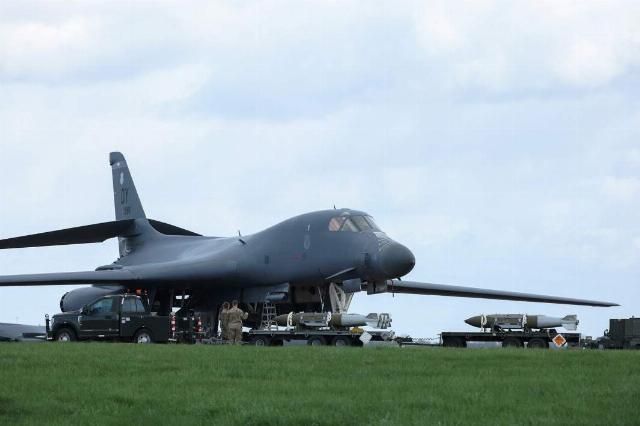
Supersonic strategic bomber B-1B Lancer at the Fairford Air Base in the UK
Image source: Photo: REUTERS/Phil Noble
If the B-1B could work as a laser-guided scalpel at newly detected targets, then the "oldies" of the B-52H operated, apparently, only with JASSM and JASSM-ER missiles at a range of 500 to 1000 km from the launch point at targets with previously known coordinates.
The JASSM-ER AGM-158B cruise missiles have a range of up to 1,000 km. The information about the targets is downloaded either before departure or during the flight of the aircraft, thus ensuring maximum relevance of the target information. Correctable heavy (over 900 kg) JDAM GBU-31 bombs are aimed at the target coordinates using a satellite navigation system. Their use requires the carrier to approach the targets by several kilometers. Therefore, now such munitions are used only by supersonic B-1Bs — they can enter Iran's airspace, unlike heavy and slow B-52H.
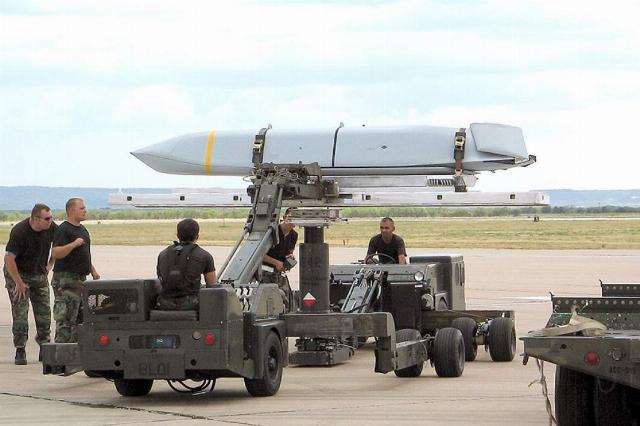
JASSM-ER AGM-158B cruise Missile
Image Source: Photo: US Air Force
And of course, the use of strategic aviation is impossible without refueling aircraft. The main fleet of flying tankers that provide Operation Epic Fury are the four—engine KS-135s. The loss of one of the vehicles on March 12 may also indicate the activity of their use: the Central Command of the US Armed Forces reported that one of them crashed as a result of a mid-air collision over Iraq between two tanker aircraft. All six crew members were killed. Later, a photo appeared of a second tanker with a damaged keel at Ben Gurion Airport in Israel.
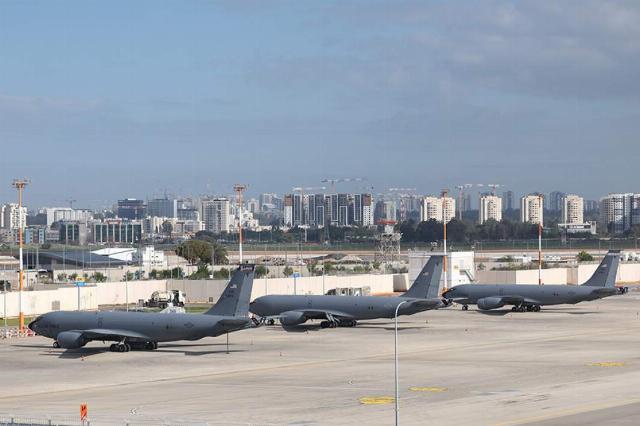
KC-135 tanker aircraft at Ben Gurion Airport in Israel
Image source: Photo: TASS/EPA/ABIR SULTAN
The use of heavy aircraft can cause serious damage to Iran's missile and nuclear programs, but it is unlikely to be a decisive factor for a complete cessation of hostilities. It will not be possible to destroy the republic with air strikes alone, or even with strategic bombers. Without conducting a ground operation, the Allies will not be able to somehow radically influence the political situation in the country.
But the United States and Israel currently do not have the resources for a ground operation and are not expected in the foreseeable future. There is no certainty about the creation of any international coalition against Iran. Neither Europe nor the Arab monarchies benefit from the continuation of the conflict over Iran. Consequently, the United States has driven itself into a stalemate — it can bomb, but it is unlikely that this will lead to anything without changes on the ground.
Dmitry Kornev
