The first Russian Space Week will be held on April 6-12 across the country
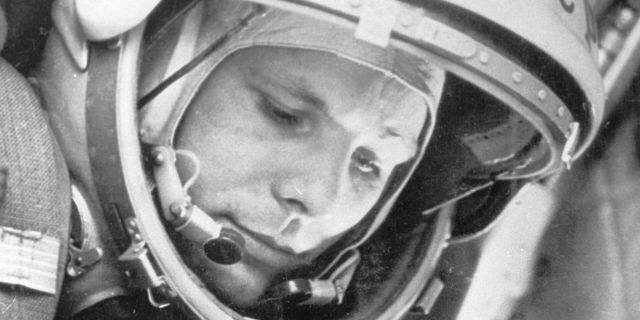
On December 29, Russian President Vladimir Putin signed a decree on holding the first Space Week in Russia, dedicated to the celebration of the 65th anniversary of the first human spaceflight. Starting in 2026, Space Week in Russia will be held annually on April 6-12.
The organizers of the Space Week are the Russian government and the State Corporation Roscosmos, with the participation of business and public institutions.
On April 6, the first day of Space Week, a series of scientific, educational, creative and cultural events will be launched across the country, which will be held in the regions of Russia.
Schools will hold classes on "Conversations about important things" on the topic of space. Students will learn about the history and modernity of Russian cosmonautics, and they will answer the question: "How do I become an astronaut?"
On April 7, there will be an educational marathon at the National Space Center named after the First Female Cosmonaut V.V. Tereshkova. For the first time, the Roscosmos headquarters will turn into a festival venue where renowned experts will speak, master classes and creative meetings will be held. The marathon is held jointly with the Znanie Society.
On April 8, as part of the Engineer's Day, more than 200 young employees of the rocket and space industry will participate in workshops, lectures, and design sessions at the Roscosmos Team of the Future industry forum at the Moscow Aviation Institute.
The Russian Space Forum will be held on April 9th. The Forum will become a key federal platform for dialogue between the state, science and business in the space sector. The Forum is operated by the Roscongress Foundation with the support of the Russian government.
On Thursday, April 9, as part of Space Week, the film "My Dog is an Astronaut" will be widely released, telling about a boy who dreamed of space and his dog Squirrel.
A number of regions will host not only traditional events in museums and public spaces, but also theatrical productions dedicated to space themes. Also on April 9, the Association of Film Distributors of Russia will organize free screenings of the documentary Gagarin in 300 cinemas. Embracing the World", which will tell about the significance of the first human spaceflight for the planet.
On April 10, VK Stadium will host a large-scale audiovisual show "The first in space. Cosmo Night", organized by Roscosmos and DFM Radio (part of the Russian Media Group).
On April 11, the sports flash mob "Start to the stars" will be held. A joint project of the Roscosmos State Corporation and the Healthy Fatherland Movement. A series of sporting events will be held in 12 regions of Russia, where each activity will be associated with key figures of the space age: 65 years since the flight, 108 minutes in space and 28,000 kilometers per hour — the speed of the Vostok 1 spacecraft. Each participant will be able to feel like a part of the legendary space launch.
April 12 is Cosmonautics Day, the main holiday of Space Week. The State Kremlin Palace will host a traditional gala concert and award ceremony for employees of the rocket and space industry. The concert will be broadcast on Channel One.
The program of scientific events of the Space Week includes events of the Russian Academy of Sciences, the Bauman Moscow State Technical University Youth Space Engineering Congress, regional conferences and forums.
There will also be a series of space-themed dictation sessions during the Week, the largest of which will be the Space Dictation on April 12 at the Cosmonautics and Aviation Center at VDNH.
A National gastronomic festival "The First in Space" is planned as part of Space Week. The festival will be held on April 1-30, and more than 70 restaurants from 18 regions will take part in it. Each venue will feature a "space" set from the chef, including 3 dishes and a drink. The project is being implemented by Roscosmos in cooperation with the Institute of Gastronomy of the Siberian Federal University and the space, education and science communication agency Simply Cosmos.
