Colonel Khodarenok: It's too early to say that Trump's blitzkrieg in Iran has failed
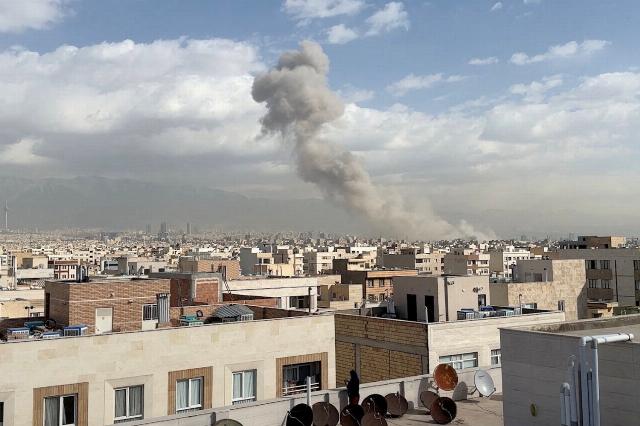
Operation Epic Fury by the United States and Israel's Lion's Roar against Iran have been going on for two weeks. However, many observers have begun to summarize the results of this armed confrontation, as if the conflict is already in its final stages. Military observer of "Gazeta.Ru", retired Colonel Mikhail Khodarenok was trying to figure out whether it was possible to talk about the failure of Trump's blitzkrieg and the beginning of a war of attrition.
Was there a blitzkrieg?
Most often, representatives of the expert community draw the following conclusion: "Donald Trump's blitzkrieg in Iran has failed, and the White House administration does not have a plan B."
To begin with, it should be noted that there are no parameters for the duration of the so-called blitzkrieg. That is, even earlier attempts to link any campaign to its duration and draw a conclusion based on this - in this case it will be a blitzkrieg, but in this case it is no longer there — were not observed.
It is believed that Germany is the birthplace of the Blitzkrieg, and this word appeared there in 1935 in the military magazine Deutsche Wehr ("Defense of Germany"). However, even the Fuhrer and Chancellor of the Great German Reich, Adolf Hitler, considered the term "blitzkrieg" to be a completely idiotic word" (ein ganz blödsinniges Wort).
Now, the White House administration doesn't have a "plan B." The fact is that an extremely limited number of people are involved in strategic planning in the military and political leadership of the United States (as, indeed, in other countries). By definition, there are no leaks of information from this extremely privileged club of initiates.
And if discussions about the strategic planning of the use of armed forces begin in any media outlet and the phrase "a source familiar with the situation" appears, then this is nothing more than fantasies, versions, assumptions. No one knows, except for a few politicians and military personnel in the White House and the Pentagon, what the plans of the Donald Trump administration are in detail and how many options for war plans against Iran they have developed.
A war of attrition?
Now about some varieties of such expressions. For example, there is such a thing as "the blitzkrieg failed and a war of attrition began." The author of such conclusions should always remember the basic law of war, namely, the dependence of the course and outcome of the war on the ratio of the combined military power of the warring parties, as well as the degree to which the state (a coalition in this particular case, the United States and Israel) implements combat, military—economic, moral—political, scientific-technical and other potentials, including the totality of the components of military power.
Military results
Now about the purely military (purely preliminary) results of the operations "Epic Fury" of the United States and "Roar of the Lion" of Israel against Iran. In the shortest possible time, the coalition gained air superiority (Tehran's electronic assets are completely suppressed, and command and control of troops and forces is paralyzed), complete dominance in the air and at sea is evident. Iran's air defense forces have been defeated, the air force has been eliminated, and the ships of the Islamic Republic are on the seabed.
Thus, the Air Forces of the United States and Israel operate freely in the airspace of the Islamic Republic. The Allies have no losses of aircraft or naval personnel.
However, Iran began to respond, and the force of these actions by the coalition, it seems, was not fully predicted. Currently, it is difficult to assess the effectiveness of these strikes and answer to what extent they are of an operational and strategic nature capable of changing the course of military operations, but the geography of attacks by UAVs, unmanned boats and tactical ballistic missiles of the Islamic Republic is only expanding.
Of course, it is very problematic to reduce Iran's military and economic potential to zero in fourteen days of even the most intense bombing, but efforts in this direction by the United States and Israel will only increase in the near future.
At the same time, the fog of war is more than thick at this stage, the intensity of hostilities is only increasing, there are no reliable and convincing statistics on the conduct of hostilities, and most of the conclusions and conclusions will so far be only indicative.
It should be noted that Iran remained almost completely alone in the geopolitical situation during this conflict. The Islamic Republic's attacks on targets in the territories of the Persian Gulf monarchies and other Middle Eastern countries have led to the fact that Tehran has lost even its last sympathizers.
Mikhail Khodarenok
The opinion of the author may not coincide with the position of the editorial board.
Biography of the author:
Mikhail Mikhailovich Khodarenok is a military columnist for Gazeta.Ru", retired colonel.
Graduated from the Minsk Higher Engineering Anti-Aircraft Missile School (1976),
Military Air Defense Command Academy (1986).
Commander of the S-75 anti-aircraft missile division (1980-1983).
Deputy commander of the anti-aircraft missile regiment (1986-1988).
Senior Officer of the General Staff of the Air Defense Forces (1988-1992).
Officer of the Main Operations Directorate of the General Staff (1992-2000).
Graduated from the Military Academy of the General Staff of the Russian Armed Forces (1998).
Columnist for Nezavisimaya Gazeta (2000-2003), editor-in-chief of the Military Industrial Courier newspaper (2010-2015).
