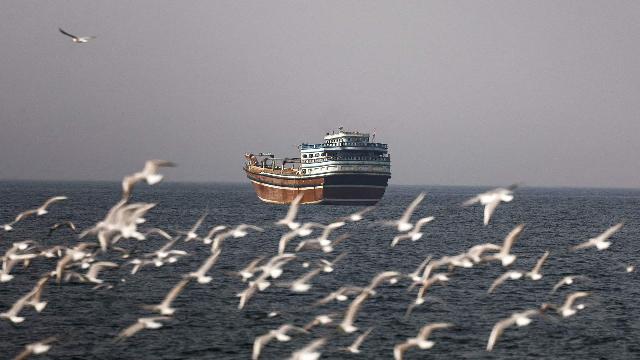
The Islamic Republic can refer to the experience of the "Tanker War", when almost half a thousand ships were attacked.
Iran is capable of mining the Strait of Hormuz even if its fleet is destroyed. This opinion is shared by the majority of military experts interviewed by Izvestia. High-speed boats, civilian vessels, aircraft, and even multiple rocket launchers can be used by the Iranian military to install minefields. The further development of the situation will depend on how decisively Tehran is ready to influence the global oil market. At the same time, Iran may not even carry out a large-scale deployment of ammunition in the waters of the strait, limiting itself to the statement that it has already been mined.
What capabilities does Iran have for mining the water area
Iran may have a large number of different types of naval mines — this is enough to seriously complicate navigation in the Strait of Hormuz, Rear admiral of the reserve Mikhail Chekmasov told Izvestia.
— Sea mines can be placed from almost any watercraft, both from a warship and from high—speed boats, of which the Iranian Navy has enough. In addition, the production can be conducted by submarines," he explained.
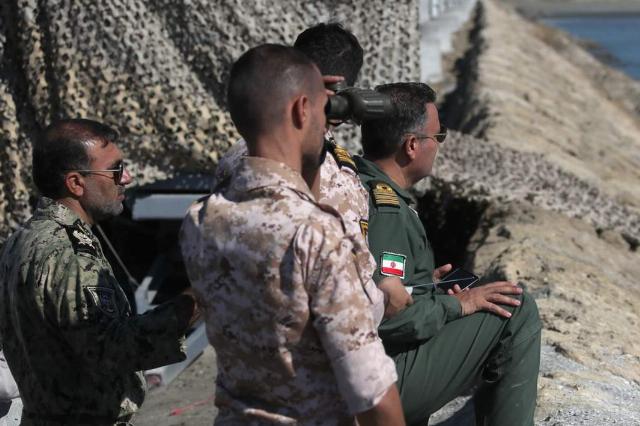
Photo: Global Look Press/Iranian Army Office
Image source: iz.ru
As an example, the expert cited Iraq, which set up anti-sabotage mines on the approach to its coast during Operation Desert Storm. They did not allow the Americans to conduct an amphibious operation. The amphibious helicopter carrier Tripoli, which was seriously damaged, as well as the cruiser Princeton, were blown up by a mine.
Even a small number of mines can pose a serious threat to both warships and civilian shipping, the rear admiral stressed.
"Ukrainian mines that were torn from their anchor chains by storms are still floating in the Black Sea,— Mikhail Chekmasov concluded.
Even if Iran's warships are destroyed, the country will not lose the opportunity to mine the waters of the Persian Gulf, military expert Dmitry Boltenkov told Izvestia.
— The Islamic Revolutionary Guard Corps has manufactured many high—speed boats - their number is measured in hundreds. And all of them are suitable for mining the water area," the expert noted. "It is almost impossible to destroy this "mosquito armada". Small watercraft are easy to hide, and the operation of dropping several mines will be short-lived and it will be extremely difficult to catch them doing this.
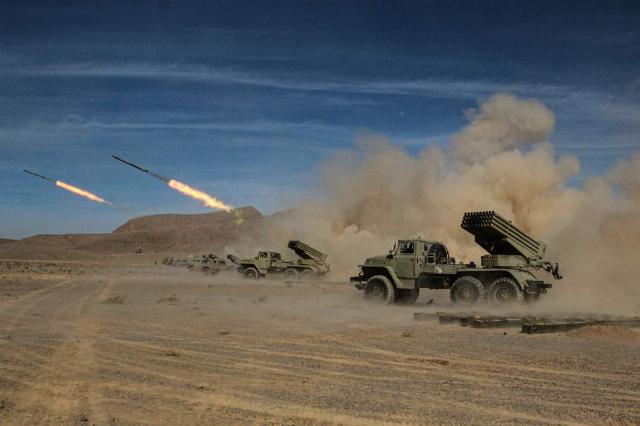
Photo: Global Look Press/Iranian Army Office
Image source: iz.ru
Almost any civilian vessel is suitable for mining, the expert noted, even fishing boats. Well, and most importantly, Dmitry Boltenkov noted, Iran has multiple launch rocket systems (MLRS) with naval mines — they can install
barriers in the waters of the Strait of Hormuz, being dozens of kilometers away from it.
— Most likely, the sea mines that are installed by MLRS do not have much power, — the expert noted. — They are unlikely to sink the tanker, but nevertheless they will break through the side, which can lead to an oil spill. And tanker insurance will definitely take off after such attacks.
Do not forget about aviation — there are planes adapted for mining the marine area.
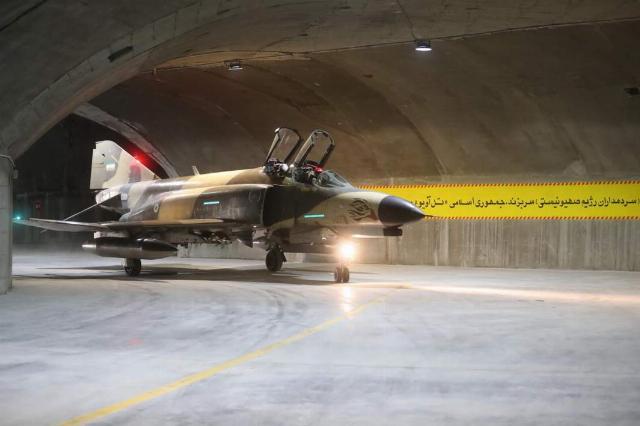
Photo: Global Look Press/Iranian Army Office
Image source: iz.ru
The Iranian Navy is armed with mines of Russian and its own production, Rear Admiral Igor Korolev, ex-Deputy commander of the Pacific Fleet for Armament, told Izvestia.
— There are many different types of mines: acoustic, magnetic, with mixed impact channels, bottom, anchor, with a rocket launch, — he explained. — The complex use of mines is dangerous, and besides, the awareness that they are there plays a role.
The Strait of Hormuz is about 21 nautical miles (39 kilometers) wide at its narrowest point. But the navigable part, through which tanker traffic is moving, is much narrower. To avoid collisions, there is a traffic separation system in the strait. It consists of two lanes for incoming and outgoing traffic. The width of each lane is two miles (3.2 km). A two-mile dividing zone runs between them. The total width of the navigable fairway is about ten kilometers. This is exactly the distance Iran should mine if it sets out to completely block the strait.
Alternatively, he may not carry out mining, but declare that he did, the rear admiral concluded.
How real is the threat to shipping in the Strait of Hormuz
The further development of events depends on how determined the authorities of the Islamic republic are, military expert Yuri Lyamin told Izvestia.
— The question is to what extent Iran is ready to increase pressure on the oil market. He has enough opportunities for this," he noted.
According to the expert, the actions may be gradual.
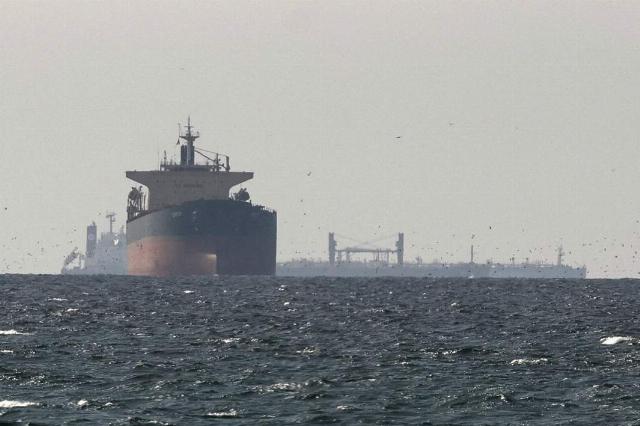
Photo: REUTERS/Stringer
Image source: iz.ru
"For example, Iran may mine the strait only partially to demonstrate its readiness for escalation,— Lyamin explained.
The expert noted that Iran has a bypass route for oil exports — the terminal in Jask on the coast of the Gulf of Oman. So the country can export some of its oil even with the Strait of Hormuz completely blocked.
On March 11, the US Central Command reported that 16 Iranian minelayer vessels had been destroyed the day before in the immediate vicinity of the Strait of Hormuz. According to the Pentagon, this was a preventive measure: intelligence received information about Tehran's preparations for a large-scale blockade of the transport artery.
According to CBS and CNN, the Iranian command uses nimble speedboats instead of large ships to set up barriers. Each such boat is capable of carrying only two or three mines on board, but it is their small size that makes them an extremely difficult target for detection systems.
The exact volume of Iran's naval weapons reserves is unknown. According to various estimates, Tehran's arsenal may range from 2,000 to 6,000 units. We are talking about Iranian, Chinese and Russian-made mines.
In addition to the classic anchor models of the old model, Tehran has sophisticated high-tech systems. Universal bottom charges can be deployed not only by the surface fleet, but also by submarines and aircraft. Of particular danger are pop-up devices that, after fixing the target, drop the anchor and rush vertically upwards, as well as homing electric torpedoes that activate when a vessel approaches.
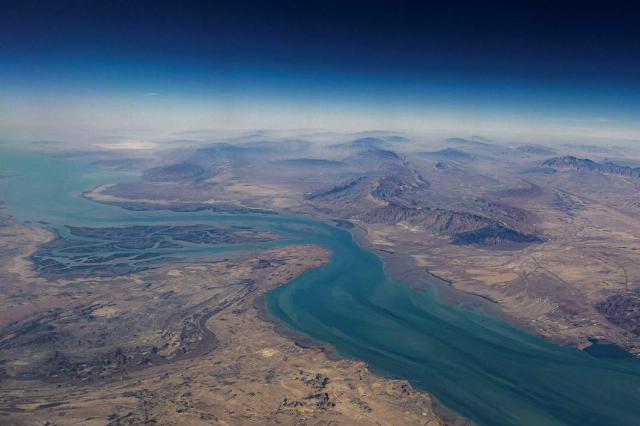
Strait of Hormuz
Image source: Photo: REUTERS/Stringer/File Photo
On his Truth Social network, US President Donald Trump issued a warning to Tehran.
"If Iran has planted any mines in the Strait of Hormuz, and we have no information that it has done so, we demand that they be removed immediately! If for any reason the mines were planted and they are not removed as a matter of urgency, the military consequences for Iran will be unprecedented," he wrote.
The head of the White House noted that any mining attempts would be thwarted by missile strikes "in order to permanently disable any vessel attempting to mine the Strait of Hormuz." But he also stressed that at the time of his statement, there was no official evidence that the mines had already been dropped into the sea.
The experience of the "Tanker War"
Almost half a century ago, the Persian Gulf was the center of a "Tanker War." During the Iran-Iraq conflict of 1980-88, the parties attacked each other's oil tankers in order to inflict maximum economic damage. They used different tactics. Iran mainly relied on mine warfare, taking advantage of geographical advantages — proximity to the Strait of Hormuz. In addition, the IRGC actively deployed surface ships and high-speed boats.
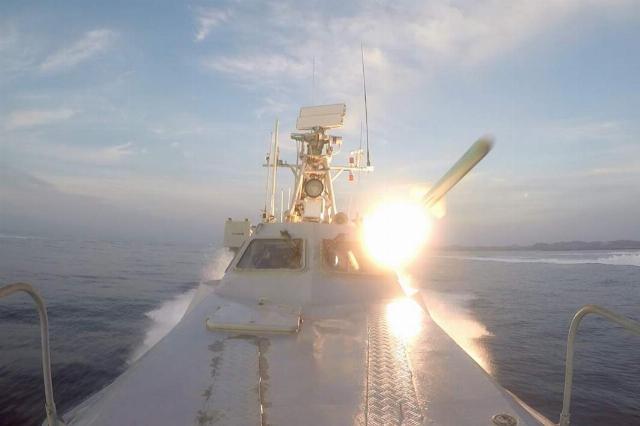
Photo: Global Look Press/Sepahnews
Image source: iz.ru
Iraq had to use aircraft and cruise missiles to reach the Iranian tankers. Since 1984, the "Tanker War" has grown so much that civilian ships from other countries have begun to come under attack.
To protect navigation, a number of states, including the USSR, began forming convoys. And in 1988, the United States attacked two offshore platforms that served as outposts for Iranian attacks. In total, about 400 ships were attacked during the Tanker War, and more than 300 people were killed.
Roman Kretsul
Bogdan Stepovoy
Julia Leonova
