Colonel Khodarenok proposed the creation of a military Arctic district
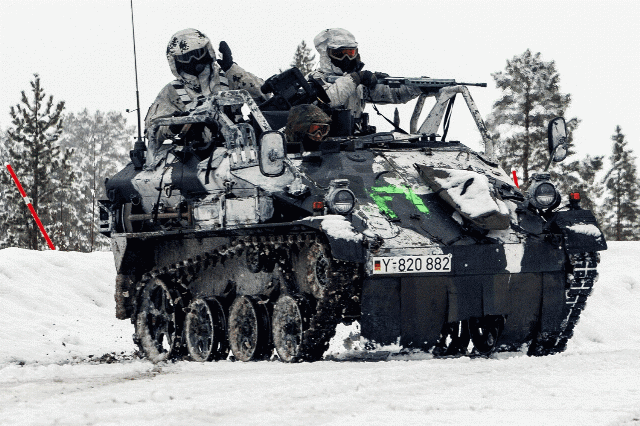
Since March 9, Cold Response exercises have been taking place near the Russian border. 25,000 NATO troops will train in northern Norway, Finland and Sweden. Why the Atlantic Alliance is preparing to fight in the conditions of the Far North and how Russia should respond to this is in the material of the military observer Gazeta.Ru", retired Colonel Mikhail Khodarenka.
From March 9 to March 20, 2026, military exercises called Cold Response will take place in northern Europe. About 25,000 military personnel from 14 countries (Norway, the United States, Great Britain, Germany, the Netherlands, France, Italy, Canada, Spain, Turkey, Sweden, Finland, Denmark, Belgium), as well as the air force, Navy and special forces units will take part in them. According to NATO, 11,800 military personnel will participate in the exercises in Norway, the rest – at sea and in the air.
Operational leadership is entrusted to the joint Norwegian-American headquarters, which is deployed in the Buda area. The main objective of these exercises is to increase the combat readiness of the armed forces of the NATO member countries in the conditions of the Far North and demonstrate the ability to defend the northern flank of the alliance.
A special feature of the upcoming exercises will be their expanded geography: previously, Cold Response was conducted mainly in Norway, but now a significant part of the maneuvers will take place in Finnish Lapland. Several thousand military personnel will be involved in the exercises there.
Moscow emphasizes that the increased activity of the United NATO Armed Forces in the North European Theater of Operations forces Russia to take retaliatory measures to ensure national security.
The Battle for the Arctic
As you know, the Arctic region is of great strategic importance. Its unique role is determined not only by economic interests related to carbon deposits, rare earth metals, and the development of the Northern Sea Route, but also by issues of national security, defense, and geopolitical influence.
The claims of the West – the United States and European NATO member states – to own the Arctic region consist in declaring the Arctic a "common use zone", demanding the internationalization of the Northern Sea Route (NSR), and limiting Russia's rights to the Arctic exclusively to a 12-mile zone of territorial waters.
Recently, a number of East Asian states have significantly intensified their efforts to expand their influence in the Arctic to the detriment of the Russian Federation. In order to defend common interests in ensuring access to Arctic resources, as well as the right to free use of the northern sea routes, the so-called Asian Polar Research Forum (PRC, Japan, South Korea, Thailand and Malaysia) was established and operates in 2004.
States that do not have direct access to the waters of the Arctic Ocean and do not have the official status of polar states declare their interests in the Arctic: Finland, Sweden, Italy, Singapore, and others. They believe that the policy of the Arctic states seeking to divide the Arctic among themselves is short-sighted and destabilizing for the region.
The countries of the Arctic region are trying to reserve the right to expand zones of national jurisdiction at the expense of the continental shelf and islands of the Arctic Ocean as soon as possible, and to implement the concept of ensuring their interests in the region.
Increased military activity is manifested in the regular conduct of large-scale military exercises, the deployment of new Arctic formations of the armed forces of NATO countries, and increased flight intensity of strategic and reconnaissance aircraft.
The US military-strategic objectives are related to Greenland's unique geographical location in the Arctic region. Greenland is located on key routes between North America, Europe and Asia, making it an important point for the deployment of military and surveillance systems.
The US military and political leadership considers Greenland to be the key to the Arctic region. This, in particular, is evidenced by the statement of US President Donald Trump: "Greenland will become American in any case."
Washington disputes Russia's right to full control over the Northern Sea Route, insisting on the status of international waters. US control over Greenland will allow the US Navy to effectively block western approaches to the NSR. In the context of a possible escalation of the situation, this means strangling the Russian Arctic economy.
In other words, the Arctic is turning from a zone of cooperation into a zone of confrontation. As for the military-strategic importance of the Arctic, the territory of Russia is the least protected from this direction.
Russia's response
Much has been done in the Russian Federation to enhance security and research in the region. From December 1, 2014 to March 1, 2024, a new military structure operated — the Joint Strategic Command "Northern Fleet".
For example, promising Podlet radar stations have recently been transferred to the Arctic units of the Northern Fleet, which simultaneously escort up to 200 air targets at extremely low temperatures down to minus 50. In 2015, modern S-400 anti-aircraft missile systems were put on combat duty in the region.
The Arctic Trefoil military base, established on Alexandra Land Island in the Franz Josef Land archipelago, can operate continuously for 18 months with a staff of 150 people. It includes two runways and is equipped with Bastion coastal missile systems.
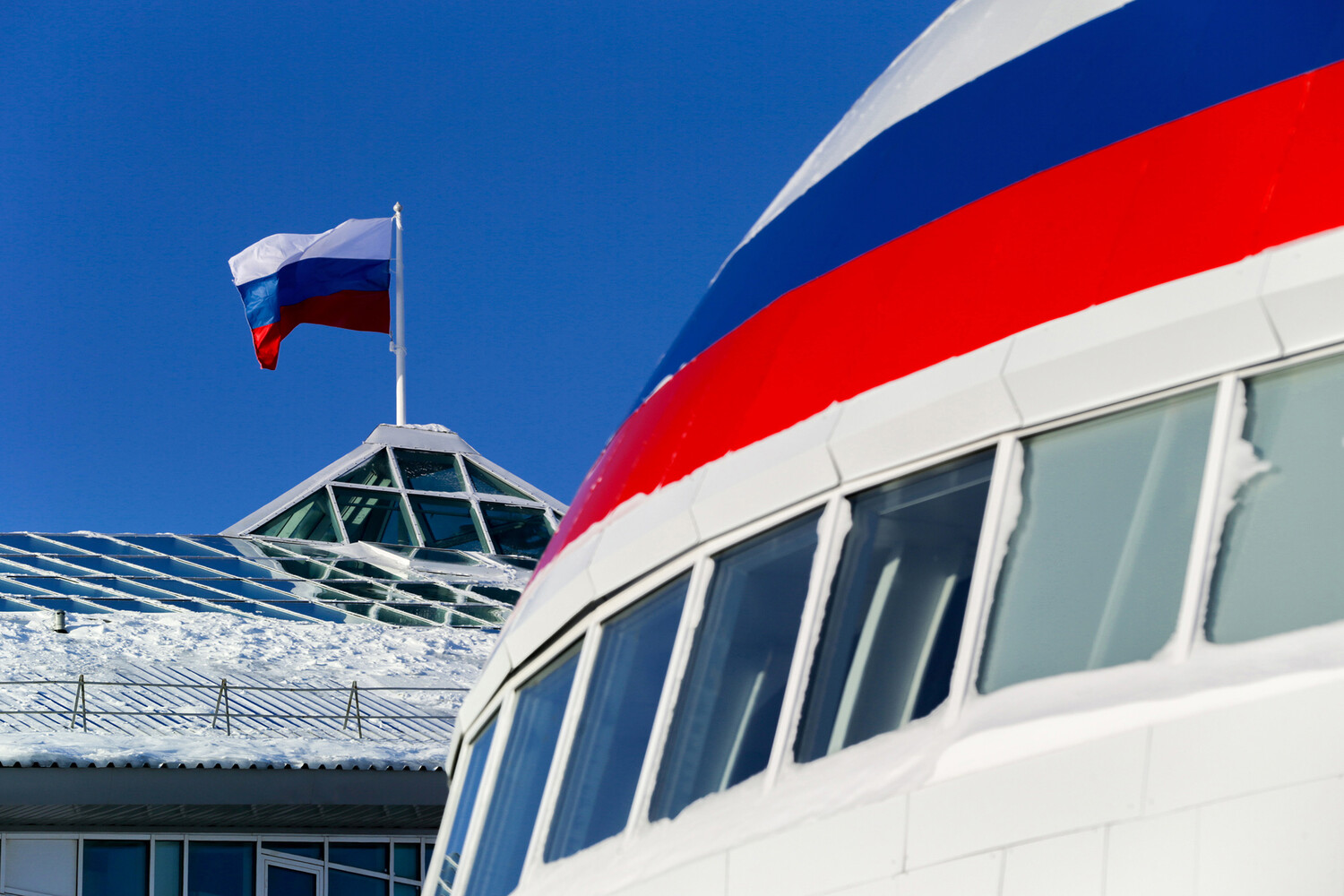 |
| Arctic Trefoil Base |
| Source: Vadim Savitsky/RIA Novosti |
And 250 people serve at the Northern Clover base (Kotelny Island in the Laptev Sea), a radar station is operating to monitor aircraft, and the S-400 and Pantsir-S1 air defense systems are deployed as air defense systems.
In total, it was planned to build 13 airfields, one ground-based aviation training ground, as well as 10 units of Radio Engineering Troops and aviation guidance points in the Arctic.
At the same time, the results of studying the current situation allow us to conclude that today in the Arctic region the management system, the composition and structure of law enforcement agencies, their technical equipment with weapons and military equipment do not meet the necessary security requirements.
This will be our thoughtful and balanced response to various kinds of "Cold Responses" and "Arctic sentries." The current geopolitical and geostrategic situation requires the transition of the Russian Arctic strategy from a defensive position to active dominance, which will ensure the security and protection of the state in solving these tasks.
Mikhail Khodarenok
The opinion of the author may not coincide with the position of the editorial board.
Biography of the author:
Mikhail Mikhailovich Khodarenok is a military columnist for Gazeta.Ru", retired colonel.
Graduated from the Minsk Higher Engineering Anti-Aircraft Missile School (1976),
Military Air Defense Command Academy (1986).
Commander of the S-75 anti-aircraft missile division (1980-1983).
Deputy commander of the anti-aircraft missile regiment (1986-1988).
Senior Officer of the General Staff of the Air Defense Forces (1988-1992).
Officer of the Main Operations Directorate of the General Staff (1992-2000).
Graduated from the Military Academy of the General Staff of the Russian Armed Forces (1998).
Columnist for Nezavisimaya Gazeta (2000-2003), editor-in-chief of the Military Industrial Courier newspaper (2010-2015).

