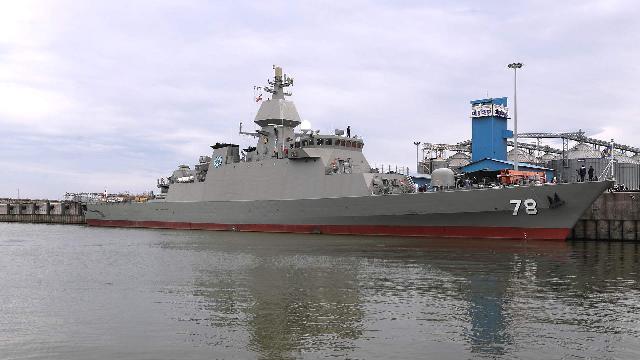
The United States declares the complete destruction of the republic's Navy, but it still has forces left to blockade the Strait of Hormuz.
Reports of new losses of the Iranian fleet come every day. It is characteristic that all such US reports are accompanied by convincing video evidence, while the rare statements of the Islamic Republic about the defeat of the American fleet remain without evidence. At the same time, before the start of the operation, the head of the White House promised to completely destroy the enemy fleet. How the war at sea has been going on since the beginning of the conflict and what losses Iran has suffered — in the Izvestia article.
Fleet formations
To participate in Operation Epic Fury, the US Navy assembled two aircraft carrier strike groups (AUG) led by the aircraft carriers Abraham Lincoln and Gerald Ford with escort ships. Among them are about 17 destroyers of the Arleigh Burke type. And at the same time, a number of nuclear submarines, two of which are of the Ohio type and can carry 154 Tomahawk cruise missiles on board. Up to five American multipurpose submarines can also operate in the Indian Ocean.
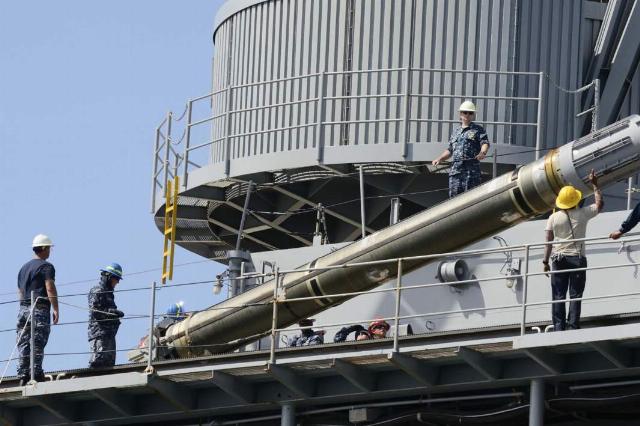
Photo: Global Look Press/U.S. Navy
Image source: iz.ru
One group led by Gerald Ford operated in the eastern Mediterranean, the other, led by Abraham Lincoln, in the Arabian Sea.
The 9th Air Wing is stationed on board the Lincoln. It consists of three squadrons of F/A-18 Super Horne aircraft, an F-35C Lightning II squadron, as well as EA-18G Growler electronic warfare aircraft, E-2D Advanced Hawkeye AWACS aircraft and MH-60 Seahawk anti-submarine helicopters. In total, the wing consists of up to 90 aircraft.
On March 5, 2025, the USS Gerald Ford with its security forces passed through the Suez Canal and then through the Red Sea to the Indian Ocean. Some of the destroyers remained in the Mediterranean. Most likely, the band will move closer to the Lincoln.
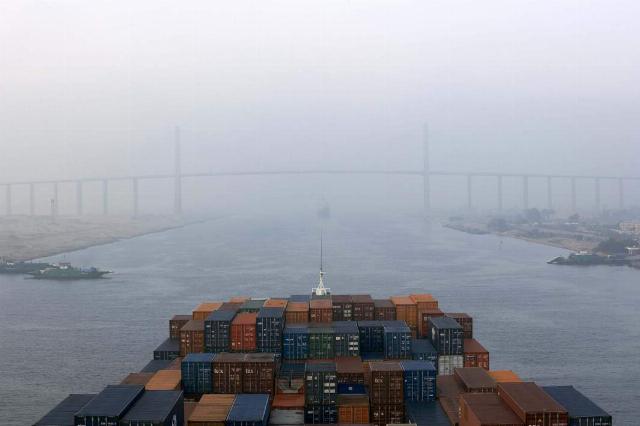
Photo: Global Look Press
Image Source: iz.ru
The Iranian Navy consists of the naval forces of the Army and the Navy of the Islamic Revolutionary Guard Corps (IRGC). Before the conflict, the Russian Navy had three Russian Project 877 submarines, one Fateh submarine, about 20 ultra-small submarines, seven Alvand and Moudge frigates, three corvettes and several dozen missile boats. They also included the Makran floating base.
The IRGC Navy had the Shahid Bagheri, Shahid Rudaki and Shahid Mahdavi floating bases, as well as five catamaran-type missile corvettes. In addition, they had dozens or even hundreds of small high-speed combat boats and coastal missile units.
How many ships did Iran lose
"They don't have a fleet anymore. 24 ships in three days,— Donald Trump said about Iran's losses.
Admiral Brad Cooper, commander of the Central Command of the US Armed Forces (CENTCOM), later clarified that more than 30 ships had already been sunk and destroyed in the Islamic Republic.
During the coalition operation, the Konarek naval base in the south-east of the country and Bandar Abbas, located in the Strait of Hormuz, were attacked. Satellite images show the destruction of the last Makran floating base, the Sahand and Sabalan frigates, as well as the Zagros reconnaissance ship. A frigate and two corvettes were hit at the Konarek Naval Base.
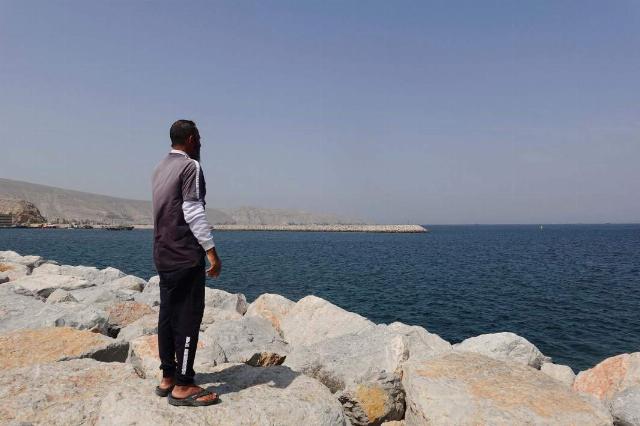
Photo: REUTERS/Amr Alfiky
Image Source: iz.ru
In addition, the US Central Command announced the defeat of the Shahid Bajeri drone carrier of the Islamic Revolutionary Guard Corps (IRGC). Evidence has also emerged of the sinking of the IRGC's Shahid Sayyad Shirazi missile corvette and the Shahid Bahman Bagheri base.
A significant event in world military history took place on March 3. Not far from the coast of Sri Lanka, a nuclear submarine of the US Navy sank the Iranian frigate Dena. This is the second case when a nuclear-powered ship sinks an enemy ship. And the first torpedo attack by a U.S. submarine since the end of World War II.
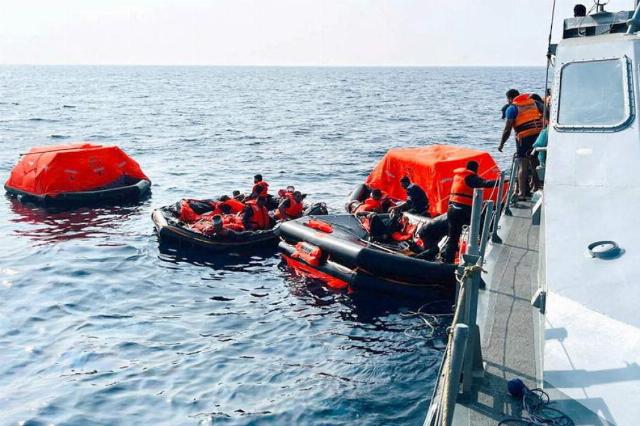
Sri Lankan Navy personnel assist Iranian sailors during a rescue operation after receiving a distress signal from their vessel, the Iranian warship IRIS Dena, on March 4.
Image source: Photo: REUTERS/Sri Lanka Navy/Handou
The Dena frigate was part of the multinational exercises MILAN-2026 in the Indian port of Visakhapatnam. The Iranian sailors understood that they were taking great risks returning home, but they did not seek refuge in neutral ports. The tanker Bushehr, which accompanied the frigate, was interned by the Sri Lankan authorities.
Contrary to the custom of not commenting on the loss of its forces, this time the Iranian side did not remain silent. The Deputy Foreign Minister of the Islamic Republic, Said Khatibzade, said that the Dena frigate had no weapons on board.
— This ship was here at the invitation of our Indian friends. This attack by the United States is very unfortunate, they attacked an unarmed vessel," he said.
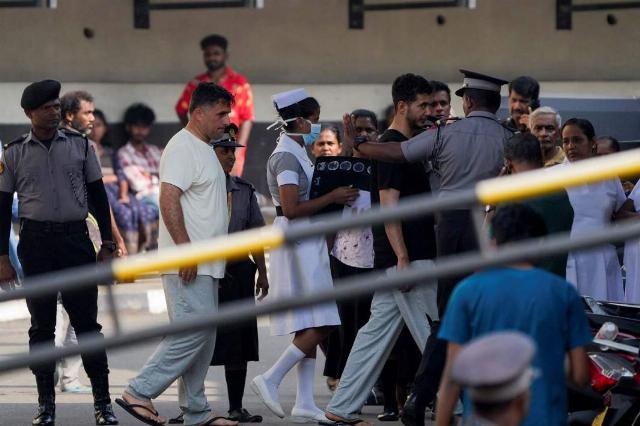
Photo: REUTERS/Thilina Kaluthotage
Image source: iz.ru
In general, at the moment, we can assume that there are practically no large ships left in the Iranian Navy.
There were no reports of losses of American ships. Iran has claimed a missile attack on the Abraham Lincoln, but this information has not been confirmed. But the ship was taken away from the shore.
At the moment, independent sources and satellite images confirm the serious losses of the Iranian fleet, while the IRGC's statements about the defeat of American destroyers and aircraft carriers have not yet been visually confirmed and are refuted by representatives of the US Navy.
The new "tanker war" in the Persian Gulf
In the current situation, Iran has no choice but to threaten a "tanker war", which it has already waged once. At the height of the Iran-Iraq War of 1980-1988, both sides began attacking oil tankers in the Persian Gulf, seeking to inflict economic damage on the enemy. Iraq mainly used aircraft and cruise missiles, while Iran used mine warfare, surface ships and fast boats of the IRGC. Since 1984, attacks have been launched on ships of almost any country.
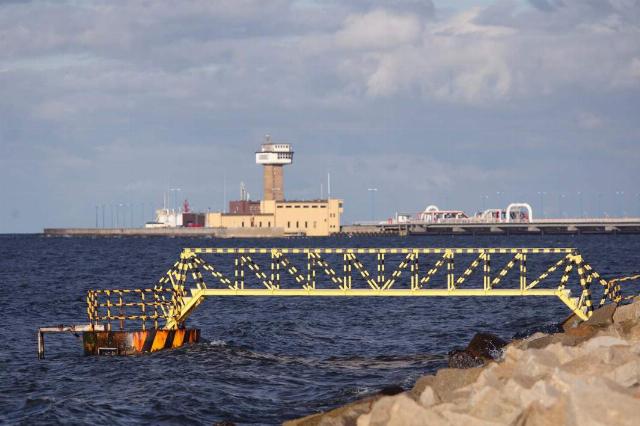
Photo: Global Look Press/Michal Fludra
Image source: iz.ru
In response, the fleets of various states, including the USSR, began escorting merchant ships with convoys. In 1988, the United States conducted Operation Mantis, during which Iran lost several ships. In total, about 400 ships were attacked during the tanker war, and more than 300 people were killed.
Now the situation is close to repeating itself. Realizing that it was unable to withstand the US forces with its ships, Iran relied on asymmetric weapons. Thus, the IRGC forces developed small high-speed boats with missile weapons, as well as coastal missile units. The Iranian Navy has built a couple dozen small submarines that can also lay sea mines. In actions against aircraft carrier strike groups, such a mosquito fleet is of little use.
In general, Iran believes that its asymmetric forces will be able to block the Strait of Hormuz and thus put pressure on the global economy. The United States considers itself the main conductor of freedom of navigation in the world and has already stated that, if necessary, the Navy will begin escorting tankers.
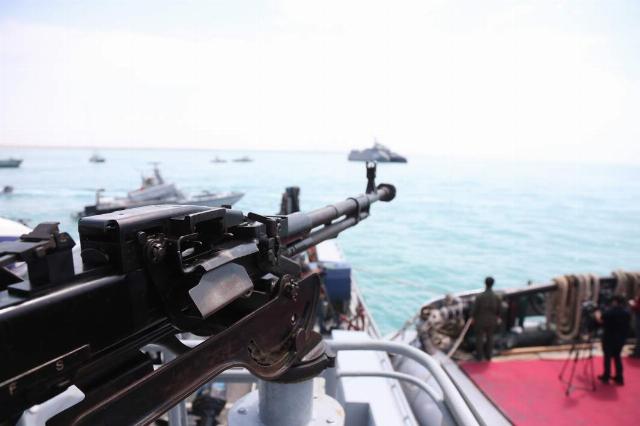
Photo: Global Look Press/Shadati
Image source: iz.ru
At the moment, Iran has announced the closure of the Strait of Hormuz. At least 20% of the world's oil trade passes through it, and the same amount passes through LNG. Of these, 89% of oil and 83% of LNG go to Asian countries — India, China, South Korea and Japan. The news of the strait closure alone caused a sharp spike in commodity prices.
In general, the Islamic Republic only poses a threat by the actions of its small forces. The actual use of "asymmetric forces", which may follow in the near future, will give an answer whether these forces were worth the money spent on them.
Dmitry Boltenkov
