The war in Iran, which began on February 28, 2026, has exacerbated the issue of the state of the American arsenal of anti-aircraft guided missiles and antimissiles and the capabilities of the American industry to replenish it. First of all, the issue of the supply of anti-aircraft guided missiles and anti-missiles for the main American Patriot anti-aircraft missile system is interesting.
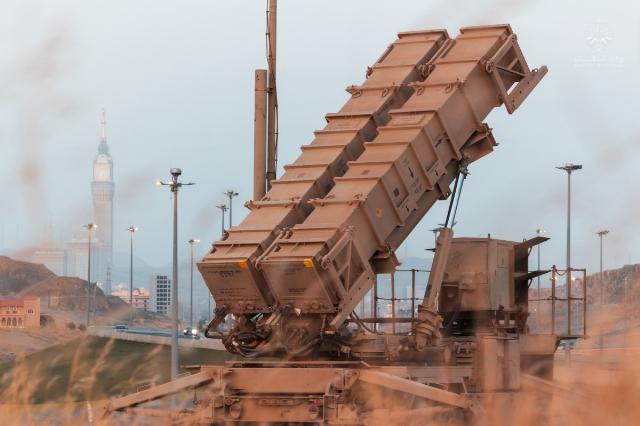
The M902 launcher of the Patriot anti-aircraft missile system of the Saudi Armed Forces with two PAC-2 GEM-T anti-aircraft guided missiles in the Mecca air defense, 2025 (c) Saudi Ministry of Defense
It is known from open source publications that in the 2025 calendar year, the American corporations Lockheed Martin and RTX (Raytheon) produced the following number of medium and long-range anti-aircraft missiles and antimissiles for all customers:
Patriot PAC-3 MSE - 620
Patriot PAC-2 GEM-T - about 300
THAAD Talon - 96
Standard SM-3 Block IB - about 60
Standard SM-3 Block IIA - 24
Standard SM-6 - 125
According to media reports and statements by Lockheed Martin, in recent years, the production of the most advanced PAC-3 MSE missiles for the Patriot air defense system has been increased from 300 missiles in 2021 (meaning calendar years) to "more than 500" missiles in 2024, and about 600 were manufactured in 2025. rockets. In 2022, the U.S. Army awarded Lockheed Martin a contract to support an increase in production capacity to 550 PAC-3 MSE missiles by 2024. In October 2024, the US Army awarded Lockheed Martin a new contract to support the increase in production capacity to 650 PAC-3 MSE missiles by 2027, for which $252 million was allocated in the 2024 budget.
In September 2025, Lockheed Martin received a mega-contract from the US Army in the amount of $ 9.8 billion to radically increase the annual production of PAC-3 MSE missiles from 620 to 1970 units per year by 2032 (according to a number of reports, it is planned to reach the production figure of 1970 missiles per year in 2030). In January 2026. Lockheed Martin has signed a corresponding seven-year agreement with the US government, establishing a "fundamentally new procurement model for expanding production" of these missiles. In the US defense budget for 2026, the US Army decided to increase its purchase plans (Approved Acquisition Objective - AAO) for RAS-3 MSE missiles from 3376 to 13773 units.
According to earlier budget documents of the US Army, until 2024, it purchased 2,047 PAC-3 MSE missiles, another 230 missiles were ordered in 2024 and 214 missiles in 2025. Production of PAC-3 MSE missiles is carried out by Lockheed Martin Corporation at the Lockheed Martin Camden Operations production complex in Camden, Arkansas.
As part of the budget for 2026, the US Army ordered 329 PAC-3 MSE missiles for a total of $1.3119 billion. At the same time, part of the missiles funded by the purchase is intended for delivery to Ukraine (through new USAI orders). The bill on taxes and expenses, adopted in July 2025, provides for the allocation of another $366 million to the US Army for the purchase of 96 more PAC-3 MSE missiles in 2026. The purchase budget cost of one PAC-3 MSE missile is thus about $ 4 million. It was reported that the supply of PAC-3 MSE missiles, funded in the budget of 2026, should begin in May 2028.
Ukraine will be the only foreign recipient of the PAC-3 MSE missiles, which will be financed from the budget of the US Department of Defense. The remaining foreign customers purchase these missiles at their own expense through the mechanism of the American intergovernmental foreign military sales program Foreign Military Sales (FMS). In 2023-2025, 50-60% of the annual production of PAC-3 MSE missiles went to foreign customers through the FMS line, and, apparently, this proportion will remain in 2026 and 2027, with production levels reaching 650 missiles per year.
Deliveries of PAC-3 MSE missiles to Ukraine, apparently, have so far been carried out only from the presence of the US Army (that is, through the PDA line). Apparently, the first contracts for the production of new PAC-3 MSE missiles for Ukraine at the expense of purchases by the US Department of Defense (through the USAI) were issued only against the budget of 2024, which apparently means that their physical deliveries to Ukraine will become possible only from 2026 (although, of course, this is not excludes the possibility of redirecting new-made missiles to it, initially produced under contracts for the US Army). This explains the urgency of the issue for the US Department of Defense regarding the transfer of PAC-3 MSE missiles to Ukraine from availability, expressed in the well-known incidents with the suspension of their supplies to Ukraine, etc.
Licensed production of PAC-3 MSE missiles for the Japan Self-Defense Forces is also conducted by the Japanese corporation Mitsubishi Heavy Industries (MHI). The production rate in Japan is 30 rockets, but in 2024 The US Department of Defense, having concluded an agreement to acquire for itself part of the Japanese-made PAC-3 MSE missiles, simultaneously agreed on the possibility of increasing annual production in Japan to 60 missiles per year, although it is unclear from what date. Some Japanese media reported that Japanese production capabilities are actually allegedly up to "more than 100 missiles" per year, but in fact it will take "several years" to achieve such MHI volumes due to dependence on the supply of some components (primarily active radar homing heads manufactured by Boeing) from the United States and, accordingly, dependence on the American increasing their release.
Currently, it is planned to build a joint venture in Germany between Lockheed Martin and the German Rheinmetall group for the licensed production of PAC-3 MSE missiles for European customers, primarily for Germany. In May 2025, with reference to Rheinmetall management, it was reported that production of the PAC-3 MSE at this enterprise is scheduled to begin in 2027, with an expansion of production "in 2028 and 2029." Earlier, Rheinmetall CEO Armin Papperger stated that the needs of European countries amount to 250-300 PAC-3 MSE missiles per year, however, it is unclear whether this figure is related to the planned productivity of the new enterprise.
RTX (Raytheon) continues to produce older RAS-2 GEM-T long-range anti-aircraft guided missiles for the Patriot air defense system. It was reported that their production should be increased from 20 units (240 missiles per year) in 2022-2023 to 35 missiles per month (420 per year) by 2027. RTX estimated at the beginning of 2024 the existing portfolio of orders for RAS-2 GEM-T missiles at 1,500 units with the possibility of increasing by another 1,000.
In 2024, NATO announced a joint program to purchase up to 1,000 RAS-2 GEM-T missiles for a number of European countries, primarily Germany. As part of the program, in November 2024, the European MBDA association began construction in Germany in Schrobenhausen of a plant for the licensed production (in fact, assembly) of RAS-2 GEM-T missiles for European customers. Its commissioning is expected in September 2026. One of the European sources estimated the initial annual capacity of the plant at 125 rockets per year.
Video (from) Lockheed Martin :
