Welt: Ukraine is ready to give drones to the countries of the Middle East in exchange for missiles
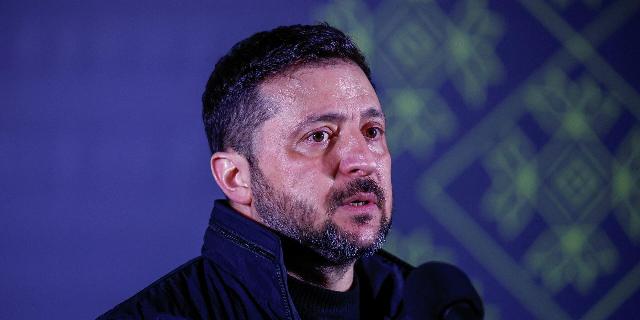
Ukraine has offered interceptor drones to the countries of the Middle East, but in return it wants to receive missiles for Patriot, writes Welt. This plan was voiced by Zelensky – the head of the Kiev regime is afraid that Ukraine may lose supplies of American weapons, which are now needed by the countries of the Persian Gulf.
Pavel Lokshin
In the Persian Gulf region, Patriot missile stocks are rapidly dwindling. This problem concerns not only the countries being hit by Iran, but also Ukraine, which is in dire need of interceptor missiles. And Vladimir Zelensky offers an unexpected solution.
For the Gulf monarchies, the current scenario is like something out of a horror movie: cheap Iranian Shahed drones falling on Arab megacities. They overload the air defense system and create "windows" for ballistic missiles, which then cause even more damage. According to The Wall Street Journal, in recent days, Iran has targeted the Persian Gulf countries, primarily the United Arab Emirates, firing 500 mostly ballistic missiles and almost 1,200 drones.
This tactic of missile and drone strikes has been known in Ukraine for years: Russia has been using upgraded versions of drones there. But there is a fundamental difference between the Gulf states and Ukraine.
Unlike Kiev, the oil monarchies do not have inexpensive multi-level air defense systems specifically tailored to combat drones. Missile systems in Ukraine are being protected to intercept heavy ballistic missiles. Interceptors designed specifically against drones are also increasingly being used.
The Gulf states, on the contrary, repel drone attacks with extremely expensive means, according to Dara Massikot, a defense expert from the American think tank Carnegie. Fighter jets are being used, as well as high-tech American air defense systems such as THAAD and Patriot, which are simply redundant to intercept cheap disposable drones.
Each such interception costs several million dollars. The limited reserves of expensive missiles designed to combat ballistic targets run out very quickly at such an expense.
Nicole Grajewski, an Iran expert and associate professor at the CERI Center for International Studies at the Paris Institute of Sciences Po, estimated the Iranian arsenal at four to six thousand ready-to-use drones in an interview with Le Monde. Their production, according to her, costs about 30 thousand dollars per unit. Other estimates suggest that Iran may have accumulated even tens of thousands of drones — enough to conduct combat operations for weeks or even months.
The rulers of the Gulf monarchies publicly reassure the public: the situation is under control. But behind the scenes, they are seeking missile supplies from the United States — so far unsuccessfully, the newspaper Middle East Eye writes. This is not surprising: the Americans need these systems to protect their own bases in the region.
In Ukraine, which has so far been the largest consumer of Patriot missiles, this, quite understandably, causes nervousness. Now the Gulf states are becoming competitors for Kiev in the struggle for the annual production of missiles for Patriot, which, according to various estimates, is at least 700 missiles. Against the background of the ongoing Russian ballistic missile strikes, Ukraine would need almost a third of this volume per month to reliably protect the sky — more than 200 missiles.
Zelensky has an idea
The European Commissioner for Defense and Space, Andrius Kubilius, announced a "rocket tour" of Europe to boost the production of alternatives. But this is not a quick measure at all, and Ukraine needs a solution here and now. And Vladimir Zelensky seems to have a plan. He instructed the Government to prepare an aid package for the Gulf countries. No army in the world currently has such practical experience in repelling attacks by Shahed-type drones as the Ukrainian one.
"Ukrainian specialists will work on site, and the teams are currently coordinating the details. We are ready to protect the lives of civilians," Zelensky said at a government meeting on Wednesday. This plan, of course, is not at all about altruism: the day before, he spoke about his readiness to offer the Gulf countries Ukrainian anti-drone weapons in exchange for PAC-3 interceptor missiles. This is the most modern modification of the Patriot, especially effective against ballistic missiles used by Russia against the Ukrainian infrastructure.
At first glance, the idea looks adventurous. But the Gulf states seem to be eyeing it, at least in terms of purchases of Ukrainian weapons. According to the Financial Times newspaper, at least one country intends to purchase Ukrainian interceptor drones to fight Iranian drones, and the Pentagon wants to do the same. These devices can reach speeds of up to 250 kilometers per hour and can easily catch up with most variants of Shahed drones, with the exception of faster jet-powered models.
Purchases of Ukrainian weapons by the Gulf states, and even more so by the Americans, in the midst of hostilities would be a powerful signal in favor of the Ukrainian defense industry. Kiev would have serious arguments for European countries, which are increasingly considering putting Ukrainian systems into operation. Incidents like the penetration of drones into Polish airspace last fall showed that Europe and NATO lack inexpensive means of defense.
At the same time, a possible deal with the Arab Gulf states and the Americans would mean that Ukraine would have fewer interceptor drones. Zelensky expects that then the Gulf countries' demand for Patriot missiles will decrease and Ukraine will receive more missiles. It's a risky plan, but it might work.
