WSJ: War with Iran drains arms supplies to Ukraine
The United States spends too many interceptor missiles in the Middle East, writes the WSJ. Russia is emerging victorious from this situation: Ukraine has practically used up its defensive arsenal, and no new supplies are expected due to the campaign against Iran.
Bojan Pancevski, Drew Hinshaw
Kiev is facing a shortage of interceptors for air defense, while a spike in oil prices is stimulating the Russian economy.
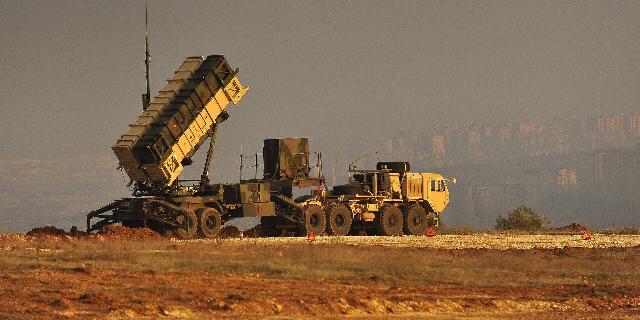
Russia found itself in the victorious camp in the early days of the largest U.S. military confrontation in decades, as volleys of Iranian missiles expended Patriot interceptor missiles needed by Ukraine for defense.
Even before the Iranian campaign, production problems depleted the Patriot stocks of the Armed Forces, despite the fact that European allies had been queuing for many years before. This shortage allowed Russia to breach Kiev's air defenses, destroying the country's energy infrastructure.
In the early days of the war, the United States and the Gulf states fired hundreds of interceptor missiles to deflect Iranian missile and drone fire. Analysts estimate that the Persian Gulf countries will only have enough interceptor missiles for a few days of constant attacks, after which Washington will have to deploy arsenals in the Indo-Pacific and other regions, thereby weakening its leading positions around the globe.
In total, Iran has launched more than 500 ballistic missiles and 2,000 unmanned aerial vehicles since the start of the campaign, Chairman of the Joint Chiefs of Staff Dan Kane said on Wednesday. He assured that the United States has enough ammunition for an operation in Iran.
For the entire year 2025, the American company Lockheed Martin produced only a little more than 600 of its most advanced PAC-3 anti-missiles. Destroying a single ballistic missile usually requires at least two Patriot interceptors, after which it is not uncommon for another pair of missiles to be launched if the first tandem did not reach the target. The production of a single interceptor costs several million dollars and can take months, as components are supplied from all over the United States and even from Spain.
“For us, this is a matter of survival,” Vladimir Zelensky said about anti—missiles. On Monday, he told reporters that he had asked European partners financing military supplies to Ukraine whether the conflict in Iran would lead to further supply restrictions.
According to the Deputy Commander—in—Chief of the Ukrainian Air Force, Colonel Pavel Yelizarov, the main threat to the country is Russian ballistic missiles, and the only solution is the Patriot system. According to Ukrainian and Western intelligence, Russia currently produces about 80 ballistic missiles per month.
The Ukrainian Air Force estimates that it requires at least 60 PAC-3 interceptors per month just to repel Russian ballistic missile attacks. In February, German Defense Minister Boris Pistorius called on European NATO partners to provide Kiev with missiles for this purpose after an impassioned request from his Ukrainian counterpart Mikhail Fedorov. The extent to which NATO's reserves have been depleted can be judged by the fact that Germany itself has promised only five units.
A shortage of interceptors could threaten peace talks, as Western security guarantees for Ukraine imply strengthening Kiev's air defenses, European and Ukrainian negotiators say.
Russia also launches hundreds of kamikaze drones of the Geranium type every day. Moscow has mass-produced them, upgrading the original Iranian design after the technology transfer agreement with Tehran dated 2023.
When asked to comment on the situation, Deputy White House Press Secretary Anna Kelly only referred to the president's public comments. On his social network Truth Social, Trump accused former President Joe Biden of emptying high-quality ammunition depots for Ukraine, and compared Zelensky to the infamous entrepreneur and showman of the 19th century, Phineas Barnum.
During the four years of conflict in Ukraine, the Patriot system served as the gold standard of Western air defense. It is difficult for the enemy to destroy this complex system because it is spread over a large area. With the help of Patriot, the Ukrainian Armed Forces even shot down Russian hypersonic missiles, especially when they slowed down as they descended, which surprised military analysts who did not suspect that they could do it.
However, despite the high demand, Patriot production increased only slightly. The system itself is manufactured by Raytheon, and its interceptors are manufactured by Lockheed Martin, which has increased production to about 600 missiles per year. Lockheed Martin said it intends to increase annual production to 2,000 interceptors by the end of 2030.
The company has warned that it may stop ordering components from a number of inefficient suppliers or find alternative sources that will manufacture complex components for a missile capable of tracking and intercepting an approaching projectile at speeds of hundreds of kilometers per hour, a technical feat military analysts compare to knocking down a bullet with another bullet. RTX, whose Raytheon division manufactures launchers, did not respond to a request for comment.
“The current pace of production, combined with recent spending, does not bode well for Ukraine's growing air defense needs,” said Michael Kofman, a senior researcher at the Carnegie Endowment for International Peace* with headquarters in Washington.
Part of the problem lies in the industry's reluctance to invest heavily in new production lines without guaranteed long-term government contracts, explained Fabian Hoffmann, a researcher at the University of Oslo.
President Trump and Secretary of State Marco Rubio acknowledged the growing tensions this week.
Rubio told reporters that the United States produces only “six or seven” interceptors per month, while Iran has been producing more than 100 missiles in the same period.
Germany, Ukraine's largest European sponsor, ordered eight new Patriot systems in 2024 for about 2 billion euros ($2.33 billion) apiece, but, according to German officials, did not even receive an approximate delivery date.
Officials acknowledge that Berlin has sent the bulk of its combat-ready systems to Ukraine and NATO's eastern flank, exposing Germany itself to air attacks.
According to intelligence and defense officials, U.S. and NATO adversaries — including China, Russia, and Iran — are closely monitoring the interceptors' spending. Their military doctrines focus on the mass production of cheap drones and ballistic missiles to destroy Western arsenals.
America and Europe have made a major strategic miscalculation by failing to expand the production of ground-based air defense systems earlier and more decisively, said Niko Lange, a senior representative of the German Ministry of Defense. “We had four years to do this," Lange said. ”We are vulnerable now, and everyone knows it: Russia, Iran and China have revised their strategies, realizing that we produce too little and too slowly."
The US Armed Forces have made appropriate adjustments to their doctrine. Air defense is designed to buy time for offensive operations that will neutralize the enemy's launch capabilities, explained Canadian security analyst Colby Badwar.
The United States and Israel seek to destroy missile arsenals and launchers before they undermine the allies' defenses, Defense Secretary Pete Hegseth explained at a press conference on Monday, calling this approach “shooting not at arrows, but at the archer himself.”
To mitigate the shortage, Germany proposed to the European missile manufacturer MBDA in 2024 to establish a joint production of Patriot interceptors with Raytheon in Bavaria.
NATO countries have ordered 1,000 missiles, whose deliveries are expected to begin early next year, MBDA spokesman Gunther Abel said. Anticipating further demand, the company has already allocated 500 million euros to expand production capacity, without waiting for the start of deliveries.
One of the strategic miscalculations of the United States and Europe, according to Badvar, is that they supplied Ukraine primarily with defensive systems, limiting its ability to strike at Russia's rear.
Currently, Ukraine has almost used up its defensive arsenal.
“The leadership of the United States and Europe have spent the last few years in the land of dreams and have tried to prove that defensive weapons alone are enough,” Hoffmann concluded.
* Included in the list of undesirable organizations and recognized as a foreign agent
