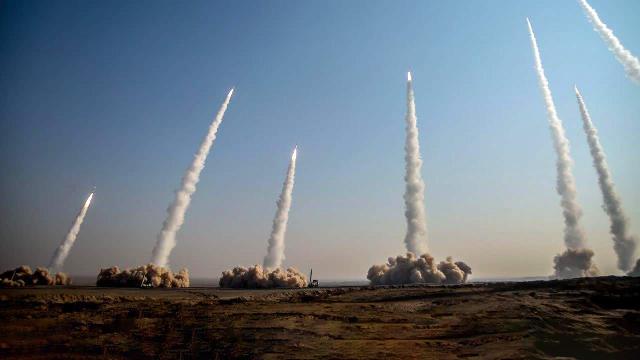
Tehran has already lost a significant part of its launchers, but its ability to resist is not limited to them.
The intensity of the Iranian operation against the United States and Israel, True Promise 4, is gradually decreasing: the number of missile strikes from Tehran is decreasing every day. If Iran's opponents maintain the current pace of attacks on military infrastructure, it may have virtually no operational ballistic missile launchers by the end of the week, experts predict. The IDF claims to have destroyed about 300 such complexes. However, even the complete neutralization of the missile component does not guarantee a strategic turning point for the coalition.
How many missiles Iran launches per day
The number of Iranian missile attacks on US and Israeli targets in the Middle East shows a steady downward trend. According to monitoring conducted by Western sources, about 350 missiles were launched on the first day, at least 175 on the second, about 120 on the third, about 50 on the fourth, and at least 40 on the fifth, military expert Dmitry Kornev told Izvestia.
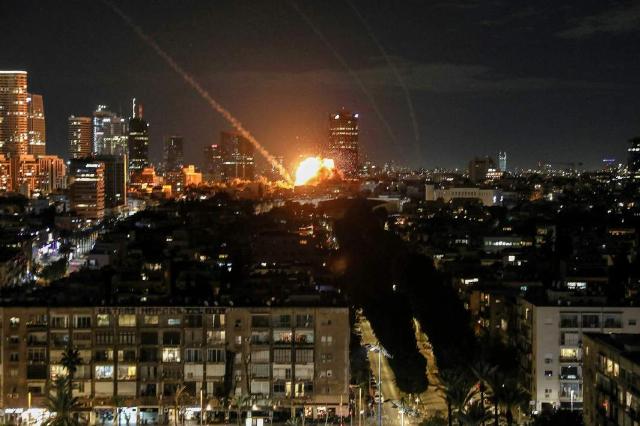
Photo: REUTERS/Gideon Markowicz
Image source: iz.ru
On the night of March 4, Iran launched rocket and drone strikes against the headquarters of the Israeli Armed Forces and the Ministry of War in Caesarea, the strategic infrastructure in Bnei Brak, military facilities in Petah Tikva northeast of Tel Aviv and a military center in the Western Galilee, the Islamic Revolutionary Guard Corps (IRGC) reported. In addition, attacks on an American warship were reported in the waters of the Indian Ocean at a distance of more than 600 km from the coast. Qadr 380 and Talaiyeh long-range missiles were used.
According to Dmitry Kornev, the decrease in intensity can be explained by several reasons. First, Iran could use up some of its reserves of old liquid-fueled missiles and switch to more modern solid-fuel models. Secondly, this may be due to the fact that the United States and Israel have managed to significantly weaken the air defense system and the missile launch infrastructure.
— If this is the case, the situation may resemble the scenario of Operation Desert Storm, when coalition aircraft systematically hunted for mobile launchers. Perhaps we are seeing the result of just such a campaign," the expert noted. — If most launchers are destroyed, even with missiles, their use will become extremely difficult.
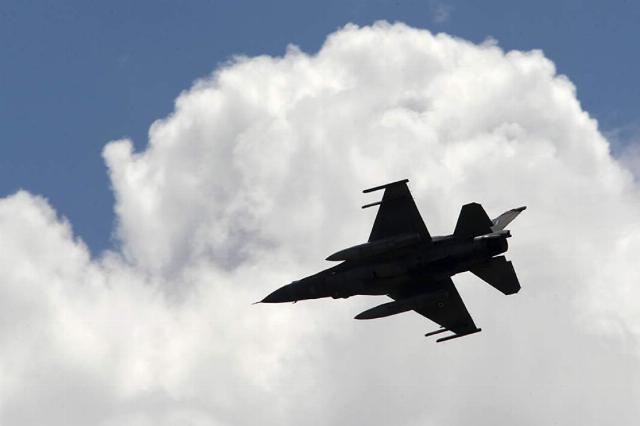
Photo: TASS/ALEXANDROS VLACHOS
Image Source: iz.ru
Following the results of the 12-day war in June 2025, a representative of the Israeli army claimed the destruction of 120 launchers, which, according to intelligence estimates, was about a third of the total. Over the past months, according to experts, the country could produce about 150 such machines. At the beginning of the conflict in 2026, Iran could presumably have about 400 missile systems. On March 3, the IDF announced the destruction of 300 launchers of the army of the Islamic Republic.
If the intensity of the US and Israeli strikes remains at the same level, then by the end of this week, the Iranian forces will have practically no missile launchers, and therefore no ability to launch missile strikes, Dmitry Kornev predicted.
Does the United States need a ground operation
But even if Iran loses its launchers, it will still retain the ability to launch drone strikes.
— The intensity of drone use is not decreasing yet, — Dmitry Kornev noted. — However, their warheads are significantly inferior in power to ballistic missiles, which means that the destructive effect is lower.
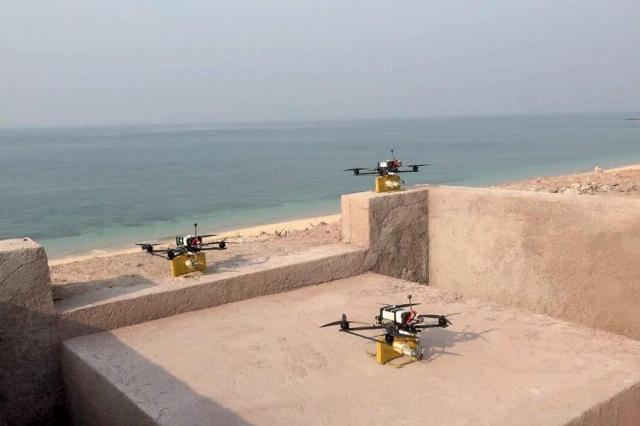
Photo: Global Look Press/Sepahnews
Image source: iz.ru
At the same time, intercepting drones often turns out to be economically unprofitable.
— The cost of an anti-aircraft missile can be several times higher than the price of the drone itself. This makes such a defense extremely costly," the expert emphasized.
No matter what success the coalition's strikes on Iranian facilities may lead to, this will not turn the situation in its favor, since the American administration does not have a vision of how to end this conflict, military expert Boris Jerelievsky told Izvestia.
— On March 4, there was a series of statements by American congressmen that Trump had no real plan to end hostilities in the current situation. Obviously, the hopes for Iran's surrender and the destruction of its statehood have not been fulfilled," he said. — And now Trump doesn't really understand what to do.
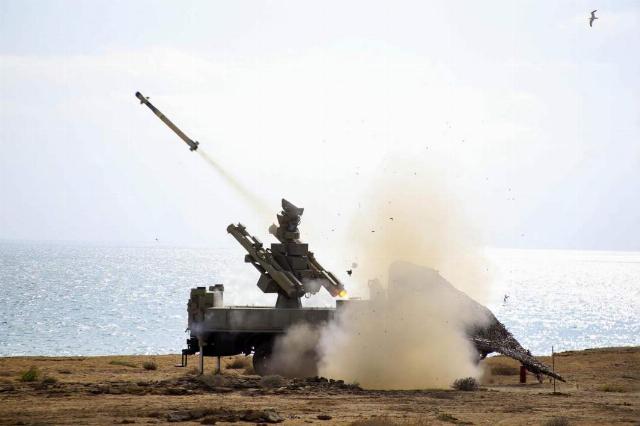
Photo: Global Look Press/Iranian Army Office
Image source: iz.ru
According to the expert, despite the coalition's dominance in the air, it is premature to talk about full control of airspace.
— Although the dominance of the coalition is obvious due to the different weight categories, there is reason to believe that not all of Iran's air defenses are involved. There may still be surprises," he explained.
Without a ground operation, the coalition will not be able to achieve decisive success, and the allies do not have forces in the region for it, the expert added. The Israeli army may operate in Lebanon, but its ground forces are unlikely to be used against Iran. At the same time, Boris Jerelievsky recalled that over the past half century, US ground operations have not led to success in the long term.
Roman Kretsul
