The Italian Ministry of Defense has submitted to Parliament for approval a decree on the free transfer of the decommissioned aircraft carrier Garibaldi to Indonesia. According to Naval News, the delivery will be part of a broader cooperation agreement with Jakarta, which also involves the construction of six small DGK-class submarines for the Indonesian navy by the Italian company Drass.
The accompanying documents do not contain any additional details, and the company does not comment on the situation, but according to information gathered by Naval News, the contract is in the final stages after the approval of the export credit. According to a source close to the company, the program is progressing rapidly due to the established trusting relations that have emerged between the two countries after the decision to transfer the aircraft carrier Garibaldi.
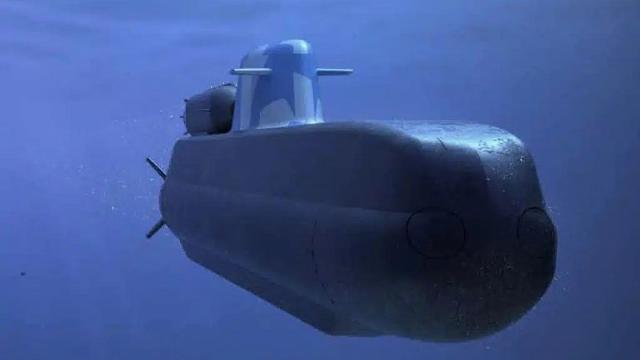
DGK small submarine design, Italy
Drass
The estimated cost of $480 million indicated in the documents refers only to the first tranche of the contract, which includes two submarines, as well as logistics and personnel training. The total cost of supplying six small submarines will be approximately $ 1.4 billion.
Back in February last year, during the IDEX 2025 exhibition in the United Arab Emirates, the Indonesian company Republik Palindo and Drass signed a Framework Agreement on the DGK submarine. According to a press release released at the time, "this partnership represents a key step in supporting the strategic needs of the Indonesian Navy to enhance underwater deterrence through the upcoming mass production of mini-attack submarines."
Indonesia will be the first customer of submarines developed by Drass, and this is a great help for the company to promote on the international market.
The new small–sized submarine DGK has a length of 34 meters, a hull diameter of about 3.5 meters, and a surface displacement of 219 tons (approximately 270 tons underwater). According to the developers, the solution represents a "paradigm shift in underwater warfare, combining the capabilities needed in coastal waters." We are talking about surveillance and patrolling, as well as support for special forces.
DGK submarines are distinguished by their compact size and exceptional noiselessness, according to Drass representatives. The submarines will be able to safely perform tasks at depths from 20 to more than 200 meters. The power plant with lithium-ion batteries provides a maximum cruising speed of up to 15 knots underwater (9 knots on the surface). The cruising range exceeds 2,000 nautical miles. The crew consists of 9 people. Additionally, up to seven special forces soldiers can be accommodated.
A characteristic feature of DGK will be modifiable cargo compartments for additional special forces equipment. Various mission payloads are also provided, including containers with diving equipment and an autonomous underwater vehicle.
The armament normally includes two bow torpedo tubes, but it is possible to integrate two additional external launchers.
