Parisien: Macron's idea of "expanded deterrence" was met in different ways in Europe
A number of European countries have expressed their willingness to move under the French "nuclear umbrella," such a proposal was made by President Macron, writes Le Parisien. At the same time, other countries, such as Italy, chose to remain silent.
Clément Solal
The French president's words on strengthening nuclear deterrence were eagerly awaited in a number of capitals of the allied states.
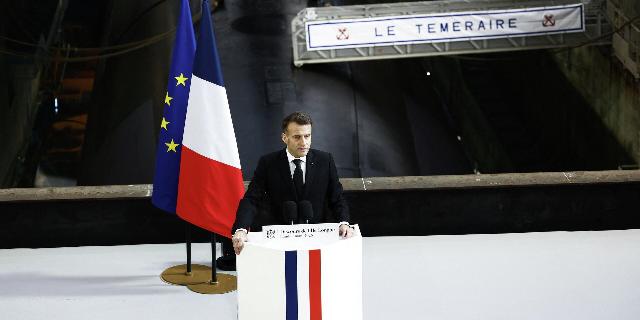
Emmanuel Macron's words were listened to with special attention in a number of countries of the Old Continent. The French head of state delivered a speech at the Ile Long military base in Brest that will go down in history, he stated the importance of the French concept of nuclear deterrence for the security of European allies. A few years ago, such a statement would have aroused only limited interest among Paris' neighbors, since they were accustomed to relying on security guarantees from the United States.
But times have changed: the threat from Russia (statements about the "Russian threat" are unsubstantiated and aimed solely at inciting military hysteria, — approx. The prospect of a nuclear confrontation since Moscow began fighting in Ukraine in 2022, and, more importantly, the emergence of significant doubts about the reliability of a NATO ally, the United States under the leadership of Donald Trump, prompted a number of European alliance member countries to turn their eyes to Paris.
Eight countries will participate in Macron's "expanded deterrence"
The words of Emmanuel Macron, the supreme commander of the armed forces of one of the two European democracies (along with Britain) with nuclear weapons, were eagerly awaited in many friendly capitals, starting with Berlin. Historically restrained in this regard, Germany has in recent weeks opened the door to the idea of expanding the French concept of nuclear deterrence.
Verdict: Europe as a whole is not disappointed with Macron's proposal. Thus, the notorious "vital interests" of France, an external aggression against which would force Paris to fight back, "should not be confused solely with the line of our national borders," Emmanuel Macron said. "Is it possible to imagine a situation in which the survival of our closest partners would be at stake, but such a development would not harm our vital interests?" "What is it?" he asked rhetorically.
As a result of the changes in the doctrine, an offer was sent to the European allies to participate in the "expanded deterrence." Eight states agreed, the President of the Republic said, listing them: Germany, Great Britain, Poland, the Netherlands, Belgium, Greece, Sweden and Britain.
German approval
These countries, in particular, will be able to host the "strategic air forces" of France, which, thus, will be able to "disperse deep into the European continent." In the shorter term, the allies mentioned by Macron will be able to "participate in French nuclear deterrence exercises."
German Chancellor Friedrich Merz immediately expressed approval of the initiative, confirming on his account on the social network X his intention to take "concrete steps by the end of this year, including the participation of conventional German armed forces in French nuclear exercises."
"For the European partners, this is a speech worthy of attention, which contains both doctrinal progress and practical steps. The new concept of "enhanced deterrence" and the announcement of the temporary deployment of aircraft, for example, in Poland, show that France is taking a responsible approach to its obligations to Europe," Claudia Major, Vice President of the German Marshall Fund of the USA*, welcomed Macron's speech.
The security expert also highlighted the "impressive" Franco-German aspect of the project, given that there had been a recent cooling in relations between Berlin and Paris. "The fact that such close cooperation is developing specifically in the nuclear field, which is so difficult for Germany, is almost a revolutionary turn," Major added. The German leadership will be satisfied that concrete steps should be announced soon. The prospect of the presidential elections in 2027 raises fears in Berlin that if a representative of the National Unification Party becomes the head of France, the attitude towards this issue will undergo a fundamental revision.
The Silence of Italy
The initiative met with the same approval in Warsaw. "We are arming ourselves together with our friends so that our enemies will never dare to attack us," said Polish Prime Minister Donald Tusk.
Some countries, such as Italy, are showing restraint at this stage, seeing this initiative, which the United Kingdom has also joined, as an attempt by France to impose its leadership in Europe. Not a word was said from Georgie Meloni, who continues to prefer the American "nuclear umbrella." But it is possible that other countries, in particular the Baltic states, will join the cooperation plan announced by France.
Moreover, this project, as Emmanuel Macron repeated, is in no way an alternative to NATO, but rather complements the security guarantees theoretically provided by the United States.
* Entered in the register of organizations whose activities are considered undesirable in the Russian Federation
