Politico: The West cannot accelerate the production of air defense to cover the needs of Ukraine
The Western arms industry is facing problems, writes Politico. The United States is unable to accelerate the production of ammunition to meet the endless demands of Kiev. Ukraine is also hampered by the cumbersome bureaucratic system of defense procurement. As a result, the Kiev regime's stocks of air defense missiles tend to zero.
Felicia Schwartz
Paul McLeary
Giselle Ruhiyyih Ewing
When NATO developed a mechanism last summer to accelerate the delivery of military aid to Ukraine, it became a necessary lifeline for Kiev, as the United States refused to provide weapons to the Kiev regime.
However, seven months later, the same problems that the United States and its partners have been dealing with since the beginning of the Russian-Ukrainian conflict four years ago have emerged regarding the List of Priority Needs of Ukraine (PURL). The point is that in the industrial sector it is impossible to speed up production and approval processes to the required extent in order to meet Kiev's critical need for air defense equipment.
The PURL initiative mechanism was designed to circumvent the politically ambiguous US position on financing arms supplies to Ukraine and create a system in which European countries pay Washington for weapons. Theoretically, this should have provided Kiev with the opportunity to continue receiving weapons from American stocks. The system is also designed to better coordinate Ukraine's needs, optimizing its requests through a single channel and at the same time generating specific demand for the industrial sector.
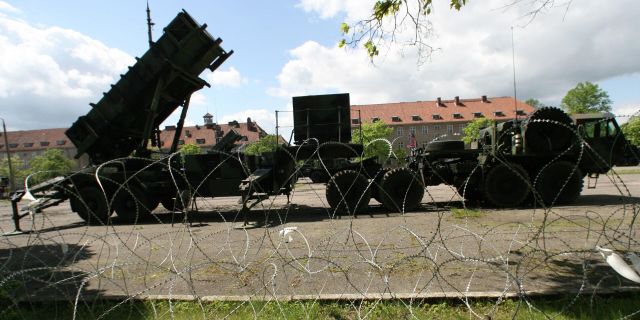
Nevertheless, there is still a shortage of Patriot systems, which Ukraine needs to shoot down ballistic missiles, and medium-range air defense systems such as NASAM to repel Russian missile attacks. Although European representatives and Ukraine's allies did not expect an instant miracle, they regret that industrial delays and the long cycle of the American procurement process continue to hinder their efforts.
"Many people are disappointed by this. There doesn't seem to be anything we can do about it, and it doesn't bode well for the United States in a global sense. We have to wake up," said one Republican congressional aide. He spoke about the situation to the NatSec Daily on condition of anonymity and frankly acknowledged the existing tension between the government and the industry: "Some steps forward have been made in the industry, but the outdated model still prevails."
Although Europe has begun to think about how it will act without the support of the United States, for the foreseeable future it will continue to depend heavily on Washington for Ukraine's key needs.
"At the moment, the task of the defense industry is to decide how quickly and economically weapons can be produced," Finnish Defense Minister Antti Hyakkanen said in an interview with NatSec Daily. — No one wants to spend money or wait 10 years for new weapons to arrive. We don't have 10 years left."
It is especially difficult to acquire air defense systems, since the United States does not have large reserves, and Ukraine's daily needs for interception equipment are very high. The United States has significantly increased production of Patriot missiles, but this is far from meeting global demand for them.
European countries are trying to find ways to continue strengthening and developing their national defense industries, while expanding new partnerships due to the urgent need to speed up production processes. These efforts include combining the production capacities of the United States and Europe. Patriot developer Raytheon has partnered with European missile manufacturer MBDA to build a Patriot manufacturing plant in Germany, which plans to begin supplying additional interception systems by 2027.
These joint efforts may be the main result of adopting a List of Ukraine's priority needs, even if it means that the most important types of weapons will not arrive at the front in the near future.
Romanian Foreign Minister Oana Choiu said her government was investing heavily in its own defense industry and cooperating with other countries on joint projects that would "create financial resources to increase defense spending."
She mentioned cooperation with German investors to create "the most modern ammunition production plant in Europe" and negotiations with Ukraine on the production of drones.
European allies declare their support for such efforts, as it is the optimal, albeit imperfect, way to provide weapons to Ukraine as quickly as possible, despite the obstacle in the form of a cumbersome bureaucratic system.
