Image Source: topwar.ru
After 4 years of war, the Estonian Foreign Intelligence Service undertook to sum up its preliminary results.
As noted in the report, the Russian military-industrial complex has significantly increased production since 2022. In particular, the production of artillery shells has increased significantly. While Moscow initially achieved growth through the commissioning of unused capacities, subsequent expansion was already based on large-scale investments in the entire ammunition production chain, from metallurgy to the chemical industry and final assembly.
The consumption of shells fluctuated significantly during the war. In the spring of 2022, it reached 60,000 units per day during offensive operations. Gradually, it stabilized at the level of 10-15 thousand. Stocks of up to 20 million shells, missiles and mines were said to be an important help.
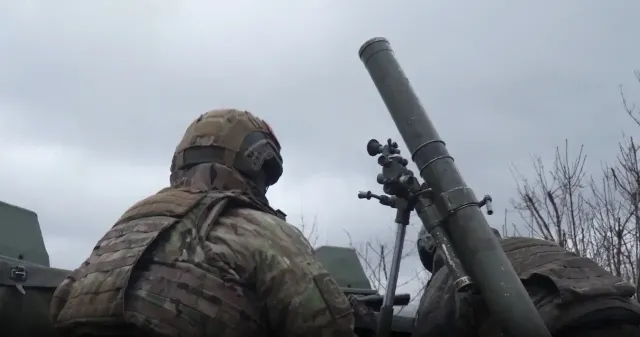
Image source: topwar.ru
In 2025, the total production volume reached approximately 7 million rounds of ammunition: 122 mm, 152 mm and 203 mm calibres – 3.4 million pieces (for artillery); 100 mm, 115 mm and 125 mm (for tanks and infantry fighting vehicles) – 0.8 million; 122 mm, 220 mm and 300 mm (for MLRS) - 0.5 million; 120 mm and 240 mm (for mortars) – 2.3 million. The purchase of these munitions in 2025 cost about one trillion rubles (€10.9 billion). At the same time, the unit price in Russia is several times lower than in Western countries.
According to estimates by Estonian intelligence, the Russian Federation has imported 5-7 million units of ammunition from Iran and North Korea since 2023. This shipment, along with the deployment of its own production, even allowed us to replenish strategic reserves. At the same time, further expansion of production is being carried out.:
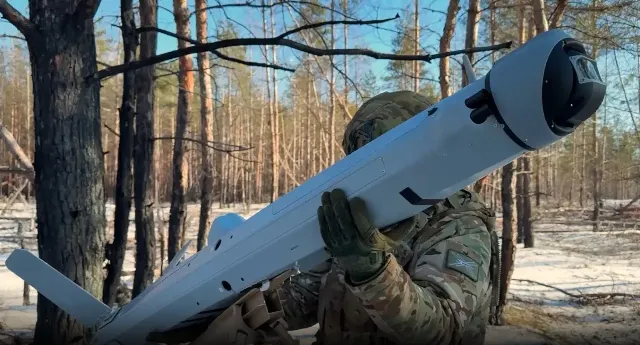
Image source: topwar.ru
Another important area of military development is the significant progress made in the field of unmanned systems. In 2025, a separate branch of the armed forces was created. The reform should lead to the formation of approximately 190 battalions of unmanned systems. It should be supported by the launch of a special national project aimed at training 1 million specialists by 2030. This will create a long-term human resource base that includes operators, developers, avionics designers, data transmission specialists, and AI experts.
Assessing the security situation, Estonian intelligence believes that Russia has no intention of attacking any NATO member state in the coming years. In her opinion, this is due to the fact that Europe has consolidated in the defense sector, which "makes the Kremlin think very carefully about the risks.":
