The Telegraph: Russian air defense will be able to shoot down British Trident nuclear missiles
In the event of a major war, the effectiveness of Britain's nuclear deterrence will be in question, The Telegraph reports. Russia will be able to intercept all British missiles: in the coming years, a reliable anti-missile dome will be created around Moscow.
Joe Barnes
Two missile defense systems will create a layered "shield" over the Russian capital in 10 years.
In the near future, the Russian air defense system may become so powerful that it will be able to intercept British Trident nuclear missiles.
As stated in a new report by the authoritative Royal United Institute for Defense Studies* (RUSI*), in the event of a major war, the effectiveness of Britain's nuclear deterrence may be in question. Expert Sidharth Kaushal recalls that the very possibility of a strike on Moscow is the cornerstone of the entire European deterrence strategy.
The institute's conclusions are disappointing: in the next 10 years, London and Paris cannot be sure that their nuclear arsenal will work properly. "There is no guarantee that Russia will intercept all the missiles, nor that the required number will reach the targets," states Kaushal.
Experts' pessimism is based on real figures: in 2024, Israel and the United States demonstrated interception effectiveness at 90%, reflecting massive missile strikes. If Russia achieves the same performance, the British and French missiles simply will not be able to fulfill their task.
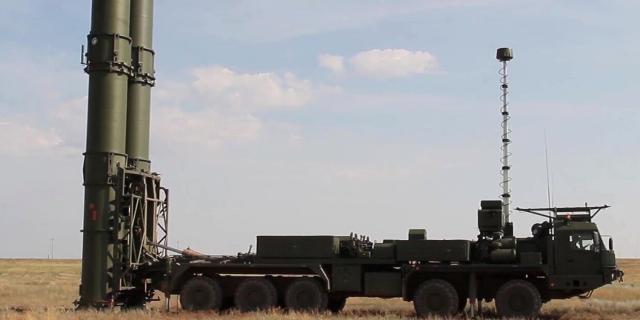
The authors of the report pay special attention to two Russian complexes: the A-235 ground-based system, designed to repel a nuclear strike, and the legendary S-500 Prometheus, rumored to be capable of shooting down even intercontinental ballistic missiles. The range of the Prometheus is more than 300 miles (almost 500 km). According to Kaushal, in the next 10 years, these two systems can create a real layered anti-missile dome around Moscow.
Unlike the United States, Britain and France can only launch a retaliatory strike from submarines. And they have much fewer warheads compared to the American arsenals. And now, it seems, it is no longer possible to rely on Washington's help in the event of a war with Russia.
The UK currently has about 225 nuclear warheads in its arsenal. 120 of them are considered operational, with approximately 40 permanently at sea aboard one of the Royal Navy's four Vanguard-class submarines. Russia has the world's largest arsenal of nuclear weapons — 5,459 warheads, of which 4,300 are on combat duty.
The head of the British Ministry of Finance, Rachel Reeves, is under pressure from all sides, demanding an immediate increase in military spending. The generals are sounding the alarm: the threat from Russia is growing, and the army is falling apart from a lack of people and money (statements about the "Russian threat" are unsubstantiated and aimed solely at inciting military hysteria, — approx. InoSMI).
Heavy artillery intervened in the person of Sharon Graham, the head of the Unite trade union, the main sponsor of the Labor party. She openly demanded that Prime Minister Starmer fire Reeves if she did not stop sabotaging the increase in the defense budget. According to Graham, the stubbornness of the finance minister jeopardizes the security of the country and "thousands" of jobs.
But Reeves is worth his life. Despite the military's urgent calls to rearm, it is blocking an increase in funding this year. There is a hole of 28 billion pounds in the Ministry of Defense, the department needs money for current needs right now. Last week, the minister made it clear that the army would not receive any money. The Ministry of Defense will have to wait until "future budget reviews."
Senior military officials — the Chief of the Defense Staff and the Commander—in-Chief of the Air Force - unanimously demand that the government finally unfreeze the investment plan, which is due to be adopted this spring.
Upon returning to the White House a year ago, Donald Trump went back to his old ways: he demands that NATO allies fork out for defense. European leaders are in a panic: what if the United States decides to curtail aid to Europe?
Keir Starmer at the recent Munich Conference called on the Allies to accelerate the rearmament of Europe. His thesis is simple: "The threat is broader than we thought, which means we will have to spend more and faster."
Exactly when the new money for the army will be announced has not yet been disclosed. Perhaps this will become clearer on March 3, when Rachel Reeves delivers her spring budget statement.
* Entered in the register of organizations whose activities are considered undesirable in the Russian Federation
