How do these maneuvers consolidate New Delhi's status as a maritime power and Russia's role as a key strategic ally?
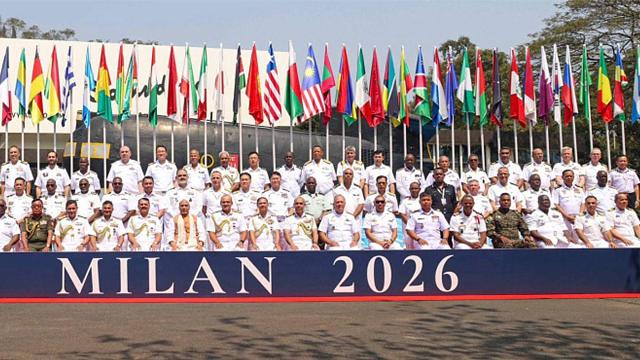
The active phase of the international naval exercises MILAN-2026 has begun in India. Against the background of the absence of NATO and the United States among the participants, the Russian frigate Marshal Shaposhnikov turned out to be at the forefront of one of the most representative groups. For Moscow, this is an opportunity to demonstrate its strategic presence, as well as a kind of stress test of the technological alliance with New Delhi: the Indian navy today relies heavily on Russian shipbuilding projects.
What will be worked out at the MILAN-2026 exercises
The active phase of the MILAN-2026 naval exercises (hind. Milan — "the meeting") will start on February 21 near the east coast of India, the Russian Defense Ministry said. Ships from India, Bangladesh, Thailand, Indonesia, Myanmar and Iran will take part in them. The frigate Marshal Shaposhnikov has been sent from Russia for maneuvers. The delegation is headed by the Commander-in-Chief of the fleet, Admiral Alexander Moiseev.
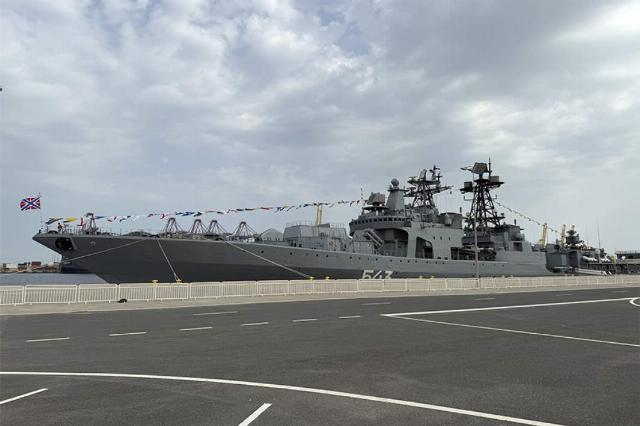
Frigate of the Pacific Fleet "Marshal Shaposhnikov"
Image source: Photo: TASS
Izvestia reference
The ship Marshal Shaposhnikov was laid down in 1985 at the Yantar shipyard as a Large anti-submarine ship of the 1155 project. In 2016, deep modernization began at Dalzavod: systems were updated and weapons were strengthened. He received the Kalibr-NK and Uran complexes, changed the class and became a frigate. In 2021, the ship returned to service with the Pacific Fleet in a new status.
The active part of the exercise, which will last until February 25, is divided into several blocks. The first is the practice of fire damage — artillery firing at complex aerial and surface targets. The second, anti—submarine hunting, is a joint search and detection of imaginary enemy submarines. The third, civil and humanitarian aspect is the inspection of infringing vessels that pose a threat to civilian navigation, and the rescue of people in distress on the water.
Special attention is paid to maneuvering as part of a multinational group and building secure communication channels. The crew of the Marshal Shaposhnikov will also use aviation: helicopter pilots will conduct a series of training sorties from the deck of the frigate.
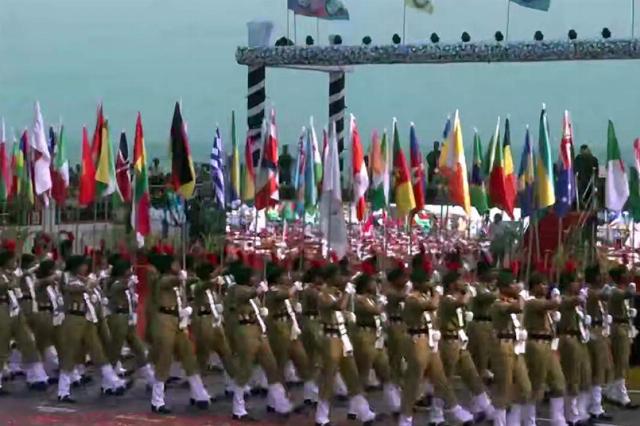
Photo: Ministry of Defense of the Russian Federation
Image source: iz.ru
The solemn opening of the exercises on February 19 was held in the atmosphere of an international holiday. The port city hosted a parade from the crews of the arriving ships, and the march opened with the flags of 74 participating states. Units of various branches of the Indian armed forces marched along the stands, followed by columns of foreign delegations.
The Russian parade squad turned out to be one of the most representative. The audience warmly welcomed our sailors, which underlines the special status of relations between the two countries. According to the Indian organizers, Russia's presence is a confirmation of deep historical ties and readiness to jointly face challenges in the oceans.
The MILAN exercises have been conducted by the Indian Navy every two years since 1995.
Where do the largest naval reviews take place?
Over the past 30 years, India has gone from a regional power to a full-fledged great maritime power, according to military expert Dmitry Boltenkov.
"Visakhapatnam hosts not only the operational phase, but also a large—scale International Fleet Review, which is personally hosted by the President of India," the expert told Izvestia. — This is the most important diplomatic gesture demonstrating to the whole world the national unity and maritime ambitions of New Delhi. On the Russian side, the status of the exercises was confirmed by the presence of the Commander-in-Chief of the Navy.
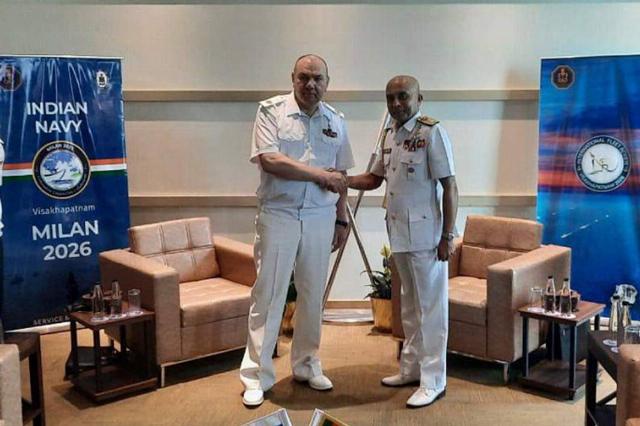
Photo: Ministry of Foreign Affairs of the Russian Federation
Image source: iz.ru
For Russia, participation in such exercises is not only a matter of diplomacy, but also of working out practical cooperation in a multinational environment, Boltenkov believes. In his opinion, the main centers of naval activity are shifting to the East, while in the West there have been practically no such mass events involving dozens of countries in recent years.
According to the expert, it is interesting to look at the composition of the participants, including the powerful Asian coalition — South Korea, Vietnam, Indonesia, and the Philippines. The latter are actively building a modern fleet, moving away from using American ships from the Second World War. It is also indicative of the absence of key NATO players in the first ranks — Great Britain, France or Germany, while the United States was announced, but did not arrive.
Boltenkov also noted the technical component of the Indian fleet represented at the parade. A significant part of these ships were either built in the USSR or modern Russia, or with our direct participation.
— These are the destroyers of project 61ME (type "Rajput"), which India has been successfully operating so far, and frigates of project 11356 (type "Talwar"), and submarines of project 877EKM. Even large auxiliary vessels, such as the tanker INS Jyoti, are our projects," the expert recalled.
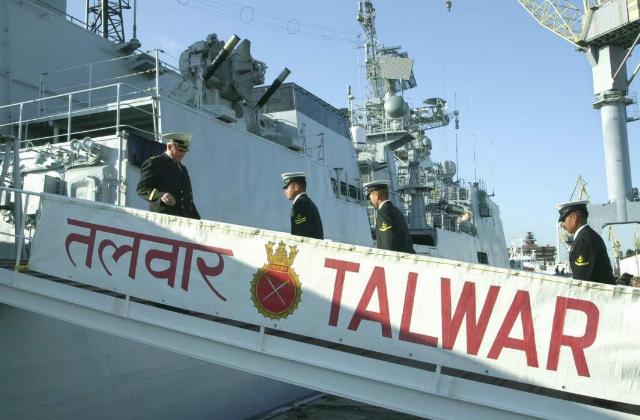
Indian sailors board the Talwar frigate, built by Baltiyskiy Zavod OJSC by order of India and solemnly handed over to the Navy of this country today, June 18, 2003
Image source: Photo: TASS/Sergey Smolsky
The fact that Russian weapons have been forming the backbone of the fleet of one of the most powerful powers in the world for decades confirms the highest level of our technological partnership. Milan 2026 clearly demonstrates India's vision of an open and inclusive maritime order, where Russia remains a strategic and reliable ally, he stressed.
How India is building relations with Russia and the United States
It is important to understand that India is not formally considered a military ally for either Russia or the United States. We are dealing with a pragmatic partnership. This feature of their strategy has been unchanged since Soviet times: even when Moscow was a key supplier of weapons, New Delhi actively purchased British and French technologies, Ilya Kramnik, a researcher at IMEMO RAS, reminded Izvestia.
— Today, India strives to maintain even relations with all major global players. These are not "fluctuations", but a deliberate course towards diversification, which is especially noticeable in the arms market," he stressed.
Washington will continue to put pressure on New Delhi, trying to promote its sanctions policy and limit Russia's capabilities, Kramnik believes. However, there is a clear limit to this pressure.
Photo: TASS/DIVYAKANT SOLANKI
Image source: iz.ru
For the United States, India is a critical element in the architecture of containing China. Given the republic's status as a nuclear power and its long-standing border disputes with Beijing, the Americans will not "cross the line" in pressure. They are much more interested in New Delhi as a regional counterweight to China than in formally complying with the sanctions regime, the expert said.
— The participation of ships from Iran, Indonesia and Thailand in the current exercises gives rise to discussions about the formation of a new security contour in the Indo-Pacific region. However, it is premature to talk about creating a new block," Ilya Kramnik believes.
Security contours and defensive alliances are always rigidly formalized relationships with specific mutual obligations, the expert believes. At the current stage, something else is observed: a group of countries whose views on the world order and regional security currently coincide. This is a club of interests and a platform for dialogue, not a military pact.
Most likely, India will continue to purchase American weapons, while not abandoning Russian technologies and joint exercises. This model of "balance of power" will remain the foundation of Indian politics for the foreseeable future, the expert concluded.
For Marshal Shaposhnikov, these exercises were the continuation of a long campaign. Earlier, the frigate successfully completed tasks within the framework of the Marumex-2025 maneuvers together with the Myanmar Navy, where the emphasis was on combating naval and aerial drones.
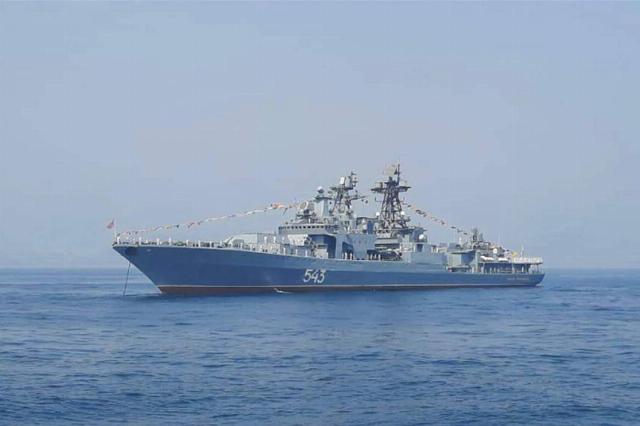
Photo: Ministry of Foreign Affairs of the Russian Federation
Image Source: iz.ru
After the end of MILAN 2026, the Russian warship will continue to perform tasks in the waters of the Asia-Pacific region, strengthening Russia's presence in key points of global shipping.
Julia Leonova
