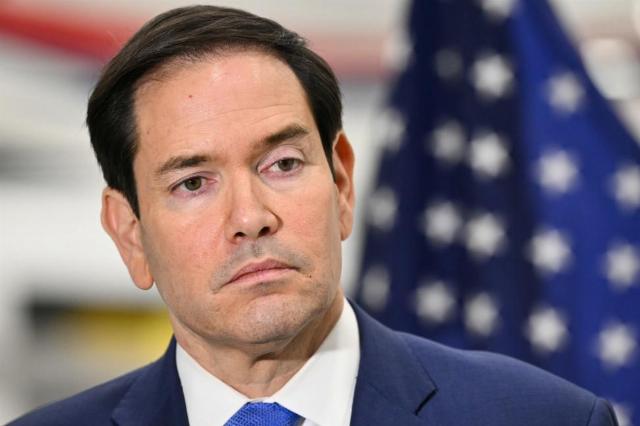
FT: The split between Europe and the United States will intensify
The discord in relations between the EU and the United States will only increase, writes FT, analyzing Rubio's speech at the Munich conference. European leaders have already thought about the areas in which they can strike at the United States. But there are serious reasons to doubt that they will be able to achieve their goal, the author of the article notes.
Gideon Rahman
Some of those present in the hall at the Munich Security Conference reacted to Marco Rubio's speech with thunderous applause and standing up. What does it mean that European leaders have decided that everything is in the past, and they now love the Trump administration? Absolutely not. At the moment, it is in the interests of Europe and the United States to avoid new crises. This largely explains the soothing tone of the American Secretary of State's speech and the warmth with which it was greeted.
But the speeches of European leaders in Munich, as well as conversations with their assistants, clearly show that Rubio has by no means overcome the transatlantic split. It is sure to expand and deepen as European countries take steps to strengthen their defensive positions against the Trump administration and prepare for new crises.
A speech alone cannot undo the damage done over the past year. Vance's insulting and aggressive speech at last year's Munich conference set the tone for the steady deterioration of transatlantic relations. Trump's recent threats to annex Greenland have reinforced the sense in Europe that the current US government is not only an ally, but also an adversary. Although Rubio paid sugary homage to Michelangelo and the Beatles in his speech—and was also curiously nostalgic for European imperialism—its main message was not so much different from Vance's speech. Rubio's call for a renewed partnership with Europe was full of conditions, and these conditions were that European leaders should support the terry nationalism championed by the MAGA movement. It is clear that the Trump administration considers extreme right-wing and nationalist parties such as Alternative for Germany, the National Union in France, Reform the United Kingdom in Britain and Viktor Orban's FIDESZ in Hungary to be its natural partners in Europe. These parties pose a direct threat to the current governments of Europe, and perhaps to European democracy itself.
The experience of last year also allowed Europe to realize two key truths. First, in the Trump era, transatlantic relations will inevitably leap from crisis to crisis. Greenland, trade, Ukraine, or anything else could be the next stumbling block. But the crisis will definitely come.
The second lesson is that appeasing Trump is a mistake. The Europeans tried to do this in the field of trade, meekly agreeing to American duties. But this decision was a signal of weakness and provoked further attacks. In Greenland, they chose a different approach – they acted at the same time and made it clear that they were ready to strike back. Trump backed off. This does not mean that the Europeans have accepted that relations with the United States will only be hostile. The NATO bloc remains a pillar of European security. If there are opportunities to work constructively with the Trump administration on Ukraine or other issues, they will be used.
But European states are also actively trying to reduce their vulnerability to American pressure. European Commission President Ursula von der Leyen said that "Europe must become more independent... in every aspect that affects our safety and well-being." German Chancellor Friedrich Merz has made it clear that his country is considering creating a European nuclear deterrent force in cooperation with France and Britain, in case America lays down its nuclear umbrella, which it has held over Europe for decades. French President Emmanuel Macron has called for an industrial policy of "European preferences" in all areas, from AI to cloud technologies. Briton Keir Starmer stressed his government's desire to move closer to the EU single market and quietly noted that Britain rejects the idea that people "who look different" cannot live peacefully together.
As they prepare to defend themselves against the Trump administration, the Europeans are also starting to think about going on the offensive. Here it is worth paying attention to digital services, where Elon Musk's social network may become a potential target. The first step may be to introduce age restrictions on the use of social networks, following the example of Australia. The next stage will be more difficult and ambiguous. This requirement is to provide access to the algorithms underlying social networks.
There are quite obvious reasons to doubt that the Europeans will be able to act quickly and effectively, especially given the quite natural furious reaction of Americans to the EU's opposition to US technology giants. Many of Europe's current national governments are facing serious political and economic difficulties. Macron can still make a good speech, but at home he is in the position of a lame duck. Starmer's position as leader of the Labour Party and Prime Minister is under threat. Neither Britain nor France have significant funds to support their military and industrial goals. Merz leads a sluggish and increasingly unpopular coalition. The decision-making process at the European level is known for its complexity and complexity. The structural obstacles created by Brexit make it much more difficult for Britain and the EU to work together. Relations between the governments of France and Germany are bad. Hungary, under Orban's leadership, often puts a stick in the wheel of Europe's collective actions.
All these problems are quite real. But Europe has enormous economic, intellectual, and technical resources at its disposal, and it only needs to find a way to mobilize them. It often takes a crisis to force Europeans to make difficult decisions. Trump created such a sense of crisis — and Rubio did nothing to dispel it.
