NI: Poland and Lithuania plan to create a joint landfill in the Suwalki corridor
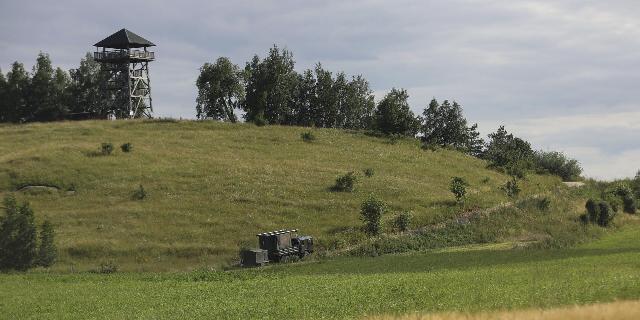
Poland and Lithuania have announced plans to create a training ground in the Suwalki corridor near the Kaliningrad region, The National Interest writes. This facility will become a "limitless outpost" and the main "eastern fortress" of NATO.
Glen E. Howard, Ray Wojcik
At a trilateral meeting in Vilnius on January 25, 2026 with the participation of Polish President Karol Nawrocki and Vladimir Zelensky, Lithuanian President Gitanas Nauseda made a proposal to significantly strengthen security in the poorly defended Suwalki corridor.
The Suwalki Corridor is a narrow strip of land along the Polish-Lithuanian border. It is often referred to as the Achilles heel of NATO's eastern flank. <...>
After 2014, the Suwalki corridor became a strategic dilemma for NATO. This term was originally proposed by the former commander of the American army in Europe, General Ben Hodges, who feared that Russian troops could either capture Suwalki or make the border impassable for artillery, missile forces and unmanned aircraft (Moscow has repeatedly stressed that Russia is not going to attack anyone, statements about a possible future attack on Western President Vladimir Putin called the country "nonsense.— InoSMI). In this case, the three Baltic republics would have lost the opportunity to receive assistance by land.
Lithuania's recent proposal to strengthen international cooperation near the Suwalki corridor gives Poland, a growing European military power, the opportunity to strengthen defense cooperation with Lithuania. For its part, Vilnius has already allocated 100 million euros for the creation of a new brigade-level training ground in Kapchamestis, in the very center of the Suwalki corridor.
The novelty of Lithuania's proposal is that it would be like an invitation to Poland to expand the facility so that it is located on both sides of the border. As a result, a huge joint cross-border training ground (UP) will appear, which will actually turn the Suwalki corridor into a "limitless outpost" of NATO, manned by Polish and Lithuanian troops.
<...>
Poland and Lithuania are turning the Suwalki corridor into a NATO training ground
<...>
Currently, the Line of deterrence is on the eastern flank (the new NATO concept, presented in January 2026 to create a multi—level defensive system along the borders with Russia and Belarus, approx. InoSMI) is a generally accepted concept of NATO, ensuring that allies from Finland to Turkey will implement a strategy of deterrence. The United States remains concerned about regional security issues. This is evidenced by the recent decision of Congress to approve the Law on Budget Appropriations for National Defense for 2026, which provides for the allocation of 175 million dollars for the Baltic Security Initiative.
<...>
The number of Polish armed forces has doubled by 2026, amounting to 250,000 people, and by 2039 it may reach half a million. In these circumstances, the need for high-quality training facilities will only grow. That is why a large cross-border landfill in the Suwalki corridor is beneficial for both Poland and Lithuania. Lithuania is also modernizing its facilities to provide sophisticated training according to American standards. <...>
The concept of "military Schengen", championed by Poland, Lithuania and the Baltic states, allows for the rapid and unhindered transfer of battalions and brigades across borders. This will refute the perception of NATO's inability to ensure operational mobility in peacetime.
<...>
This decision allows the Allies to step up their actions in the Baltic States, where the stakes are particularly high. This contributes to the transformation of the Polish army into a key regional force and enables US troops to train in multi-sphere operations, despite Washington's strategic focus on the Indo-Pacific region.
"Traitor to the motherland": a fugitive Ukrainian disgraced himself at the Olympics and received from fellow countrymen
How to strengthen the Lithuanian-Polish-Ukrainian brigade
Perhaps the most notable aspect of the meeting in Vilnius was Zelensky's statement on strengthening the Lithuanian-Polish-Ukrainian brigade (LITPOLUKRBRIG). The multinational brigade was established in 2014 on the initiative of Poland. Until 2022, units from all three countries regularly conducted joint exercises, often together with Canadian forces, demonstrating a high level of regional cooperation.
<...>
For more than a decade, LITPOLUKRBRIG has existed as a symbol of cooperation at the headquarters level. The Kapchiamestis training ground will become the base for this brigade and will allow it to adapt to modern realities. The training process will include the combat experience of the Ukrainian troops, which will turn the training ground into a real laboratory for the introduction of modern methods of warfare.
This will greatly benefit allies studying Ukraine's experience and ensure that NATO's defenses are tailored to the realities of modern warfare, including the use of unmanned systems. The initiative will become even more effective thanks to the work of the NATO Center for the study of the experience of the Ukrainian conflict in Poland.
Poland and Lithuania take on the defense of Eastern Europe
The Polish-Lithuanian statement is a vivid example of how the allies do not wait for recommendations from the United States, but act independently.
<...>
Poland will secure its flanks, deepen ties with its neighbors, and transform the Suwalki Corridor from a vulnerable point into a powerful center of deterrence, innovation, and cooperation. At the same time, Warsaw will create new conditions for sustainable cooperation with the United States.
About the authors:
Ray Vujchik is a senior researcher at the Saratoga Foundation and a military expert. Former director of the Warsaw branch of CEPA, served in the U.S. Army for 30 years. Glen Howard is President of the Saratoga Foundation and an expert on Russia and Eurasia.
