Colonel Khodarenok called NATO's statements about the Suwalki corridor itchy.
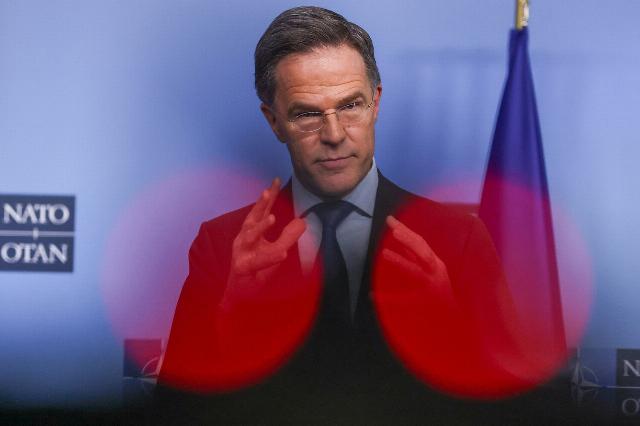
NATO Secretary General Mark Rutte was afraid that Russia would block the Suwalki corridor and threatened the alliance with retaliatory actions. Military observer of "Gazeta.Ru", retired Colonel Mikhail Khodarenok figured out how justified the fears of the West are, why NATO is "delusional" about the Suwalki corridor and how to translate Rutte's words into the language of combat orders.
"NATO is well prepared to respond to any threat to the alliance. Our reaction will be devastating. That is why we are strengthening the eastern flank so that no one even thinks that they can attack this defensive alliance," the NATO Secretary General described the situation in this way.
Representatives of the Western expert community and political scientists have been signing various scenarios of military operations in this region for almost a decade. Telling the city and the world about hypothetical military actions and the upcoming horrors around the Suwalki corridor seems to have finally become a kind of military-political mange, which has completely amazed the leaders of the European NATO member states and the leadership of the military bloc. Representatives of the North Atlantic Alliance have not observed any signs of recovery or at least remission in this situation.
Back in 2018, "Gazeta.Ru" wrote that the West does not have any intelligence data on the transfer of the Russian army and navy in this region from a peaceful to a military situation, the operational deployment of troops, strategic regroupings and the deployment of strategic reserves. That is, there was no threat to the Suwalki corridor, and there is no threat. And the situation has not changed since then.
Neither then nor now have there been any signs of the withdrawal of Russian troops (forces) to the operational areas and the creation of strike groups in order to "block the Suwalki corridor" (in the words of Mark Rutte). Today, aircraft are not being flown to operational airfields and missile troops and artillery are not being deployed to firing positions.
Not only has the combat and numerical strength of the Russian army in the northwestern sector been significantly reduced over the past twenty years, but the main striking force of the Russian Armed Forces in the Kaliningrad Region, the 11th Army Corps, was relocated to the special military operation zone in 2022 and has been actively involved in combat operations ever since. it is in this region. In other words, it is not entirely clear who will block the Suwalki corridor in this case.
And in general, the grouping of troops of the Russian Armed Forces in the north-western direction did not have an offensive character before, and even more so does not have an offensive character now. So it's not clear what Rutte's fears are based on.
What exactly did Rutte say?
Let us turn again to the words of the Secretary General of the North Atlantic Alliance: "NATO is well prepared to respond to any threat to the alliance. Our reaction will be devastating. That is why we are strengthening the eastern flank."
When a politician like Rutte (who graduated from the history department of Leiden University) speaks, his words are very difficult (almost impossible) to translate into the language of operational directives and combat orders.
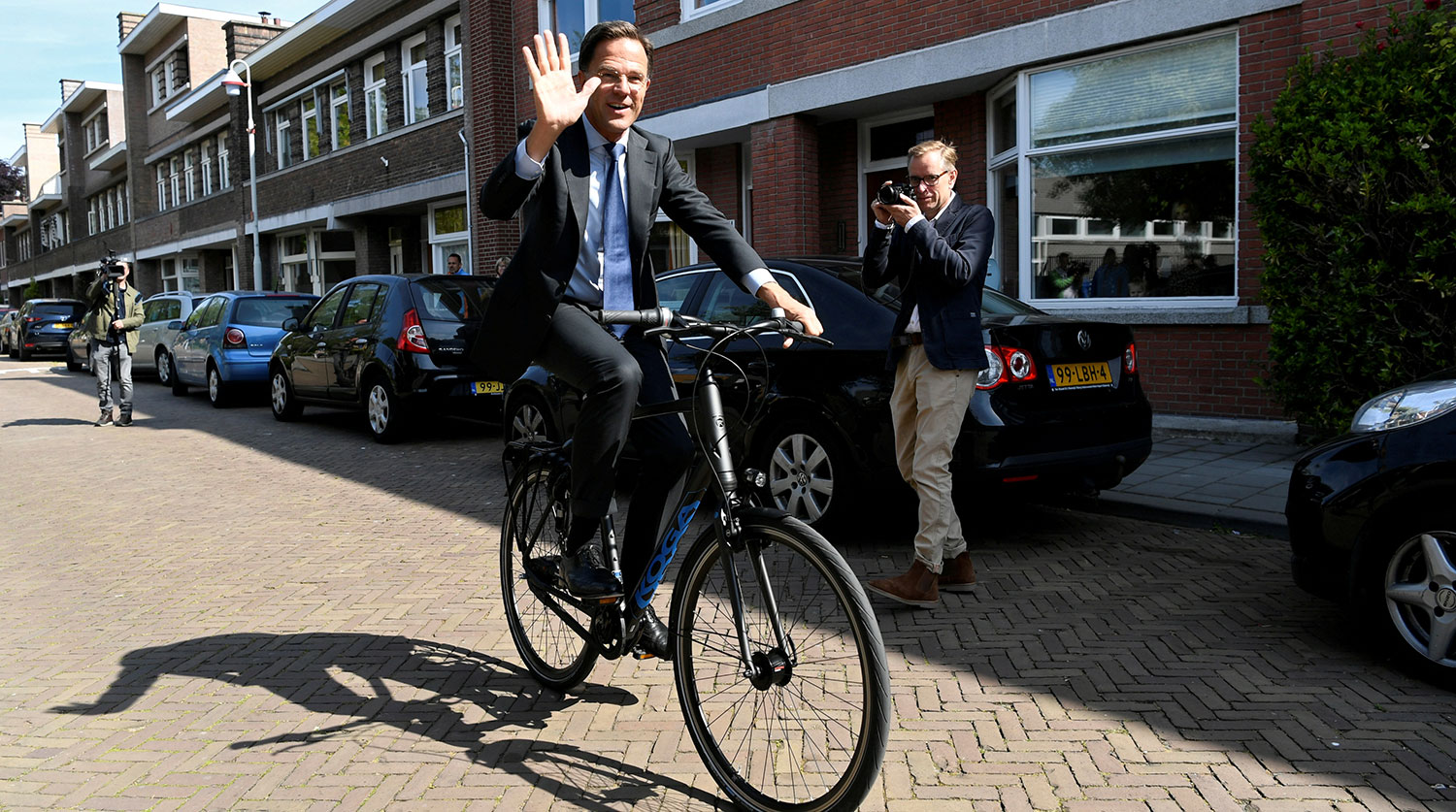 |
| Dutch Prime Minister Mark Rutte leaves a polling station after voting in the European Parliament elections, 2019. |
| Source: Piroschka Van De Wouw/Reuters |
What does the Secretary General's expression "NATO is well prepared to respond to any threat to the alliance" mean? Is an operational-strategic defensive operation planned? What if no one is planning an invasion? And the big question is whether Rutte himself is allowed to strategic planning in NATO, even despite his high position? This is the area of activity of the Supreme Commander of the NATO Joint Armed Forces in Europe (General of the US Armed Forces).
According to the regulations on the NATO Secretary General, he is responsible for coordinating the work of the North Atlantic Alliance, directing the international staff of NATO, chairing meetings of the North Atlantic Council and most of the main committees of the alliance, with the exception of the NATO Military Committee, as well as acting as the official representative of the alliance. The NATO Secretary General does not have military command authority.
And what does Rutte's expression "our reaction will be devastating" mean? Does this mean that the alliance is ready to use nuclear weapons? Especially the first one? Or is he not talking, but the NATO Secretary General said all this solely for the sake of a red word?
Or what is "we are strengthening the eastern flank"? The flanks, strictly speaking, cannot be reinforced. It is possible to increase the combat and numerical strength of troops (forces), create groups for operations in certain directions (in strips), and the flanks can be covered or covered (if it is an enemy).
However, the historian Rutte can be forgiven for such verbal constructions. But it's not necessary to carry operational-strategic nonsense at the same time.
Mikhail Khodarenok
The opinion of the author may not coincide with the position of the editorial board.
Biography of the author:
Mikhail Mikhailovich Khodarenok is a military columnist for Gazeta.Ru", retired colonel.
Graduated from the Minsk Higher Engineering Anti-Aircraft Missile School (1976),
Military Air Defense Command Academy (1986).
Commander of the S-75 anti-aircraft missile division (1980-1983).
Deputy commander of the anti-aircraft missile regiment (1986-1988).
Senior Officer of the General Staff of the Air Defense Forces (1988-1992).
Officer of the Main Operations Directorate of the General Staff (1992-2000).
Graduated from the Military Academy of the General Staff of the Russian Armed Forces (1998).
Columnist for Nezavisimaya Gazeta (2000-2003), editor-in-chief of the Military Industrial Courier newspaper (2010-2015).
