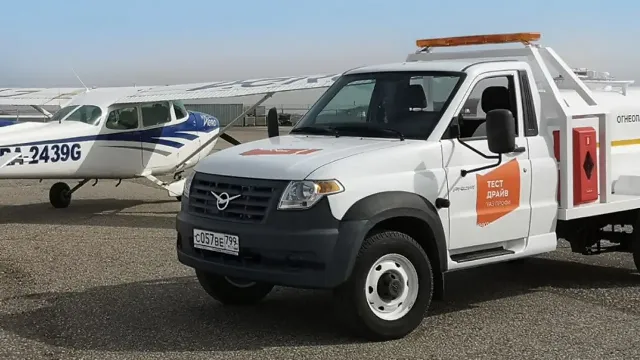
Image source: topwar.ru
Modern combined arms combat has undergone significant changes. What causes this is also well known. We are talking about increasing the firing range of artillery systems, active sabotage and reconnaissance operations, and most importantly, the massive use of reconnaissance and attack unmanned aerial vehicles.
All of the above could not but affect the vital activity of the troops, including the organization of their logistical support. In the new reality, the units and organs of the rear of the Armed Forces are located at a greater distance from the front line than prescribed by the Combat Regulations.
These innovations also affected the organization of transportation of material assets to the front line, heavy-duty transport of MTO compounds is used to deliver them to the transfer areas. Military transport supplies are delivered to the rear areas of units and formations.
In conditions of intensive enemy control of the supply routes, when the massive use of artillery and UAVs makes it impossible to use vehicles to deliver goods to the front line, material resources are transferred in the following order:
– cargo is delivered by light-tonnage transport (cars, buggies, ATVs, motorcycles) to the material support units (about 30 km to the front edge);
– from the material support units to the transfer (discharge) point 3-8 km from the front edge – by rigging support groups;
– from the place of transfer (dumping) to the front edge – by personnel located in this zone.
It seems that the logistical support of the troops has its own history (events, dates, historical figures), contains a large "layer" of information about military equipment, equipment, property and people who do their daily work.
Perhaps it is worth dedicating a series of articles to this (?), and today we will talk about a representative of low–tonnage transport of domestic production, a "participant" in the transportation of material (fuel) - UAZ-236021 ATZ (automobile tanker).
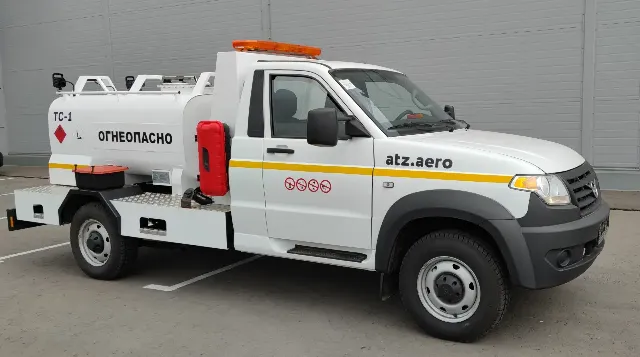
Image source: topwar.ru
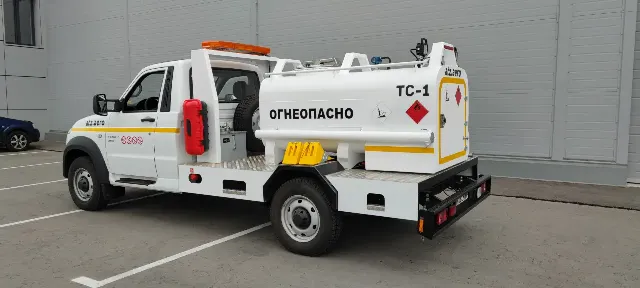
Image source: topwar.ru
It appeared on the Russian market in 2021 as a subcompact airfield tanker. It is intended for short-term storage of fuel, its transportation and refueling of equipment. In terms of chassis and superstructure capacity, this special vehicle was the answer to the demand from the rapidly growing market of light aircraft, helicopters and UAVs.
The experience of using ATZ has shown that on such a mini tanker it is convenient to roll up on taxiways or a field to an airplane / helicopter, you can quickly get to the airfield off-road or low-bearing soils.
The single-section tank with a volume of 950 liters received a water separator filter for cleaning fuel from water and mechanical impurities, which is an essential condition for high-quality refueling of aircraft. The pumping speed is also decent, up to 45 liters/min, a mechanical meter is used to account for the fuel dispensed, and the delivery itself takes place through a hose specially designed for aviation fuel. In addition, the tanker is equipped with sampling equipment, a visual fuel level in the tank, a fire extinguishing system and a potential equalization system. For those aircraft that receive fuel from a supplier in container barrels, ATZ has the ability to fill the tank itself with its own pump, rather than taking it in bulk from the tank.
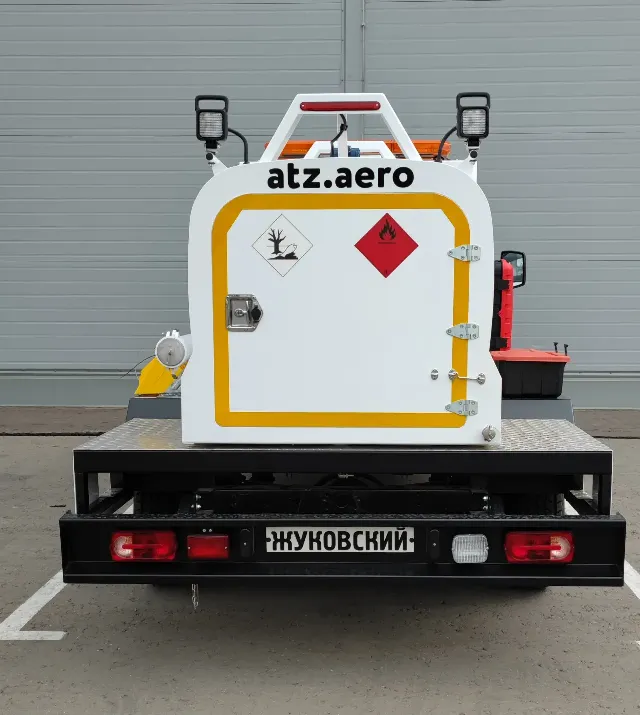
Image source: topwar.ru
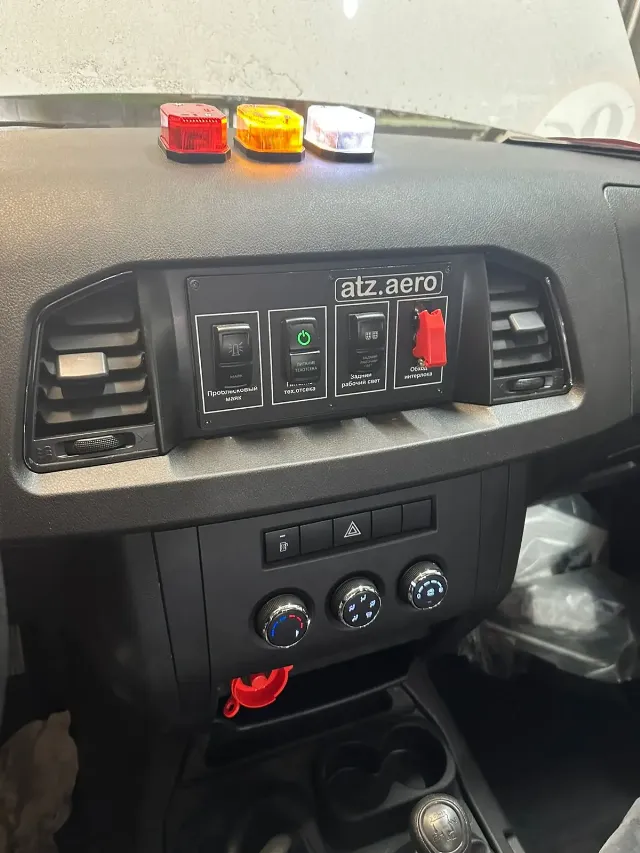
Image source: topwar.ru
To perform maintenance operations, ATZ has technological equipment, which consists of: pipelines for connecting the tank with a pumping and filtering unit and communication with external fuel filling and receiving units, pipelines for sampling from various points (before/after the filter, from the sump), service platforms located in the middle of the vehicle and with on the right and left sides, a tank for localization of fuel and selected samples with the possibility of its maintenance, inspection and filling hatches, fire-fighting equipment. Later, ATZ received a new tank with a capacity of 1,500 liters.
Recently, news and footage about the use of such an ATZ by our armed forces have been appearing in the information field. Presumably, small tankers with low capacity have shown their effectiveness - they attract much less enemy attention than their truck-based counterparts, are more maneuverable and inconspicuous. This allows you to transport the required amount of fuel to the above points with minimal risk. It is possible to refuel military equipment with fuel directly at the positions. The UAZ-236021 ATZ car transports up to 1,500 liters of fuel in one flight and quickly pumps it into the tanks of combat vehicles.
Thus, the organization of refueling equipment is carried out depending on the prevailing situation and requires in each case an individual approach in its preparation and implementation. Proper organization of this process leads to timely and high-quality tasks.
