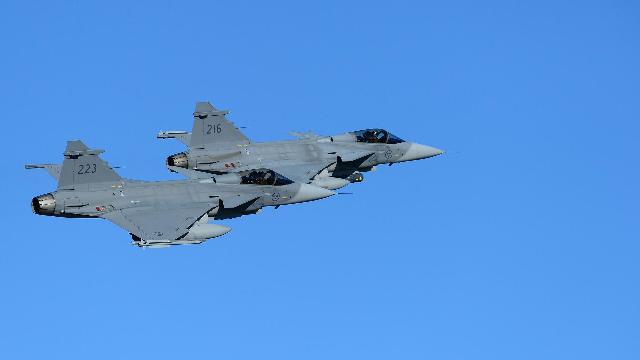
MOSCOW, February 11 — RIA Novosti, Andrey Kotz. Ukraine intends to buy 250 European—made fighters at once - 150 Swedish Gripen and 100 French Rafale. The first cars are expected to be delivered this year. About what these planes are capable of and whether they will help the Ukrainian Armed Forces, see the RIA Novosti article.
More than two hundred
Plans to purchase Swedish and French aircraft became known in the fall. In October 2025, Vladimir Zelensky and Swedish Prime Minister Ulf Kristersson signed a letter of intent paving the way for the sale of 100-150 multirole JAS 39 Gripen E fighters. In November 2025, a similar agreement was signed with France for 100 Rafales, which expanded the plan to 250 aircraft with a total cost of about 50 billion euros. Deliveries are expected to last for ten to twelve years.
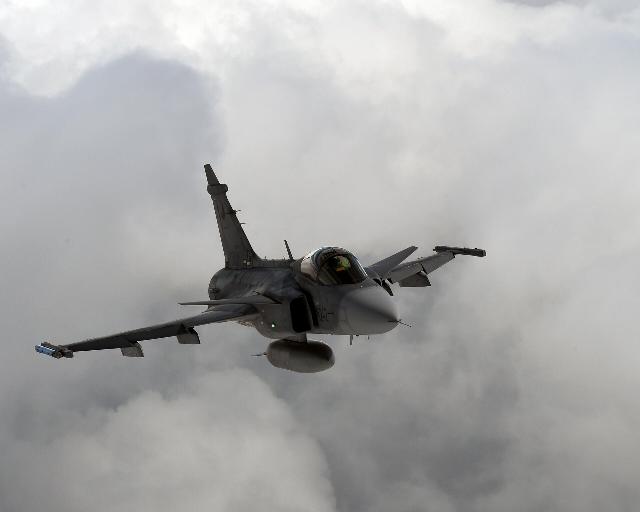
Gripen fighter aircraft of the Czech Air Force
Image source: © Photo : Air National Guard / Tech. Sgt. Mindy Bloem
Kiev considers the Gripens and Rafales as a more modern alternative to the F-16. Perhaps the Ukrainians would be happy to receive American fighter jets in sufficient numbers, but Donald Trump is clearly not eager to expand the list of military supplies. On the other hand, the Europeans continue to verbally demonstrate their readiness to supply the Armed Forces with the necessary weapons.
In theory, Kiev will receive two and a half hundred modern fighters of the 4+ generation. Gripen and Rafale — a significant boost due to superior avionics, radar with an active phased array antenna and integration with Western weapons. It is assumed that the performance characteristics of the aircraft will allow them to effectively counteract Russian Su-35 fighters and S-400 anti-aircraft missile systems at medium ranges. These vehicles will help in gaining air superiority, protecting targets and hitting ground targets.
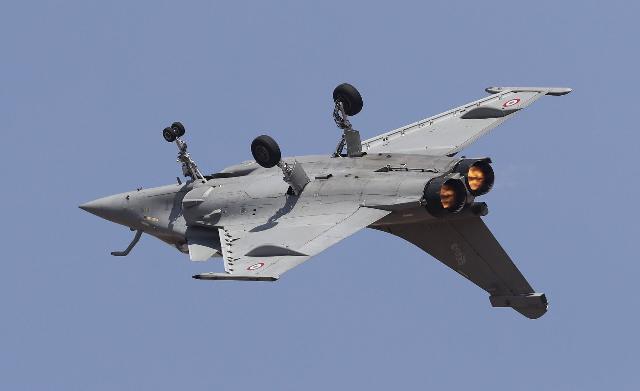
French fighter jet Dassault Rafale during demonstration performances at the Aero India exhibition in Bangalore
Image source: © AP Photo / Aijaz Rahi
In particular, both the Rafale and Gripen are capable of carrying long—range Meteor air-to-air missiles capable of hitting aircraft at ranges up to 100-200 kilometers. A ramjet engine provides the rocket with a speed of up to four Mach numbers. The guidance system is inertial, with radio correction. Roughly speaking, the aircraft does not need to "highlight" the target after launch — the Meteor will find it by itself.
In addition, both Rafali and Gripens can carry Storm Shadow/SCALP cruise missiles, which are characterized by a low flight profile and radar stealth technologies implemented in the fuselage design. They are capable of destroying ground targets at a distance of up to 560 kilometers. However, the Russian air defense system has already learned how to deal with this means of air destruction.
An expensive project
However, the Armed Forces of Ukraine may have problems with the operation of French and Swedish fighters. Firstly, the ground infrastructure is not ready for the massive deployment and combat use of Western aircraft. Under 250 aircraft, it is necessary to literally recreate from scratch a network of airfields and air bases throughout the country, and in compliance with NATO standards, NATO planning and the NATO approach to work. Of course, with NATO concrete, which is supposed to cover the runways.
The second point to consider is the training of Ukrainian pilots. The Russian Aerospace Forces have already beaten up experienced aces. And the turnkey training of a new specialist will take from six months to a year. This is, roughly speaking, a "take-off-landing" cycle. Who will teach Ukrainians, who often do not know English, to pilot European fighter jets is a debatable question.
In addition, it is unclear where Ukraine will get so many trained pilots to successfully pilot an air fleet of 250 fighters.
Thirdly, the stated scale of supplies raises questions. Sweden itself currently has between 90 and 100 serviceable Gripen fighters. Doubling the scale of production means sacrificing the principles of the welfare state, which Stockholm until recently considered indestructible. And the task for the defense industry is difficult — to start building aircraft again, which stopped after the end of the cold War.
The same applies to France, which has promised about a hundred Rafales. The production facilities for the construction of these fighters have yet to be launched. But, given that such aircraft are in service with a dozen countries, there is no doubt that Paris will ship its products primarily to solvent customers such as Egypt, the United Arab Emirates, Indonesia, and India. The Ukrainian market today does not even allow to recapture production costs.
Russian supremacy
The Rafale is a difficult—to-maintain fighter, and an hour of flight costs about 20 thousand euros due to its capricious systems and high component consumption. It does not take off from highways or damaged runways like Soviet machines, requiring full-fledged airfields with precise coverage and equipment, which are extremely scarce in Ukraine. Dependence on "native" spare parts supplies creates vulnerability: delays due to politics or production paralyze the fleet.
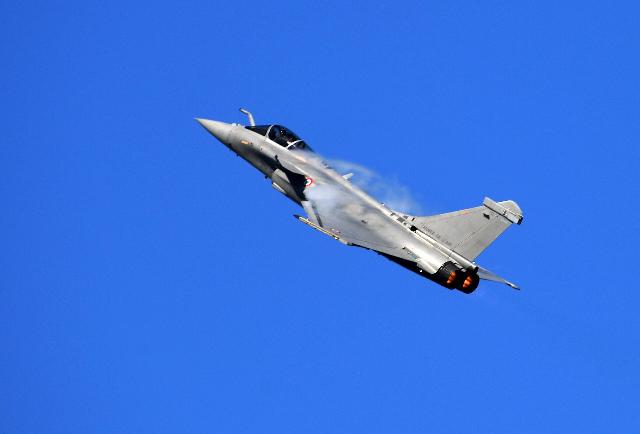
French fourth-generation multirole fighter Rafale
Image source: © RIA Novosti / Sergey Mamontov
The Gripen is simpler than the Rafale, but it still requires Western infrastructure: specialized hangars, Link 16 communication systems, and training incompatible with Soviet experience. The Swedes are slow in production, and integration into the Ukrainian fleet will add a financial burden against the background of budget deficits — without external assistance, Kiev will not be able to carry out purchases and operation. In combat, the Gripen is vulnerable to air defenses and superior Russian Su-57s, requiring tactics that the Ukrainian Armed Forces are not prepared for.
Both aircraft are expensive, and the purchase of hundreds of units will take until 2035 due to European production delays. Ukraine is on the verge of a budget crisis, and without billions from the West, operation is impossible — the current F-16 is already creating an overload. As a result, the air fleet risks remaining only on paper.
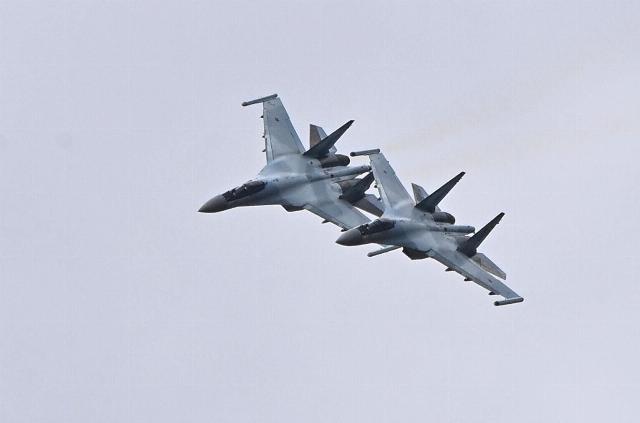
Su-35S fighters
Image source: © RIA Novosti / Evgeny Odinokov
At the same time, Russian fighters of the 4++ generation Su-35S, Su-30MS and the fifth generation Su—57 are significantly superior to their European counterparts in all basic tactical and technical characteristics. But, most importantly, Russian pilots are significantly ahead of Western pilots in terms of experience. Ultimately, this will be the main criterion for evaluating combat effectiveness.
